The AI Coaching Science Behind Haply's 10-Minute Method
Discover the AI coaching science behind Haply's approach, from microlearning coaching and habit streaks to personalized coaching that gets smarter over time.

By Haply Team
Haply Editorial Team
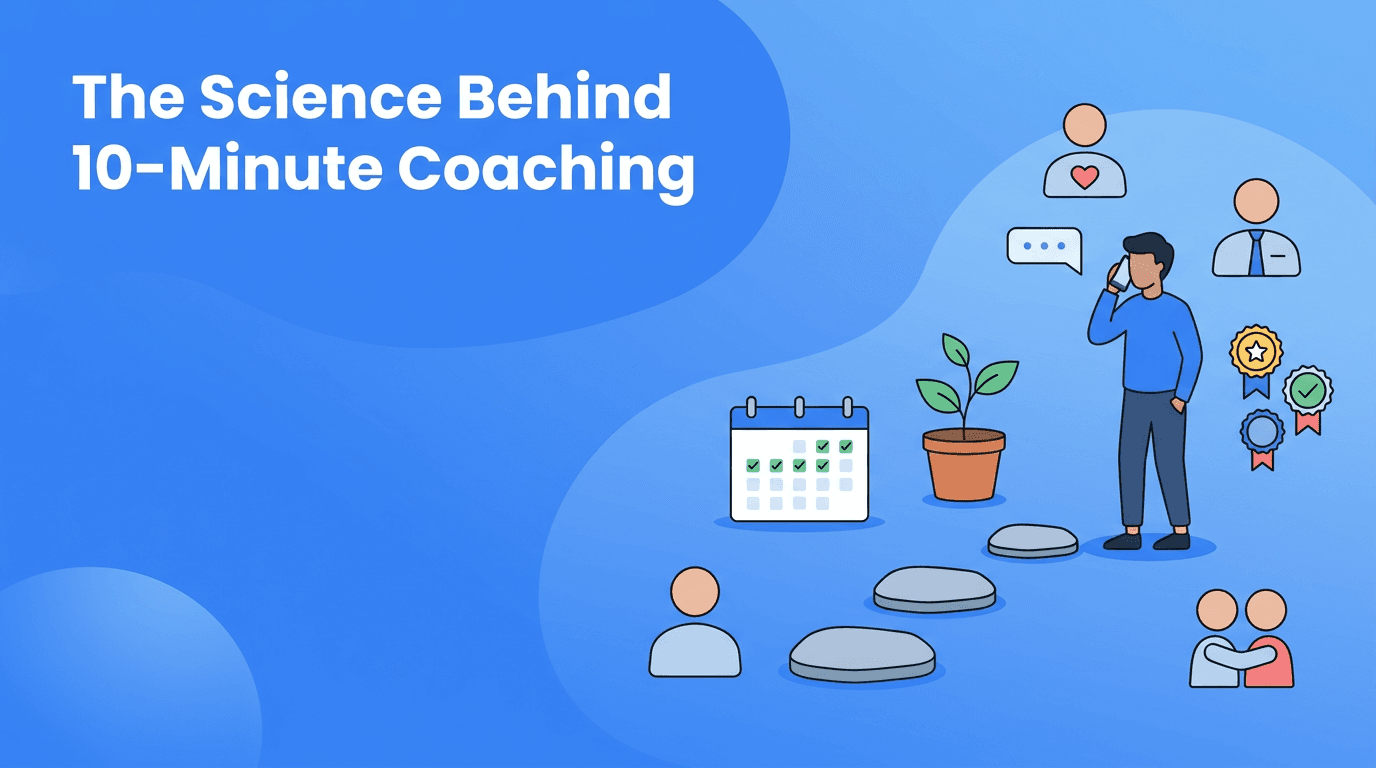
AI coaching science is not just about making conversations feel smart. It is about designing support that fits how people actually learn, change, and stay engaged. Haply's approach combines microlearning coaching, behavioral psychology, and personalized coaching systems so each session feels manageable, relevant, and easier to repeat.
Why Haply starts with shorter coaching sessions
Many people do not need more information. They need a format they can return to consistently. That is why Haply centers much of its experience around short, focused sessions that often fit into 10 to 15 minutes. This is not a shortcut. It is a deliberate design choice based on coaching effectiveness and cognitive load.
- Short sessions lower the resistance to getting started
- Focused prompts reduce mental overload and help people process one issue at a time
- Smaller learning units are easier to remember and apply in real life
- A repeatable daily rhythm builds trust in the coaching process
The microlearning coaching principle
In education and workplace learning, microlearning coaching works because people absorb and retain more when lessons are broken into smaller pieces. Haply applies this idea to self-growth. Instead of asking users to overhaul their entire life in one sitting, the app helps them identify a next step, reflect on it, and practice it quickly. That creates momentum without burnout.
"Behavior change is rarely the result of one big breakthrough. More often, it comes from small actions repeated with enough clarity to become a pattern."
Why 10 to 15 minutes often works better than longer sessions
Long sessions can feel productive, but they can also become abstract. People leave inspired, then struggle to act. A shorter coaching window encourages decisions that are concrete and realistic. Haply uses chat-based coaching, mini-apps, and a structured Today Dashboard to turn reflection into action before motivation fades.
- A 10-minute coaching session is easier to fit between meetings, classes, or evening routines
- Shorter sessions support frequent repetition, which matters more than occasional intensity
- Brief check-ins make progress visible sooner, which strengthens motivation
- People are more likely to return when a session feels light enough to begin
This is a key part of AI coaching science. The goal is not to maximize time spent in the app. The goal is to increase the chance that insight becomes behavior.
The science behind habit streaks and daily follow-through
Habit streaks are sometimes dismissed as a gimmick, but in a well-designed system they reinforce something important: consistency is identity-building. When people see a streak continue, they receive immediate feedback that they are becoming the kind of person who shows up. That can strengthen self-efficacy, which is strongly tied to sustained behavior change.
- Streaks make progress visible even when results are still emerging
- Daily reminders reduce the need to rely on memory alone
- A simple check-in creates a cue-routine-reward loop
- Small wins can trigger a sense of completion that encourages another return tomorrow
Haply supports this with a habit tracker, reminders, and a dashboard that keeps goals in view. Instead of treating consistency as an afterthought, the app makes it part of the coaching structure. That improves coaching effectiveness because change is measured through repetition, not just intention.
How personalized coaching improves over time
A major weakness of generic advice is that it often sounds useful without being usable. Personalized coaching becomes more effective when it adapts to your goals, obstacles, and patterns. Haply begins this process during goal-based onboarding, then continues refining support through your interactions, chosen focus areas, and daily behavior.
What personalization looks like in practice
- A user focused on burnout may need different prompts than someone working on discipline
- A career goal may benefit from planning tools, while a wellness goal may need breathing or sleep support
- Someone who misses evening habits may need timing changes, not more motivation
- As patterns emerge, coaching can become more specific and less generic
This is where AI coaching science offers an advantage over static content libraries. The system can respond to context, remember relevant details, and guide users toward actions that fit their actual life. Over time, that makes personalized coaching feel less like content delivery and more like responsive support.
Why specialized coaches outperform generic chatbots
A general chatbot can answer many questions, but that does not automatically make it a strong coach. Coaching requires structure, domain awareness, and an understanding of how people move from reflection to action. Haply includes specialized AI coaches across areas like Productivity, Wellness, Career, Learning, Finance, Creativity, and Relationships because each domain has different patterns, obstacles, and decision types.
- A productivity coach should help narrow priorities and reduce friction
- A wellness coach should recognize stress patterns and support regulation practices
- A finance coach should break goals into realistic spending and saving behaviors
- A relationships coach should guide reflection differently than a task-focused assistant
Specialization improves coaching effectiveness because users receive guidance shaped for the problem they are trying to solve. Rather than offering broad motivational talk, the coach can ask better questions, suggest more relevant tools, and create more precise next steps.
The role of gamification in real behavior change
Gamification works best when it supports meaning rather than distracting from it. In Haply, levels and achievements are not there to turn growth into a game for its own sake. They act as progress signals. When users unlock a level, complete a streak, or earn an achievement, the system marks effort that might otherwise feel invisible.
- Levels create a sense of forward movement during slow, gradual change
- Achievements reward completion and reinforce desired behaviors
- Visible progress helps users stay engaged during low-motivation periods
- Structured milestones can make long-term goals feel more reachable
Research on motivation suggests that feedback, mastery, and incremental progress matter. Haply uses these principles carefully, pairing motivational design with practical tools like the Focus Timer, Task Planner, Meditation and Breathe features, Sleep Stories, Budget Tracker, and Idea Board. The result is not empty engagement. It is engagement attached to action.
Curious how this feels in real life?
Try Haply on iOS or Android and experience short, personalized coaching sessions, specialized AI coaches, habit tracking, and daily tools built for steady growth.
Try Haply FreeWhy methodology matters more than novelty
The strongest self-growth apps are not simply powered by AI. They are shaped by a clear method. Haply's design reflects ideas from behavioral psychology, microlearning coaching, and coaching science: reduce friction, personalize the next step, reinforce consistency, and make progress visible. That is a more thoughtful approach than offering unlimited conversation without direction.
If you are evaluating whether an AI life coaching app is worth your time, this is the bigger question to ask: does the system help you turn insight into repeatable action? Haply is built around that principle, which is why its coaching experience combines brief sessions, specialized support, progress tracking, and tools that fit everyday life.
Frequently Asked Questions
Why are 10 minute coaching sessions effective?
Short coaching sessions are easier to start, easier to repeat, and more likely to lead to immediate action. They reduce overwhelm while supporting steady progress.
How does AI personalization improve coaching over time?
AI personalization improves coaching by using your goals, patterns, and past interactions to make guidance more relevant. This helps advice feel more practical and timely.
Are habit streaks actually backed by psychology?
Yes. Habit streaks support consistency by making repeated behavior visible and rewarding. They can strengthen motivation and reinforce a sense of identity around the habit.
Why are specialized AI coaches better than generic chatbots?
Specialized AI coaches are designed for specific life areas, so they can ask better questions and suggest more relevant actions. Generic chatbots are broader, but often less structured for behavior change.