A Day With an AI Life Coach: 5 Realistic Haply User Routines
Curious what an AI life coach looks like in real life? These five relatable Haply-style routines show how busy people fit coaching, habits, and small wins into ordinary days.

By Haply Team
Haply Editorial Team
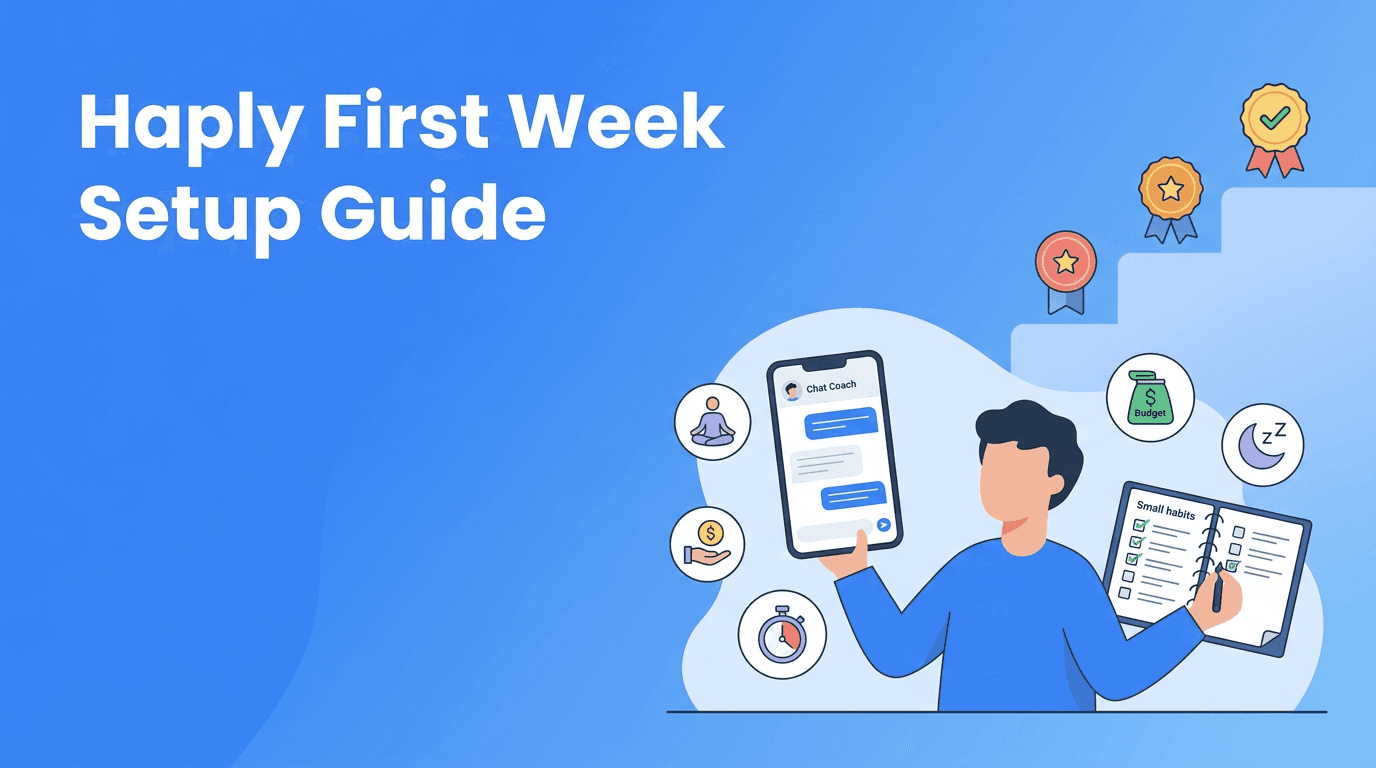
What does an AI life coach actually look like once the novelty wears off and real life takes over? Not in theory, but on school mornings, lunch breaks, after draining meetings, and during those tired evenings when motivation is low. The easiest way to understand Haply is to picture it inside ordinary routines, where small prompts, short coaching chats, and simple tools help people keep moving on their personal growth journey.
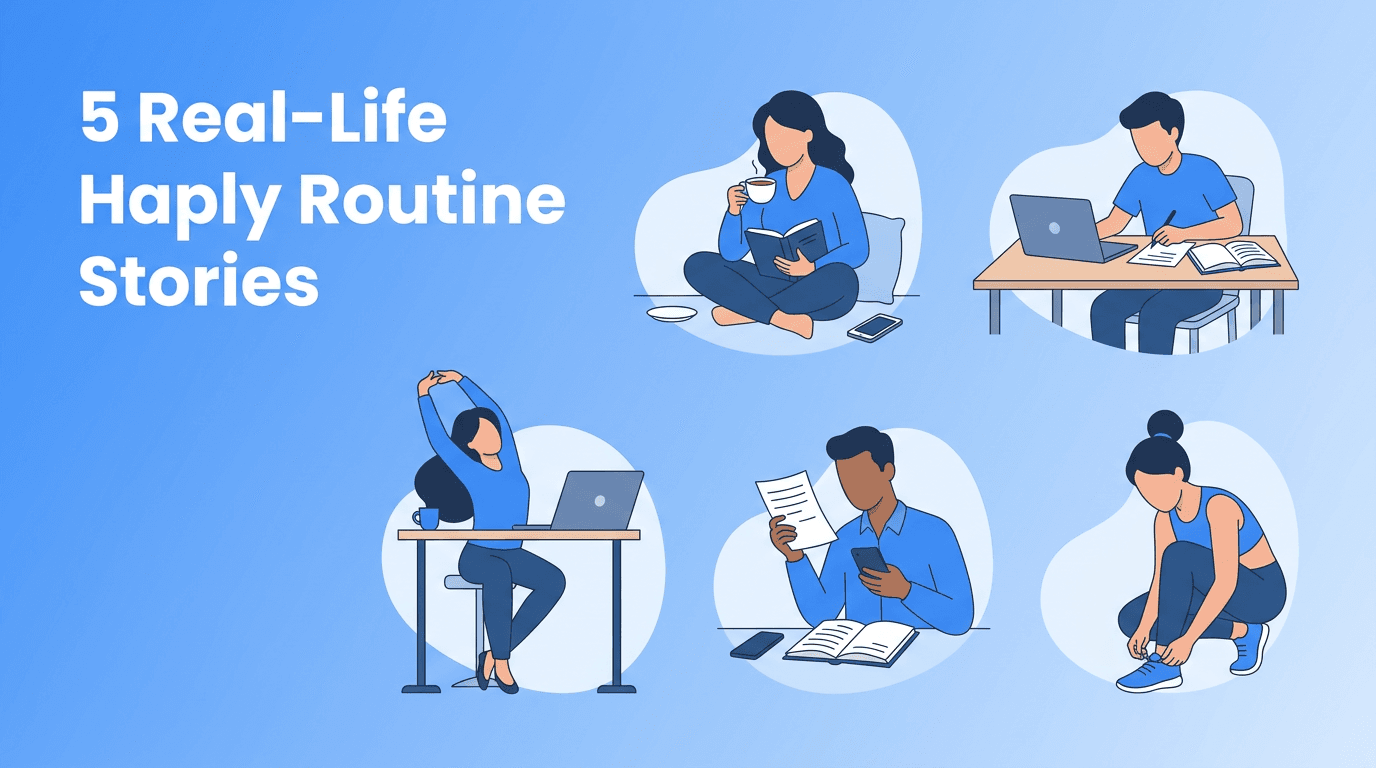
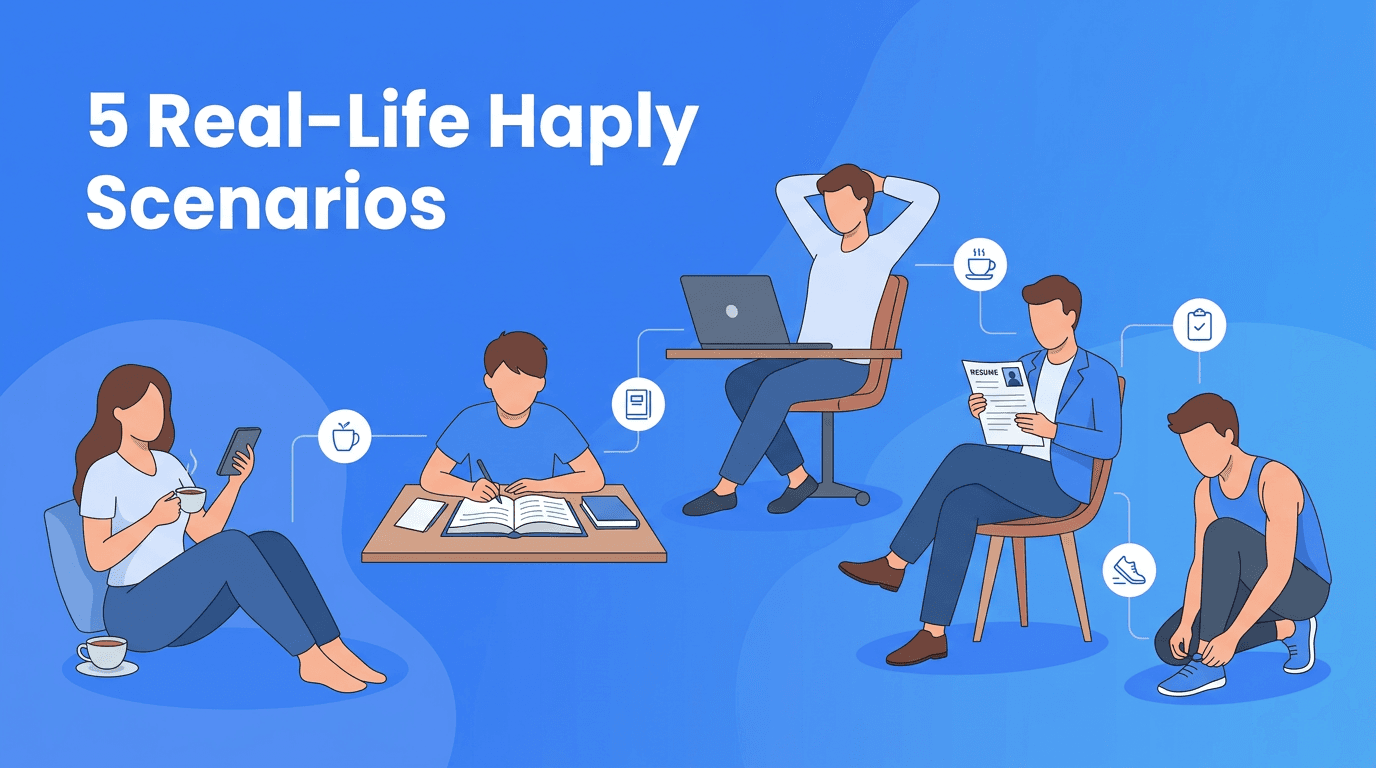
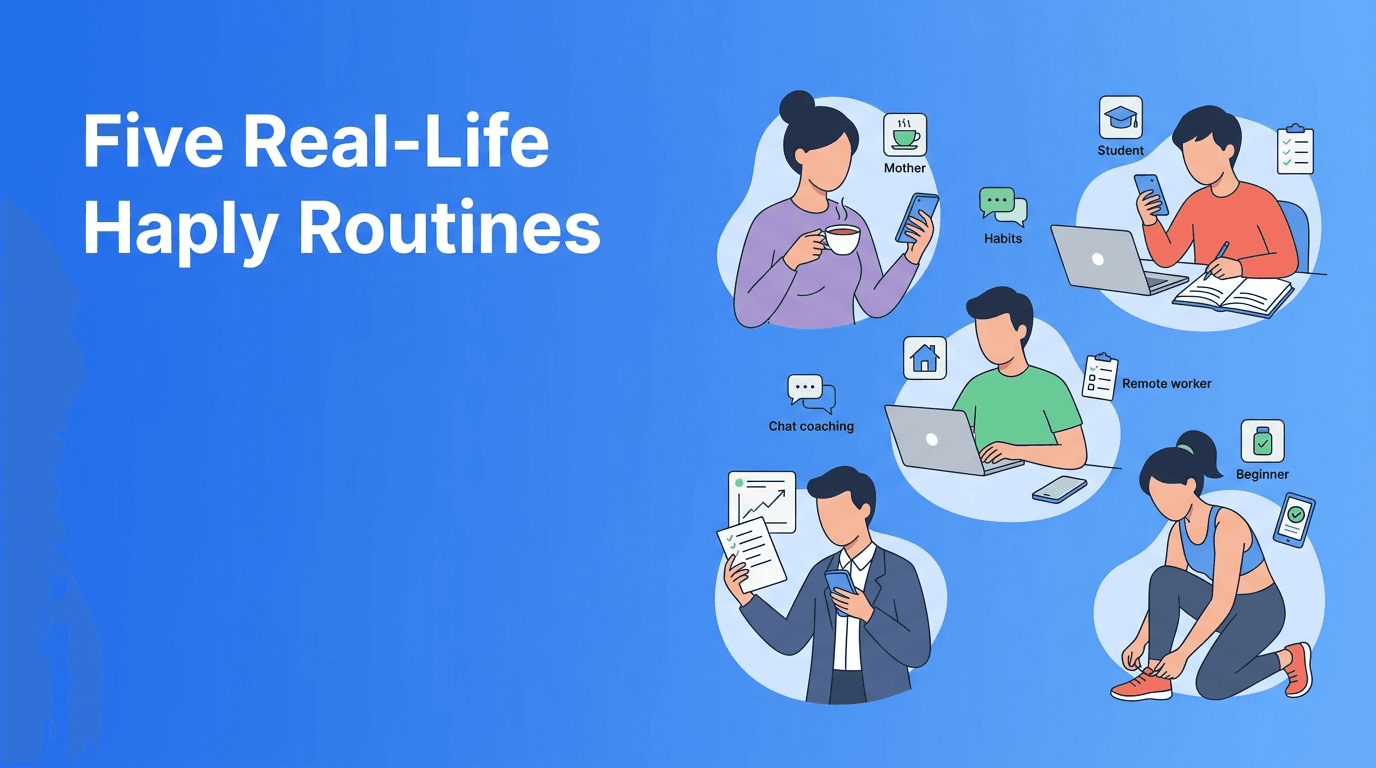
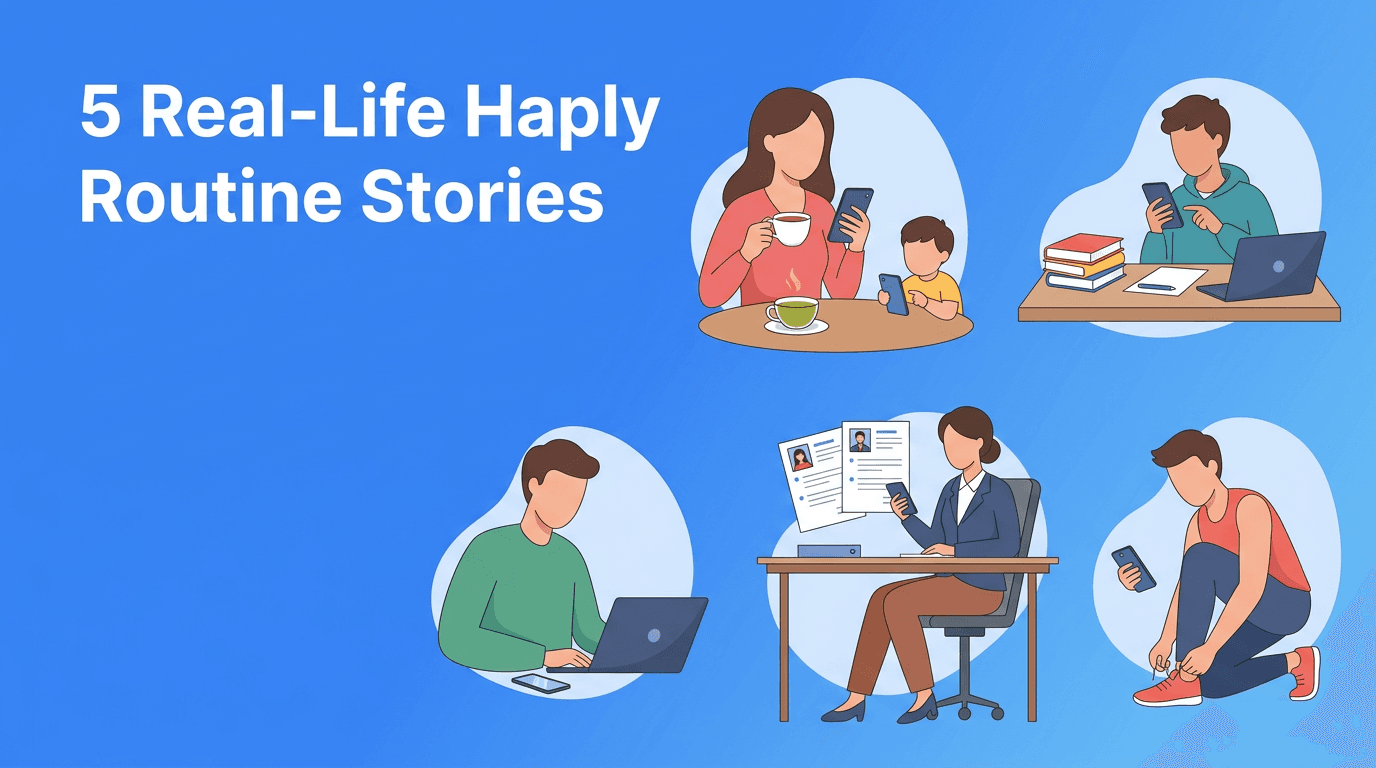
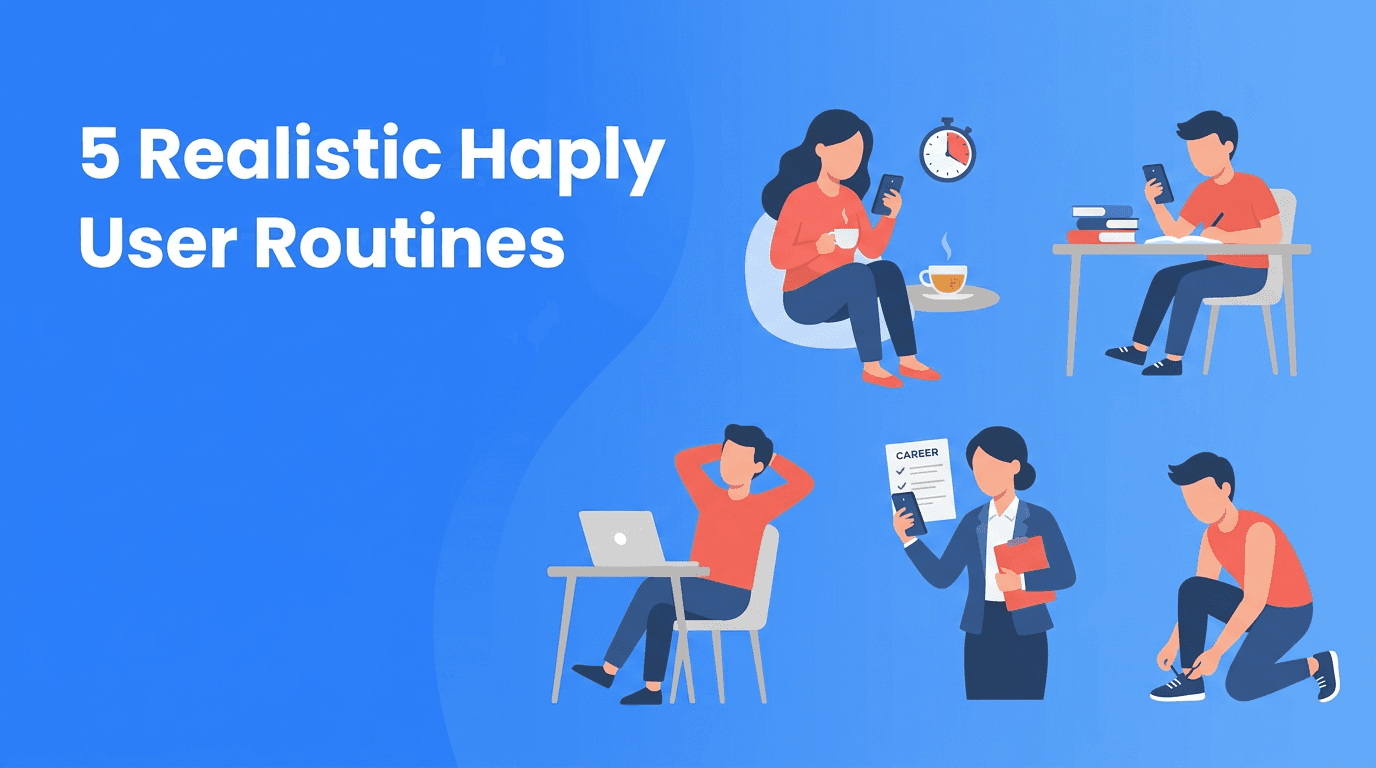
Below are five illustrative stories, not real user profiles, but realistic snapshots of how a Haply user might weave the app into everyday life. Each one shows a different kind of AI coaching experience on iOS or Android, with chat-based support, mini-apps, streaks, reminders, and a Today Dashboard that makes progress feel doable instead of overwhelming.
1. The busy mom who takes back 15 minutes
At 6:40 a.m., Maya is already negotiating breakfast, missing socks, and a school form she forgot to sign. By 9:15, the house is quieter, but her energy is not magically restored. This is where her daily coaching routine with Haply begins, not with a perfect hour-long ritual, but with 15 minutes she can actually protect.
How Haply fits into her morning reset
- She opens the Today Dashboard to see one encouraging quote, her self-care goal, and a short recommended check-in.
- She starts a quick chat with Haply's Wellness coach and types: "I only have 15 minutes and I feel fried."
- The coach suggests a tiny plan: 3 minutes of breathing, 5 minutes of journaling, and 7 minutes of tea without multitasking.
- She uses the Meditation/Breathe mini-app, then checks off the habit to keep her streak alive.
"Self-care becomes real when it fits inside your actual life, not your fantasy schedule."
What changes is not that Maya suddenly has more time. It is that the app helps her stop wasting the little time she does have. Instead of doom-scrolling or standing in the kitchen feeling guilty, she gets a structured, compassionate nudge. For her, the AI life coach is not replacing human support. It is helping her act on what she already knows she needs.
2. The college student building study habits between classes
Noah's problem is not a lack of ambition. It is friction. He wants consistent grades, but every assignment feels larger in his head than it is on paper. So he uses Haply as a low-pressure study companion, especially during awkward gaps between lectures.
A realistic study habit loop
- At 11:05 a.m., Noah opens Haply after class and checks the Today Dashboard instead of social media.
- He messages the Learning coach: "I have a 40-minute gap and zero focus. What should I do first?"
- The coach helps him break one reading assignment into a 15-minute sprint and one short review task.
- He launches the Focus Timer mini-app and puts his phone face down.
- Before his next class, he logs the session, sees his streak continue, and feels momentum instead of panic.
This kind of AI coaching experience matters because it meets him at the moment he would normally avoid the task. Haply does not just say "study more." It turns vague pressure into a next step. Over time, Noah starts trusting his own system because he is repeating one simple pattern, not waiting for perfect motivation.
3. The remote worker fighting slow-burn burnout
Elena works from home, which sounds flexible until every room starts feeling like an office. By 2:30 p.m., she has answered messages for hours, skipped lunch twice this week, and cannot tell if she is productive or just permanently available. Her personal growth journey starts with noticing that burnout rarely arrives dramatically. It usually builds quietly.
How she uses Haply in the middle of the day
- A daily reminder from Haply appears before her usual energy crash.
- She opens a chat with the Productivity coach and writes: "I am working all day but ending with nothing finished."
- The coach suggests a boundary reset: pick one priority, mute nonessential notifications for 25 minutes, then take a real break.
- She uses the Task Planner to choose one meaningful task and the Focus Timer to complete it.
- Afterward, she logs a short reflection and checks her streak, which reinforces consistency more than intensity.
For Elena, the value of an AI life coach is not hype or inspiration. It is interruption. Haply breaks the autopilot loop. Some days she also opens the breathing tool after a tense call, or reads the motivational quote on the Today Dashboard as a cue to step away from her desk for five minutes. Small interventions, repeated often, are what help her feel human again.
Want your own simple coaching rhythm?
Try Haply on iOS or Android to build a routine that fits your real schedule, with specialized AI coaches, mini-apps, reminders, and a 7-day free trial.
Try Haply Free4. The career changer using AI coaching for clarity
Jordan has a spreadsheet full of possibilities and a mind full of second-guessing. A move into UX, project management, and people operations all sound possible on different days. What he needs is not another personality quiz. He needs structured reflection that turns swirling thoughts into decisions.
A coaching routine that supports career transitions
- In the evening, Jordan opens Haply and checks his goal-based progress from onboarding.
- He starts a chat with the Career coach and asks: "How do I compare career paths without spiraling?"
- The coach helps him create three criteria, skill fit, lifestyle fit, and income potential.
- He uses notes from the session to build a short action list: one informational interview, one course module, and one resume update.
- At the end of the week, he reviews his streak and achievements, which makes progress feel visible even before the career change happens.
This is where Haply feels especially practical. A Haply user in transition often does not need a giant breakthrough. They need a place to return to the same question with better structure. The chat-based format makes it easy to think in motion, while the app's goal system helps big change feel less abstract.
5. The fitness beginner building a workout habit without all-or-nothing thinking
Sam has restarted exercise more times than he can count. His usual pattern is familiar: one highly motivated week, then soreness, missed days, guilt, and a complete stop. This time he tries something different. He uses Haply not to chase intensity, but to build identity, the kind that says, "I am someone who shows up."
What his evening habit looks like
- At 6:10 p.m., Haply sends a reminder tied to his workout goal.
- He checks the Today Dashboard and sees that today's target is simply 10 minutes of movement.
- He chats with the Wellness coach for a quick motivation reset after a long day.
- Instead of overplanning, he commits to a short walk and a few bodyweight exercises.
- He marks the habit complete, protects his streak, and ends the day with a win that feels sustainable.
That is the hidden strength of a good daily coaching routine. It lowers the emotional cost of starting. Sam is not relying on excitement anymore. He is using reminders, streaks, and tiny commitments to make consistency easier than quitting. For beginners, that shift can matter more than the perfect workout plan.
What all five Haply stories have in common
These scenarios are different, but the pattern is strikingly similar. Each person opens Haply during a real-life transition point, not in a perfectly calm moment. A parent uses it after the morning rush. A student uses it between classes. A remote worker uses it before the afternoon crash. A career changer uses it when overthinking starts. A fitness beginner uses it when motivation dips.
- They start with what is true right now, not what an ideal version of themselves would do.
- They use one specialized coach, Productivity, Wellness, Learning, Career, or another area, for immediate guidance.
- They rely on one small tool, like the Focus Timer, Task Planner, Meditation/Breathe, or habit tracking.
- They let streaks, reminders, and achievements make progress visible.
- They repeat small actions often enough that change starts to feel normal.
That is the most relatable version of an AI coaching experience. It is not dramatic. It is woven into ordinary life. And that is exactly why it can work.
Frequently Asked Questions
What is it like to use an AI life coach every day?
For most people, it looks like short check-ins, quick chat-based guidance, and simple tools used during real moments of stress, planning, or habit-building.
Can Haply help with study habits and productivity?
Yes. Haply offers specialized coaching and mini-apps like Focus Timer and Task Planner to help users break goals into small, manageable actions.
Is Haply only for wellness and self-care?
No. Haply supports multiple life areas, including productivity, career, learning, finance, creativity, relationships, and wellness.
How much time do I need to use Haply each day?
Many routines can start with 5 to 15 minutes a day. The app is designed for short, practical sessions that fit into busy schedules.
Does Haply offer a free trial?
Yes. Haply offers a 7-day free trial, so you can explore the coaching experience and tools before committing.