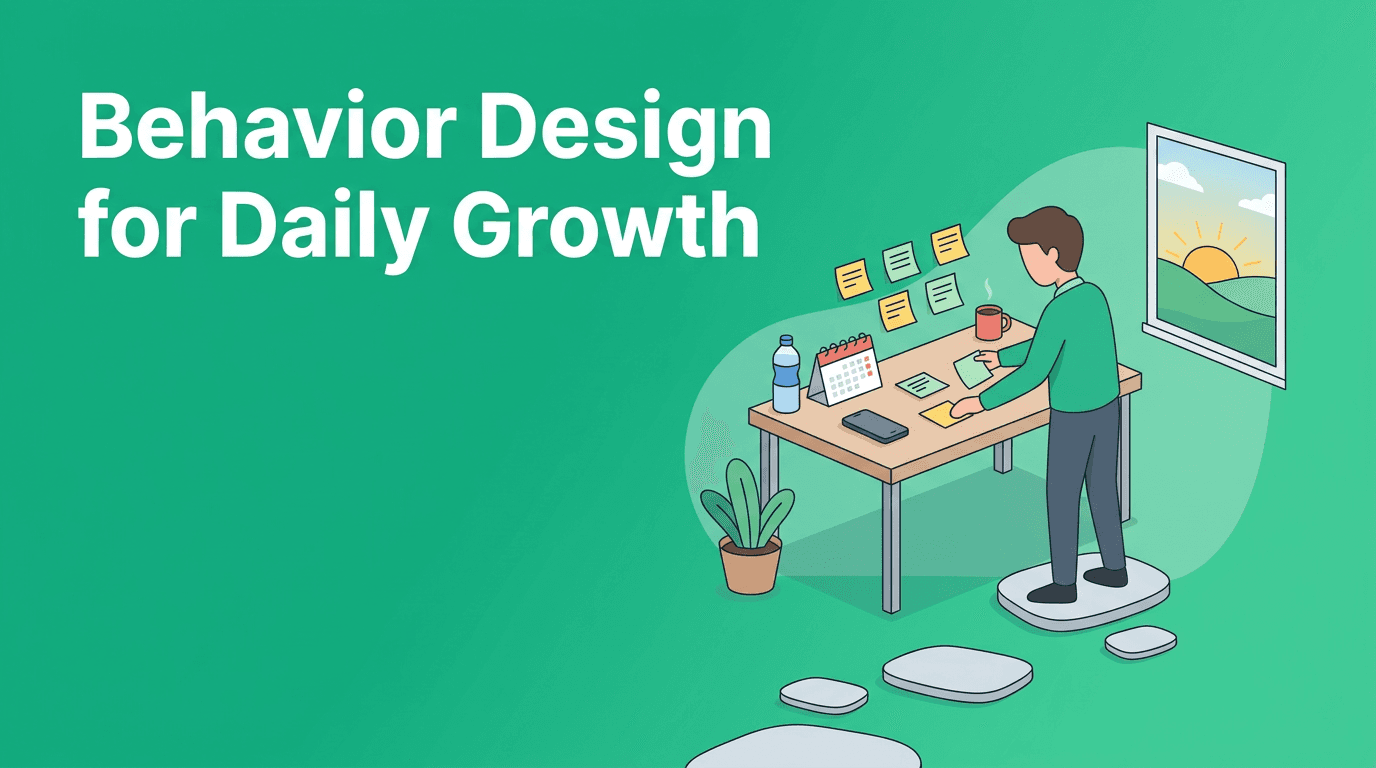
Behavior Design for Personal Development: Make Your Daily Routine Easier to Repeat
Behavior design is a practical approach to personal development that helps you shape a daily routine, strengthen self-belief, and create lasting behavior change.

By Haply Team
Haply Editorial Team
Most people try to improve their lives by pushing harder. Behavior design offers a smarter path. Instead of relying on perfect motivation, it helps you shape your environment, your cues, and your daily routine so good actions become easier to repeat. If you care about personal development, a stronger growth mindset, and more consistent behavior change, this approach can make progress feel lighter, not harder.
Why behavior design works when motivation fades
A lot of self-improvement advice assumes you will feel ready every day. Real life does not work like that. Classes run late, work gets messy, sleep slips, and your energy changes. Behavior design matters because it reduces friction. When the next right action is clear and simple, you are more likely to follow through even on average days.
This shift also protects self-belief. When your system is built well, you stop treating every missed habit as a character flaw. You start asking a better question: What can I change in the setup? That is the heart of a growth mindset. You improve the process instead of attacking yourself.
The 5 parts of a behavior design daily routine
1. Make the action tiny
Start with a version so small that resistance has no excuse. Read one page. Do two push-ups. Write one sentence. Review tomorrow's top task for 30 seconds. Tiny actions feel almost too easy, and that is exactly the point. Small wins create momentum and reinforce self-belief.
2. Attach it to an existing cue
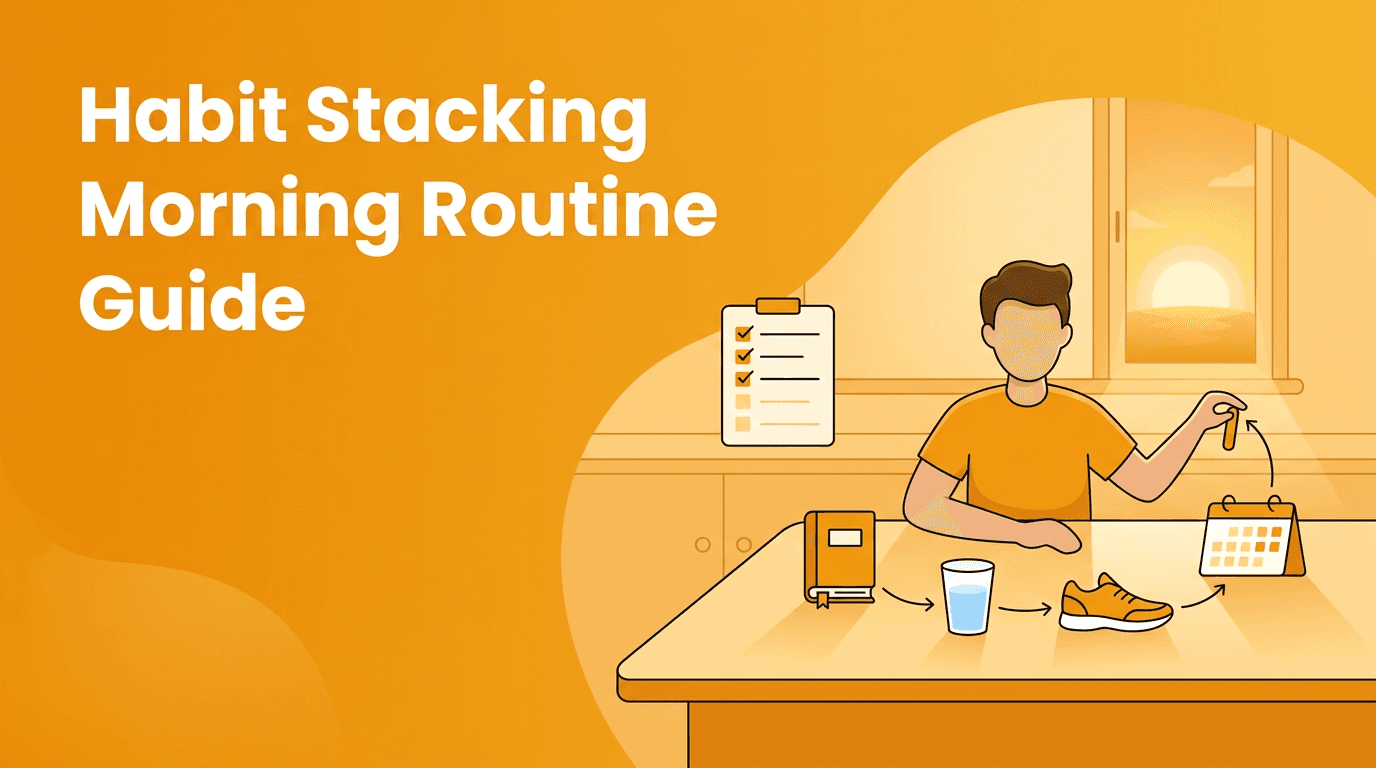
The best habits do not live in isolation. They connect to something that already happens. After brushing your teeth, you stretch. After opening your laptop, you review your top priority. After lunch, you take a five-minute walk. A reliable cue turns intention into action.
3. Remove friction
If you want a habit to happen, make it easier to start. Put your book on your pillow. Fill your water bottle at night. Keep your workout clothes visible. Block distracting apps during study hours. Behavior change is often less about discipline and more about design.
4. Add a quick reward
Your brain learns faster when effort ends with something satisfying. Check off the habit. Say, 'Done.' Mark a streak. Play one favorite song after finishing a focus session. The reward does not need to be dramatic. It just needs to make completion feel real.
5. Track the pattern, not perfection
A useful daily routine is not one you do flawlessly. It is one you can return to quickly. Track weekly consistency instead of demanding a perfect streak forever. Missing once is normal. Missing repeatedly is feedback. Adjust the system and continue.
You do not rise to the level of your goals. You repeat the level of your systems.
A simple behavior design example for busy students and young professionals
Here is a realistic morning setup for someone balancing study, work, and personal development:
- After turning off your alarm, place both feet on the floor and take one deep breath.
- After drinking water, write your top one priority for the day on a note or in your app.
- After opening your laptop, work for 10 minutes on the hardest task before checking messages.
- After lunch, take a five-minute walk without your phone.
- Before bed, reset your desk for tomorrow in under two minutes.
This kind of routine supports personal development because it builds direction without overwhelming your schedule. It also strengthens a growth mindset because each action is proof that change can happen in small, repeatable steps.
How to rebuild self-belief after inconsistency
Many people think self-belief comes first and action comes second. In practice, it often works the other way around. You believe in yourself more when you collect evidence. That evidence can be tiny. One focused study block. One honest journal entry. One walk instead of quitting the whole day.
- Lower the habit until you can do it on your worst busy day.
- Keep your habit visible with a checklist, widget, or sticky note.
- Celebrate completion immediately, even if the step looks small.
- Review your routine weekly and remove what feels unrealistic.
- Talk to yourself like a coach, not a critic.
If you want support, Haply can help turn these ideas into action. The app offers AI life coaching on iOS and Android, personalized chat-based support, a habit tracker with streaks and reminders, and tools like Focus Timer and Task Planner. That makes it easier to build a routine that fits your real life, not an imaginary perfect one.
Want a simpler way to stay consistent?
Use Haply's AI coaching, habit tracker, and daily tools to make behavior design easier to apply in real life.
Try Haply Free3 mistakes that slow behavior change
- Starting too big - Big plans feel exciting, but they often collapse under real-world stress.
- Changing everything at once - A few stable habits beat a complete life reset that lasts four days.
- Using shame as fuel - Shame may create urgency, but it rarely supports durable behavior change.
A better approach is to treat your routine like a design project. Test one change, notice what works, and improve from there. That is practical personal development in action.
Your next step: design one repeatable win
Pick one part of your day that already happens without fail, like waking up, sitting at your desk, or finishing dinner. Then add one tiny action that supports the person you want to become. Keep it easy, visible, and rewarding. Over time, behavior design can reshape your daily routine, strengthen self-belief, and make growth feel sustainable.
Frequently Asked Questions
What is behavior design in personal development?
Behavior design is a way to make good habits easier by shaping cues, environment, and small actions. It supports personal development by reducing reliance on motivation alone.
How do I use behavior design to build a daily routine?
Start with one tiny habit, attach it to an existing cue, remove friction, and track consistency. Build slowly instead of changing everything at once.
Can behavior design improve self-belief?
Yes. Small repeated actions create proof that you can follow through, which gradually strengthens self-belief.
What is the difference between behavior design and willpower?
Willpower depends on energy in the moment, while behavior design changes your setup so the right action is easier to do. It is more reliable over time.