Tiny Wins Theory: How Small Daily Proof Builds Self-Belief and Personal Development
Tiny wins can transform personal development by strengthening self-belief, improving your daily routine, and creating lasting behavior change with a growth mindset.

By Haply Team
Haply Editorial Team
Big transformations rarely start with a dramatic breakthrough. More often, they begin when self-belief gets a little stronger today than it was yesterday. If your personal development efforts keep stalling, the missing piece may not be motivation. It may be the lack of small, visible proof inside your daily routine that you can trust yourself.
Why self-belief grows from evidence, not hype
Many people try to build confidence by repeating positive affirmations alone. Those can help, but lasting self-belief usually comes from evidence. When you keep one promise to yourself, even a tiny one, your brain starts collecting proof: "I do what I say I will do." That is where real behavior change starts.
Confidence is not something you wait for. It is something you practice into existence.
The problem with all-or-nothing personal development
A lot of personal development advice sounds inspiring but fails in real life because it assumes you have perfect energy, focus, and time. Young professionals and students often do not. When your plan depends on a flawless morning, a free evening, and endless willpower, one stressful day can knock everything over.
- You miss one workout and assume the week is ruined
- You skip one study session and start doubting your discipline
- You break a habit streak and tell yourself you are "not that kind of person"
- You aim too big, too fast, then confuse overwhelm with failure
The Tiny Wins Theory for behavior change
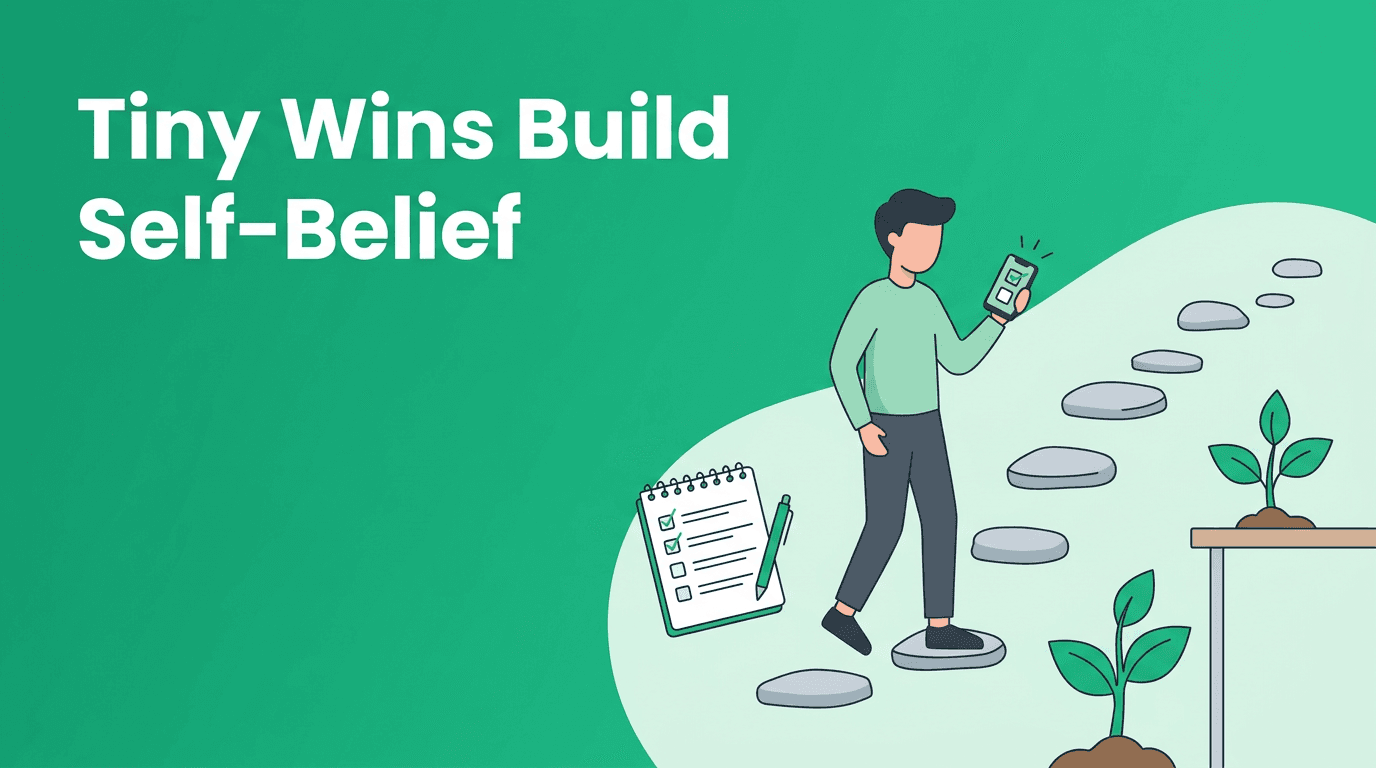
Here is the fresh angle: instead of chasing dramatic reinvention, use tiny wins as a system for building self-belief. A tiny win is a small action that is easy to repeat, visible enough to notice, and meaningful enough to count. Think 5 minutes of reading, 1 cleaned surface, 3 deep breaths before class, or writing one sentence in a journal.
What makes a tiny win powerful?
- It is small enough to do on low-energy days
- It gives immediate evidence that you followed through
- It fits inside your existing daily routine
- It lowers resistance, which makes behavior change more likely
- It supports a growth mindset by focusing on progress, not perfection
This approach matters because your identity is shaped by repeated actions. Every tiny win tells a story about who you are becoming. Over time, those stories strengthen self-belief far more than occasional bursts of motivation.
How to design a daily routine that creates self-belief
1. Start with a proof action
Choose one action that takes less than 5 minutes and clearly signals progress. Good examples include making your bed, reviewing your top 3 tasks, reading one page, or doing a 2-minute stretch. The point is not intensity. The point is proof.
2. Attach it to something automatic
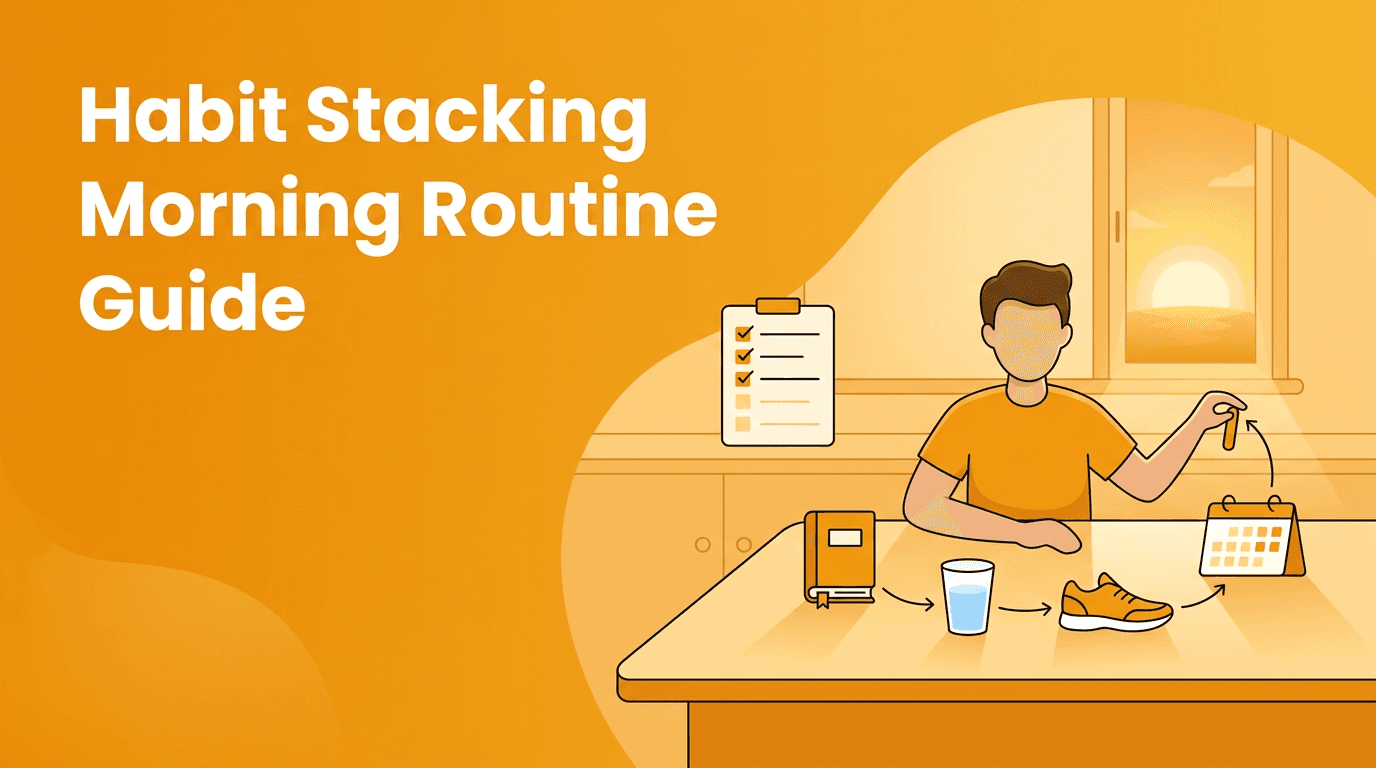
Place your proof action right after something you already do, such as brushing your teeth, opening your laptop, or sitting down in class. This makes your daily routine easier to maintain because you do not need to decide when to begin.
3. Track completion, not mood
Do not ask, "Did I feel motivated?" Ask, "Did I complete the action?" This simple shift strengthens a growth mindset because it teaches you to respect process over emotion.
4. Raise the bar slowly
Once the action feels easy for 1 to 2 weeks, expand it slightly. One page becomes three. Two minutes becomes five. This is how sustainable behavior change works. It grows by consistency, not pressure.
Need help staying consistent?
Haply is an AI life coaching app for iOS and Android that helps you turn small goals into daily action. Use chat-based coaching, habit streaks, reminders, and tools like the Focus Timer and Task Planner to build self-belief one win at a time.
Try Haply FreeA practical 7-day tiny wins reset
If your routine feels messy, try this simple reset. For one week, ignore optimization and focus only on actions that rebuild trust with yourself. This is one of the most underrated forms of personal development because it restores momentum fast.
- Day 1: Pick one tiny win and define it clearly
- Day 2: Do it at the same time as yesterday
- Day 3: Write down how long it took, usually less than expected
- Day 4: Notice the excuse that almost stopped you, then do it anyway
- Day 5: Add a second tiny win only if the first feels easy
- Day 6: Reflect on what this says about your capability
- Day 7: Review your week and celebrate completion, not perfection
Why this works for students and young professionals
Your schedule changes. Your energy changes. Your stress level definitely changes. Tiny wins work because they are flexible enough for real life. They support self-belief even when exams, deadlines, meetings, or life transitions make bigger routines hard to maintain.
- Students can use tiny wins to reduce procrastination before study sessions
- Young professionals can use them to start focused work without overthinking
- Anyone rebuilding confidence can use them to create daily proof of follow-through
Small actions do not create small results. Repeated small actions create a stronger self.
What to do when you miss a day
Missing one day does not erase your progress. In fact, recovery is part of the skill. The healthiest growth mindset response is: return quickly, reduce the size if needed, and continue. If you miss two days, make the next action even easier. Protect the habit of returning.
This is also where tools can help. With Haply, you can check your Today Dashboard, restart with a mini goal, and use supportive AI coaching to adjust your plan without spiraling into self-criticism. That keeps personal development practical, not performative.
Make your next win almost impossible to avoid
If you want more self-belief, stop waiting to feel more certain. Create one tiny action you can complete today, repeat it tomorrow, and let the evidence change your self-image. The best daily routine is not the most impressive one. It is the one that quietly proves you are becoming someone who follows through.
Frequently Asked Questions
How do I build self-belief when I keep failing?
Start with actions so small that success is likely. Repeated follow-through creates evidence that rebuilds trust in yourself over time.
What are examples of tiny wins in a daily routine?
Examples include making your bed, reading one page, planning your top three tasks, or taking a two-minute walk before work or study.
Can small habits really create behavior change?
Yes. Small habits reduce resistance, increase consistency, and make it easier to grow into bigger routines that last.
How does a growth mindset improve personal development?
A growth mindset helps you treat setbacks as feedback, not proof that you cannot change. That makes it easier to stay consistent and improve.