Habit Stacking for a Morning Routine That Fuels Personal Transformation
A simple habit stacking approach can turn your morning routine into a foundation for personal transformation, stronger self-discipline, and steady goal achievement.

By Haply Team
Haply Editorial Team
If your mornings feel rushed, inconsistent, or full of good intentions that never quite stick, habit stacking can help. This simple method turns a scattered morning routine into a repeatable rhythm that supports personal transformation, stronger self-discipline, and real goal achievement without relying on motivation alone.
Why habit stacking works better than starting over
Many people try to change their lives by designing a perfect morning from scratch. The problem is that big plans often create friction. Habit stacking works because it attaches a new action to something you already do, like making coffee, brushing your teeth, or opening your planner. Instead of forcing a total reset, you build growth one link at a time.
- You use an existing habit as the trigger
- You add one small, specific action right after it
- You repeat the same order until it becomes automatic
- You expand only after the first stack feels easy
"You do not rise to the level of your goals. You fall to the level of your systems."
A smarter morning routine for self-discipline
A strong morning routine is not about waking up at 5 AM or copying someone else's life. It is about reducing decision fatigue and making your best actions easier to start. When your mornings begin with a clear sequence, self-discipline feels less like inner struggle and more like a guided path.
Start with what already happens every day
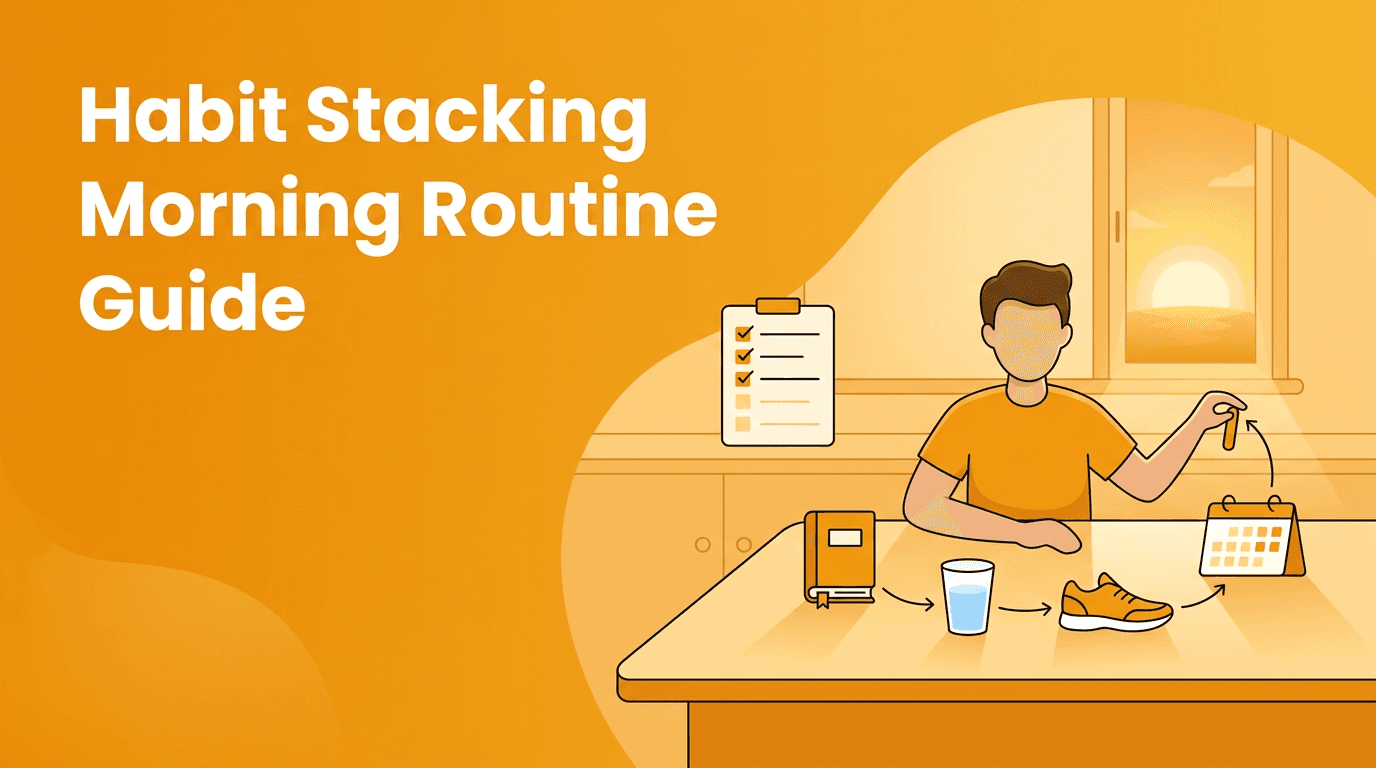
Pick one behavior that already happens almost automatically. That is your anchor. For example: after I pour water, I write one line in my journal. After I brush my teeth, I stretch for two minutes. After I sit at my desk, I list my top three priorities. These tiny links are where habit stacking becomes practical.
- After I make coffee, I review my top goal for the day
- After I drink water, I take three deep breaths
- After I brush my teeth, I do ten squats or a short stretch
- After I open my laptop, I work on my most important task for five minutes
How small stacks lead to personal transformation
Real personal transformation rarely comes from dramatic overnight change. It usually comes from repeated proof that you can trust yourself. Each time you complete a small stack, you reinforce the identity of someone who follows through. That identity shift matters more than intensity, because it supports long-term growth.
Build evidence, not pressure
If your routine is too ambitious, missing one step can make you feel like you failed. A better approach is to create small wins that are hard to skip. Over time, those wins improve confidence, consistency, and momentum. That is what moves you toward goal achievement in a sustainable way.
- Make each new habit take under two minutes at first
- Keep tools visible, like your journal, shoes, or water bottle
- Use the same trigger at the same time each day
- Track consistency for seven days before adding more
Want help turning habits into lasting growth?
Haply is an AI life coaching app for iOS and Android that helps you build routines, track streaks, and stay focused with personalized coaching, reminders, and tools like the Focus Timer and Task Planner.
Try Haply FreeA 15-minute habit stacking morning routine example
Here is a simple example you can adapt. Notice that every step is linked to the one before it. That is what makes habit stacking so effective for busy people.
- After I get out of bed, I drink a glass of water
- After I drink water, I take three slow breaths
- After I breathe, I write one sentence about today's focus
- After I journal, I move my body for five minutes
- After I move, I start my highest-value task for five minutes
This kind of sequence supports energy, clarity, and momentum. It also keeps your morning routine connected to the bigger picture: goal achievement. Instead of just being productive early, you are training yourself to act on what matters most.
Common mistakes that break a morning routine
- Trying to build five new habits at once
- Choosing actions that are too vague, like "be productive"
- Depending on motivation instead of clear triggers
- Skipping planning the night before
- Making the routine so long that real life cannot support it
If you want your routine to last, keep it realistic. A short routine you repeat is more powerful than an ideal routine you abandon. Consistency creates growth, not perfection.
How to make habit stacking stick on hard days
The best systems work even when your mood is low, your schedule changes, or life feels messy. Create a "minimum version" of your stack for difficult mornings. That might mean one breath, one line of journaling, or one minute of planning. Protect the pattern, even if you shrink the action.
This is also where Haply can help. Its chat-based AI coaches, daily dashboard, habit tracker, and reminders can support your routine across productivity, wellness, learning, and more. When you want guidance without overthinking, structure matters.
Your next step toward goal achievement
Choose one existing habit tomorrow morning and attach one small action to it. Keep it simple enough to succeed. Then repeat it for a week before adding anything else. That is how habit stacking becomes a practical tool for personal transformation, deeper self-discipline, and long-term growth.
Frequently Asked Questions
What is habit stacking in simple terms?
Habit stacking means attaching a new habit to one you already do consistently. It helps the new behavior feel more automatic and easier to remember.
How do I use habit stacking for a morning routine?
Pick one existing morning action, like making coffee or brushing your teeth, and add one small habit right after it. Repeat the same order daily until it feels natural.
Can habit stacking improve self-discipline?
Yes. Habit stacking reduces the need to rely on motivation by creating clear cues and repeatable actions, which makes self-discipline easier to practice.
How long does it take for habit stacking to work?
Many people notice progress within a week or two, especially when the habit is very small. Long-term automatic behavior usually takes longer and depends on consistency.