Identity-Based Habits: The Personal Development Shift That Makes Behavior Change Stick
Identity-based habits can turn personal development from a stop-start cycle into lasting behavior change. Learn how to build a daily routine, grow self-belief, and make progress that feels natural.

By Haply Team
Haply Editorial Team
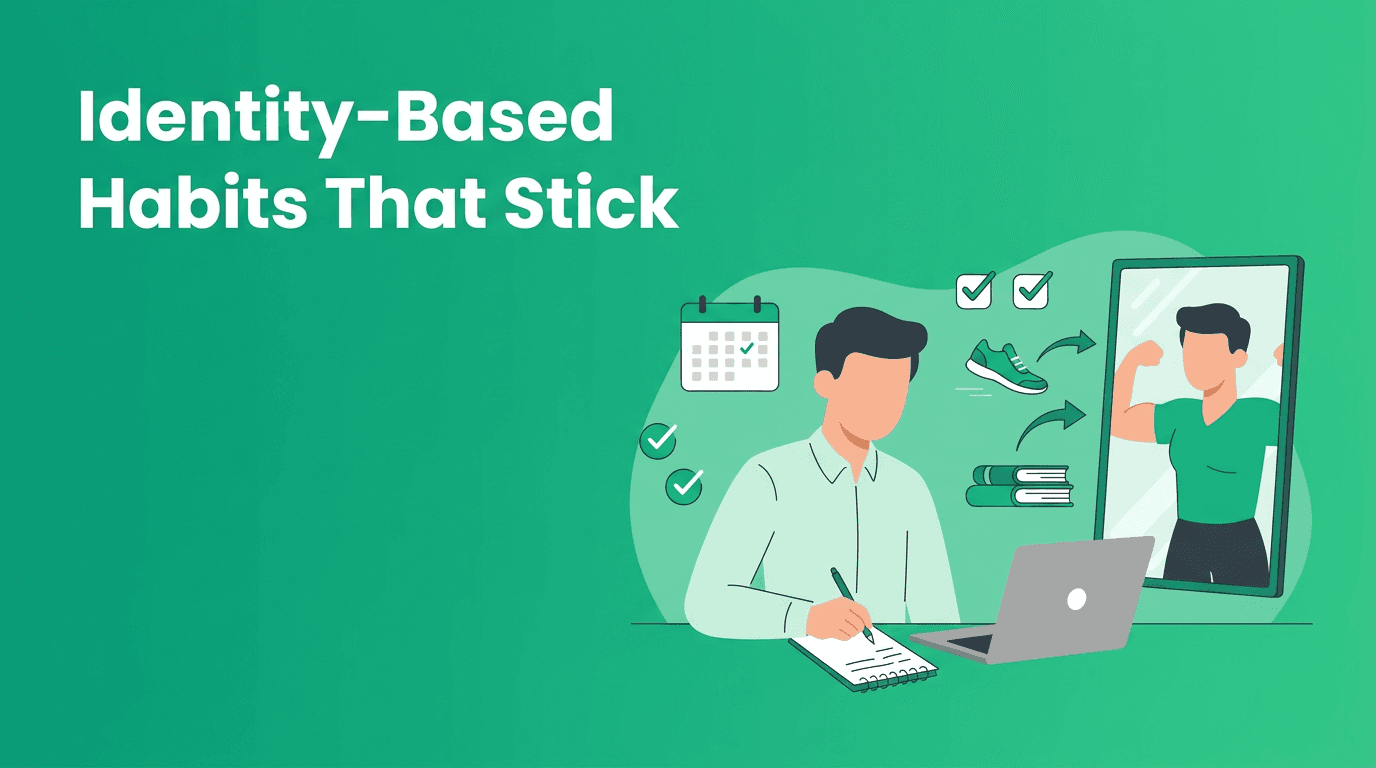
Most personal development advice tells you what to do. Fewer people teach you who to become. That is why identity based habits matter so much. When your daily routine reflects the kind of person you believe you are becoming, behavior change feels less like a battle and more like proof. This shift can strengthen self-belief and help you build a real growth mindset instead of chasing motivation for a week and quitting.
Why identity based habits work better than willpower
Willpower is useful, but it is unreliable. Stress, exams, deadlines, and low energy can knock it out fast. Identity based habits work differently. Instead of saying, "I want to read more," you say, "I am becoming someone who learns every day." Instead of saying, "I need to work out," you say, "I am a person who takes care of my body." That small mental shift makes your actions feel consistent with who you are, which is a powerful driver of behavior change.
Every action you take is a vote for the type of person you want to become.
The hidden reason routines keep collapsing
Many routines fail because they are built on outcomes alone. Outcomes are exciting, but they are far away. Identity is immediate. If your only goal is to "get fit" or "be more productive," you may quit when results are slow. But if your goal is to become a disciplined, healthy, focused person, each small action counts today. This is where personal development gets practical.
- Outcome goal: Run a 10K
- Identity goal: Become someone who does not skip movement for long
- Outcome goal: Get better grades
- Identity goal: Become a consistent learner with a smart study routine
- Outcome goal: Feel more confident
- Identity goal: Become someone who keeps promises to themselves
How to build identity based habits into your daily routine
You do not need a dramatic life reset. Start with one identity statement and one repeatable action. Keep it small enough that you can do it even on busy days. The best daily routine is not the most impressive one. It is the one you can repeat when life gets messy.
Step 1: Choose the identity before the habit
Ask yourself, "Who do I want to become in this season of life?" Pick one clear answer. Maybe it is a focused student, a calm communicator, a reliable professional, or a healthy adult. Then choose a habit that proves that identity in under five minutes.
- If you want to become a reader, read 2 pages after breakfast
- If you want to become an organized person, plan 3 priorities before opening social media
- If you want to become someone with self-belief, write down one promise and keep it today
- If you want to become more emotionally steady, take 3 slow breaths before difficult conversations
Step 2: Use evidence to build self-belief
Self-belief grows from evidence, not empty hype. Each time you complete a tiny habit, your brain gets proof: "I am the kind of person who follows through." That is why small wins matter so much in personal development. They are not trivial. They are identity evidence.
Want support that adapts to your goals?
Haply is an AI life coaching app for iOS and Android that helps you turn identity goals into daily action. Use personalized coaching, habit streaks, reminders, and mini-tools like the Focus Timer and Task Planner to make progress easier.
Try Haply FreeA simple formula for behavior change that lasts
Try this formula: Identity -> Action -> Evidence -> Belief -> Repetition. You decide who you want to become, take one action that matches it, collect evidence, strengthen belief, and repeat. Over time, your old story starts losing power. This is one of the most practical ways to approach behavior change without depending on perfect motivation.
What a growth mindset looks like in real life
A real growth mindset is not pretending everything is easy. It is believing you can improve through effort, feedback, and repetition. With identity based habits, setbacks become information instead of proof that you are failing. Missing one day does not mean you are not disciplined. It means you return the next day and keep casting votes for your future self.
- Say "I am learning consistency" instead of "I am bad at routines"
- Track returns, not just streaks
- Make habits easier to start than to avoid
- Review your week and ask, "What did my actions say about my identity?"
Common mistakes that weaken identity based habits
Even strong systems can fail if your habits are mismatched. Watch for these common problems if your daily routine keeps breaking down.
- Choosing an identity that sounds impressive but does not feel meaningful
- Starting with habits that are too big to repeat consistently
- Using setbacks as identity proof, like "I missed a day, so I am lazy"
- Copying someone else's routine instead of designing one for your energy and schedule
- Waiting to feel confident before acting, instead of acting to build self-belief
Make your routine easier with the right support
If you want help staying consistent, tools matter. Haply can support your personal development with chat-based coaching, a personalized Today Dashboard, and habit tracking that keeps your goals visible. You can also use mini-apps like Meditation, Sleep Stories, Budget Tracker, or the Idea Board depending on the identity you are trying to build, whether that is calmer, more focused, more creative, or more organized.
The mindset shift to remember
You do not rise because you set a perfect goal once. You grow because you repeatedly act like the person you want to become. Identity based habits make personal development feel more grounded, more human, and more sustainable. Start small, collect evidence, protect your daily routine, and let your actions teach you a stronger story about who you are.
Frequently Asked Questions
What are identity based habits?
Identity based habits are small repeated actions connected to the type of person you want to become. They focus on who you are becoming, not just what result you want.
How do identity based habits help behavior change?
They make actions feel consistent with your self-image, which increases follow-through. Small wins also create evidence that strengthens self-belief over time.
How can I start identity based habits in a daily routine?
Choose one identity, then pick one tiny action you can repeat every day. Keep it simple enough to do even on stressful or busy days.
Can identity based habits improve self-belief?
Yes. Each completed habit becomes proof that you can trust yourself, and that repeated proof is one of the strongest ways to build self-belief.