Emotional Agility for Self-Improvement: A Practical Skill for Real Personal Growth
Emotional agility is a powerful self-improvement skill that strengthens personal growth, resilience, habits, and emotional intelligence. Learn how to use it in daily life.

By Haply Team
Haply Editorial Team
Emotional agility is one of the most useful skills in self-improvement because it helps you respond to thoughts and feelings without letting them control your choices. If you want steadier personal growth, stronger resilience, better habits, and deeper emotional intelligence, this is a practical place to start.
Why emotional agility matters in daily life
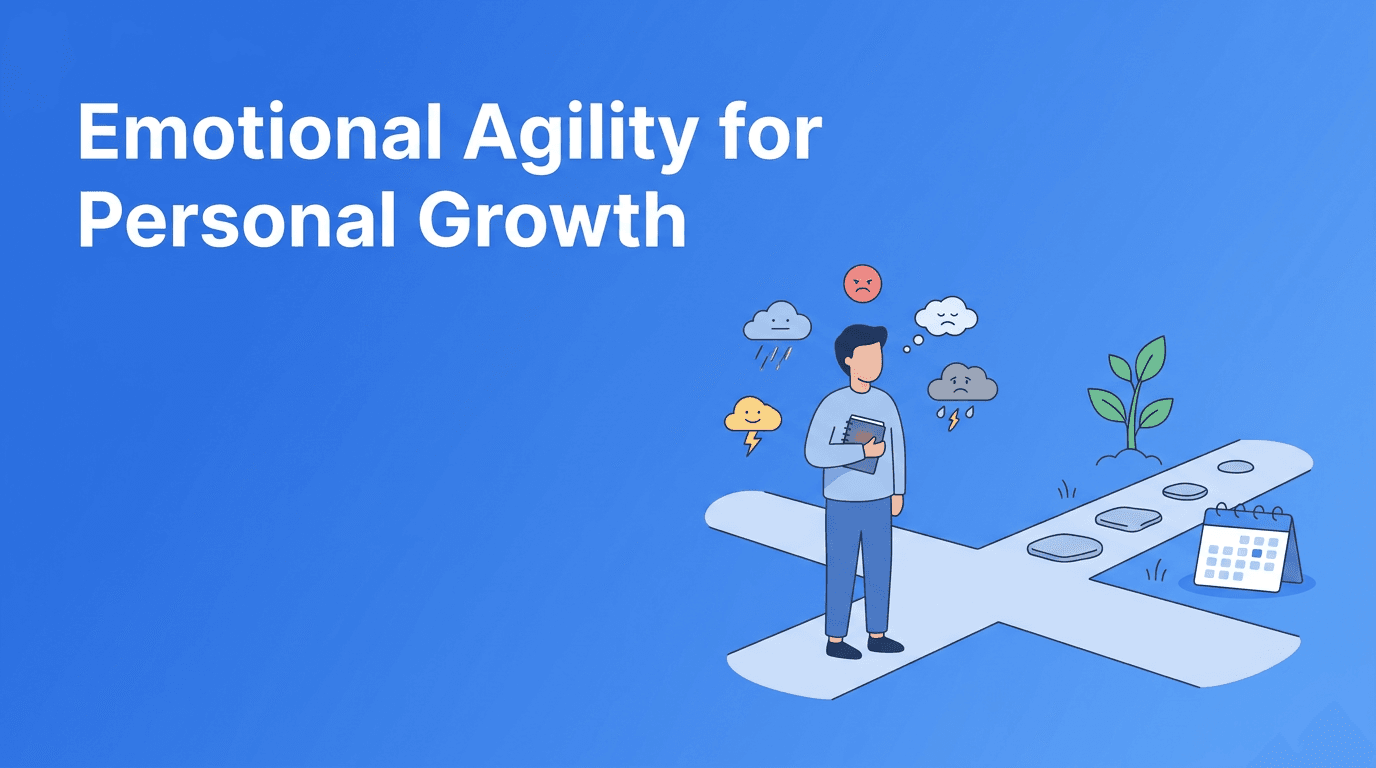
Many people think growth means becoming more disciplined, more positive, or more confident all the time. In reality, progress often depends on your ability to stay flexible when discomfort shows up. Emotional agility means noticing what you feel, naming it honestly, and choosing an action that matches your values instead of your impulse.
- You stop treating every uncomfortable feeling like a problem to eliminate.
- You build resilience because setbacks become information, not identity.
- You improve emotional intelligence by recognizing patterns in your reactions.
- You protect good habits by not abandoning them during stressful moments.
"You do not have to control every emotion to make a wise next move. You only need enough awareness to choose it."
The hidden reason self-improvement often stalls
A lot of self-improvement advice focuses on motivation, but motivation is unstable. What usually breaks momentum is emotional friction: boredom, shame, frustration, anxiety, or self-doubt. When people do not know how to handle those inner states, they procrastinate, quit, or chase quick relief. Emotional agility gives you a better option.
Common signs you need more emotional agility
- You avoid important tasks when you feel overwhelmed.
- You break routines after one bad day and call it failure.
- You overthink feedback and take it personally.
- You set goals for personal growth but abandon them when progress feels slow.
- You react first and reflect later in difficult conversations.
These patterns are normal, but they are trainable. The goal is not to become emotionless. The goal is to become skillful with emotion.
A simple 4-step emotional agility practice
1. Notice the emotion without rushing to fix it
Pause and ask, "What am I feeling right now?" Be specific. "Bad" is vague. "Disappointed," "restless," or "embarrassed" is useful. This strengthens emotional intelligence and reduces automatic reactions.
2. Separate the feeling from your identity
Say, "I am noticing anxiety," instead of "I am anxious and therefore incapable." This tiny language shift creates space. It reminds you that emotions are experiences, not definitions.
3. Return to your values
Ask, "What would the kind of person I want to become do next?" This connects emotional agility to meaningful personal growth. Values-based action is often small: sending the email, taking the walk, apologizing, or opening the book for five minutes.
4. Choose one tiny action
Do not wait to feel ready. Pick one behavior that supports your long-term direction. This is where better habits are built. The action should be easy enough to start even when your emotions are noisy.
Want support turning insight into action?
Haply is an AI life coaching app for iOS and Android that helps you build self-improvement habits with personalized coaching, daily reminders, streaks, and tools like Focus Timer, Task Planner, and Meditation. Its goal-based onboarding and Today Dashboard make personal growth easier to follow through on.
Try Haply FreeHow to use emotional agility with habits and resilience
The best habits are not the ones you can do only on ideal days. They are the ones you can return to when life becomes messy. That is why resilience and self-improvement are deeply connected. A resilient routine has built-in flexibility.
- Create a "minimum version" of key habits, like 5 minutes of reading or 1 journal sentence.
- Use setbacks as reviews, not verdicts. Ask what made the habit harder today.
- Track emotional triggers that repeatedly interrupt your progress.
- Pair difficult tasks with grounding actions like breathing, stretching, or a short timer.
- Celebrate recovery speed, not perfection. Returning quickly is a major growth skill.
A real-life example
Imagine you planned to exercise after work, but the day was draining and you feel defeated. Without emotional agility, you may skip it, feel guilty, and lose momentum. With it, you notice the emotion, accept that energy is low, and choose a 10-minute walk instead. You still reinforce the identity of someone who shows up for their growth.
Build emotional intelligence without overanalyzing everything
Some people turn self-reflection into endless self-monitoring. That can make personal growth feel heavy. Healthy emotional intelligence is not obsessing over every feeling. It is learning which emotions need compassion, which need boundaries, and which simply need time to pass.
- Journal briefly: "What happened, what did I feel, what did I choose?"
- Name recurring emotional patterns at the end of each week.
- Practice honest conversations where you describe feelings without blame.
- Use coaching tools to spot patterns faster and stay accountable.
The long-term payoff of emotional agility
Over time, emotional agility helps you trust yourself more. You become less ruled by temporary moods and more guided by clear values. That is the heart of sustainable self-improvement: not perfect control, but consistent return. When you can face discomfort without folding under it, personal growth becomes more realistic, compassionate, and lasting.
Frequently Asked Questions
What is emotional agility in simple terms?
Emotional agility is the ability to notice your thoughts and feelings, accept them without getting stuck, and choose actions that align with your values.
How does emotional agility help with self-improvement?
It helps you stay consistent when emotions like fear, boredom, or frustration would normally derail your progress. That makes habits easier to maintain over time.
Can emotional agility improve emotional intelligence?
Yes. Emotional agility strengthens emotional intelligence by helping you identify emotions clearly and respond to them more thoughtfully.
How can I practice emotional agility every day?
Start by naming your emotions, separating them from your identity, reconnecting with your values, and taking one small constructive action.
What app can help with personal growth and habits?
Haply is an AI life coaching app that supports personal growth with personalized coaching, habit tracking, reminders, and practical tools for daily follow-through.