Creative Constraints: How Limits Spark Better Innovation
Creative constraints can unlock stronger creativity, sharper creative thinking, and practical innovation. Learn how to use limits to improve brainstorming and turn imagination into action.

By Haply Team
Haply Editorial Team
When you want more originality, more options can seem like the answer. But creative constraints often do the opposite in the best way. They sharpen creativity, focus creative thinking, improve brainstorming, and help your imagination produce ideas you can actually use.
Why creative constraints work
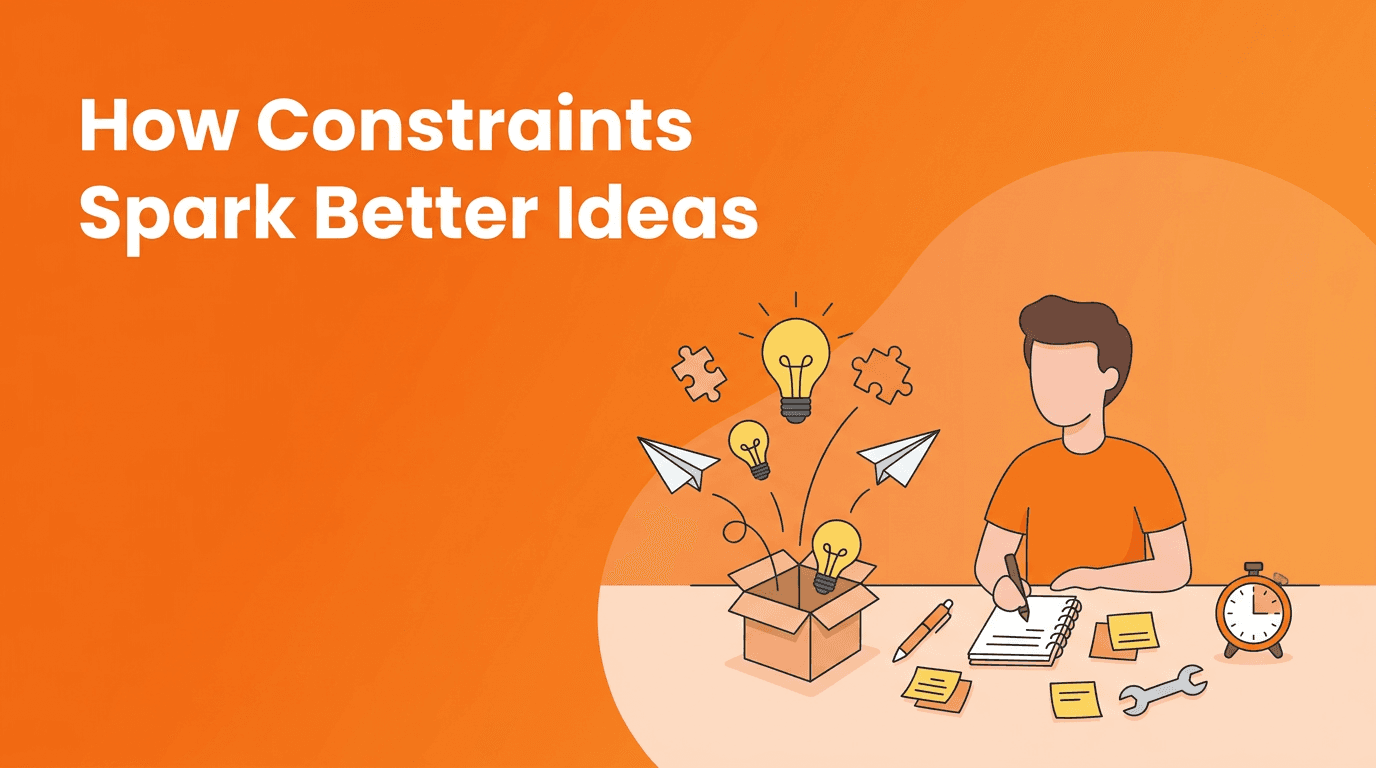
Constraints reduce the pressure of the blank page. Instead of asking, "What could I make?" you ask, "What can I make with this time, these tools, or this audience?" That smaller frame pushes your brain toward innovation because it must combine familiar pieces in unfamiliar ways.
- A time limit forces faster decisions and less overthinking.
- A format limit makes ideas clearer and easier to test.
- A resource limit encourages reuse, remixing, and smarter problem-solving.
- An audience limit helps you create something more relevant and memorable.
"Creativity loves constraint. When everything is possible, nothing begins."
5 types of constraints that strengthen creativity
1. Time constraints
Set a 10-minute idea sprint, a 30-minute sketch session, or a one-hour prototype window. Short bursts are powerful for creative thinking because they reduce perfectionism and keep momentum high.
2. Tool constraints
Write with only pen and paper. Design with one font. Shoot photos with one lens. Limiting tools can wake up imagination because you stop chasing more inputs and start exploring depth.
3. Format constraints
Try telling a story in six sentences, pitching an idea in one slide, or explaining a concept to a 12-year-old. Format rules make vague ideas concrete, which is where innovation starts becoming useful.
4. Theme constraints
Pick one emotion, one customer problem, or one visual motif. A defined theme improves brainstorming by giving every idea a common direction.
5. Resource constraints
Ask, "What can I make without buying anything new?" This is one of the most practical creativity exercises because it trains you to notice hidden value in what you already have.
A simple creative constraints exercise
Use this 15-minute method when you feel stuck or overwhelmed by too many options.
- Choose one goal, such as writing a headline, planning a workshop, or sketching a product idea.
- Add three limits. Example: 15 minutes, one page, and one clear audience.
- Generate 10 rough ideas without judging them.
- Circle the two ideas that feel both simple and surprising.
- Spend the final 5 minutes turning one idea into a tiny next step.
This method works because creative constraints turn open-ended pressure into a playable challenge. Your brain stops asking for perfect inspiration and starts building with what is available.
Want help building a creativity practice?
Haply is an AI life coaching app for iOS and Android with specialized Creativity coaches, an Idea Board mini-app, habit tracking, and personalized guidance to help you capture ideas and stay consistent.
Try Haply FreeHow to use constraints without feeling boxed in
The goal is not to make your work smaller. The goal is to make your next move clearer. Good constraints are specific enough to guide you, but flexible enough to leave room for play.
- Start with one or two limits, not ten.
- Use constraints for the first draft, then expand later.
- Change the constraint if it creates panic instead of focus.
- Review what kind of limits consistently produce your best ideas.
If you want extra support, tools like Haply can help you turn this into a repeatable habit. You can use its chat-based coaching to reflect on your process, the Idea Board to save sparks of imagination, and daily reminders to keep your brainstorming practice alive.
The real lesson: innovation grows inside a frame
Many people wait for freedom before they create. But in real life, most meaningful work happens inside limits, deadlines, budgets, and real human needs. When you use creative constraints intentionally, you build stronger creativity, clearer creative thinking, and more grounded innovation.
Frequently Asked Questions
What are creative constraints?
Creative constraints are intentional limits, such as time, tools, format, or resources, that help you focus and generate better ideas.
How do constraints improve creativity?
Constraints reduce overwhelm, create direction, and force your brain to explore fresh combinations instead of relying on obvious ideas.
What is an example of a creative constraint?
A simple example is giving yourself 10 minutes to brainstorm 10 ideas using only one page and one specific audience in mind.
Can creative constraints help with brainstorming?
Yes. They make brainstorming more focused and productive by giving your ideas a clear boundary and purpose.