Creative Hobbies for Adults: Tiny Experiments That Wake Up Your Imagination
Creative hobbies can do more than fill spare time. They help adults reconnect with play, explore art, music, and photography, and build a lasting creative outlet through adult learning.

By Haply Team
Haply Editorial Team
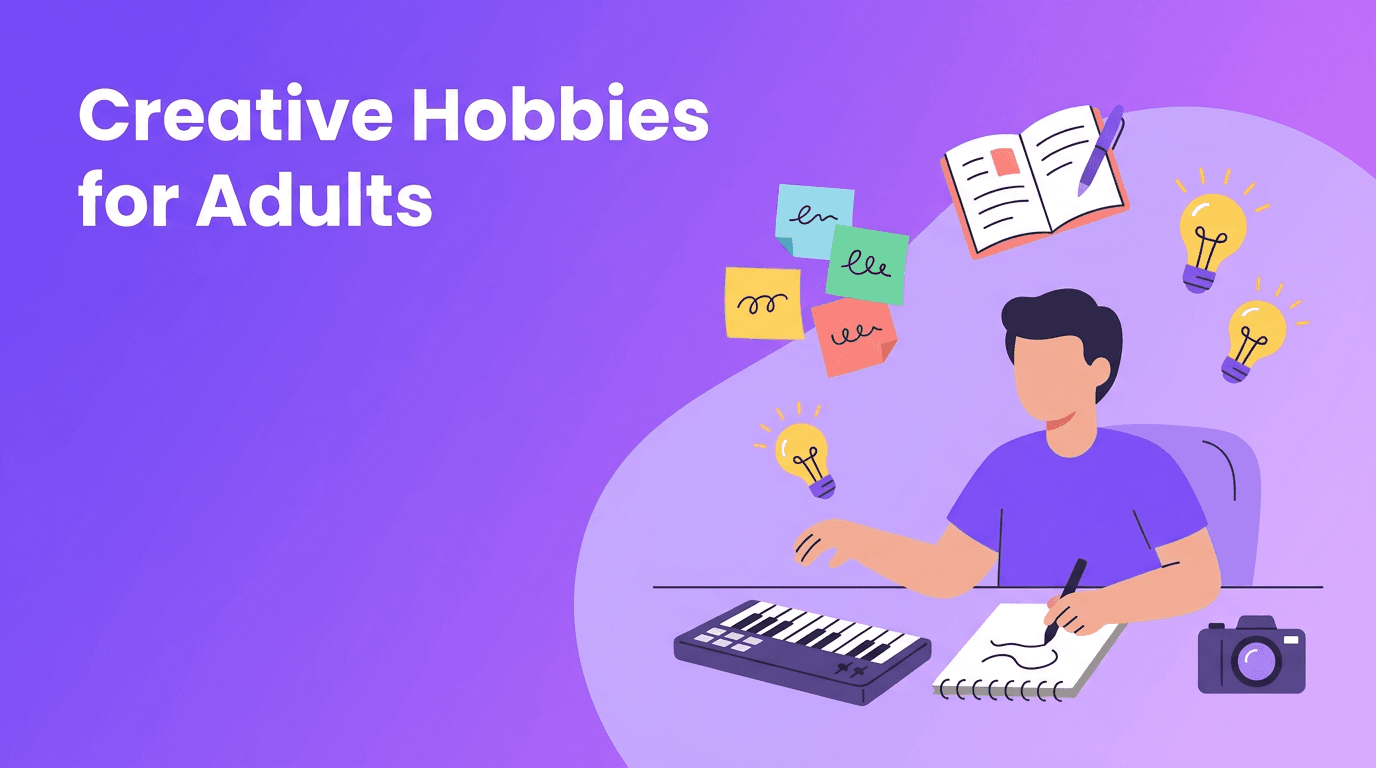
Creative hobbies are not just cute little side quests for weekends. They are one of the easiest ways to bring more play, curiosity, and momentum back into adult life. If you have been feeling stuck in routines, tiny experiments with art, music, photography, or any other creative outlet can help you learn again, make things again, and feel more like yourself again.
Why creative hobbies matter more in adulthood
Kids are encouraged to make messes, try random ideas, and learn by doing. Adults, on the other hand, often get pushed toward efficiency, productivity, and being good at things immediately. That is exactly why creative hobbies feel so refreshing. They give you permission to be a beginner, which is where adult learning gets interesting.
- Creative hobbies lower the pressure to perform and raise the chance that you will explore.
- They create a safe space for creative expression without turning every interest into a side hustle.
- They support well-being by giving your brain novelty, focus, and emotional release.
- They help you build identity beyond work, chores, and endless notifications.
"Creativity is intelligence having fun." - Albert Einstein
The tiny experiment method for finding your creative outlet
A lot of adults give up too early because they choose one hobby and treat it like a lifelong commitment. Try a lighter approach. Pick one small experiment per week and aim for 20 minutes, not mastery. This makes creative hobbies feel playful instead of heavy.
Week 1: Try art without calling yourself an artist
Grab cheap materials and make something delightfully low stakes. Doodle with markers, make a collage from old magazines, or sketch everyday objects for ten minutes. The goal is not polished art. The goal is noticing what feels fun.
Week 2: Use music as a mood lab
If music pulls at your brain, experiment with rhythm before technique. Tap beats on your desk, try a beginner keyboard app, build themed playlists, or hum melodies into your phone. A creative hobby counts even if nobody else ever hears it.
Week 3: Turn photography into a scavenger hunt
You do not need fancy gear for photography. Use your phone and give yourself prompts like 'three shadows,' 'one reflection,' or 'something that looks like a face.' This trains attention, which is a sneaky superpower for both creativity and well-being.
How to choose the right creative hobby for your energy
Not every hobby fits every mood. Choose based on the kind of energy you want to release or create.
- If you feel restless, try movement-based creativity like dancing, drumming, or improvising with music.
- If you feel mentally crowded, try repetitive art forms like coloring, knitting, or simple sketching.
- If you feel emotionally flat, try photography walks, journaling, or songwriting prompts.
- If you want adult learning with structure, pick a hobby with tiny skill ladders, like digital drawing, piano basics, or photo composition.
Make creativity easier than scrolling
The best hobby is the one you can start before your brain begins negotiating. Keep your tools visible. Leave a notebook on the table, a camera app on your home screen, or a small keyboard where you can reach it in seconds. Reduce friction and your creative outlet becomes the default, not the exception.
Need a playful push to stay creative?
Haply helps you turn creative intentions into action with AI coaching, daily reminders, and tools like the Idea Board for capturing sparks before they disappear. It is a fun way to support adult learning and keep your creative hobbies alive.
Try Haply FreeA 15-minute reset when you feel creatively blocked
- Set a timer for 5 minutes and make something badly on purpose.
- Spend 5 minutes copying a texture, rhythm, lyric pattern, or photo angle you admire.
- Use the final 5 minutes to write one sentence: 'Next time I want to try...'
- Stop while you still have energy. Leaving a little unfinished makes it easier to return.
This reset works because it bypasses perfectionism. Instead of asking, 'Am I talented?' you ask, 'What happens if I play with this for a moment?' That simple shift is often enough to restart creative hobbies that have gone quiet.
Let adult learning be messy, not majestic
One of the biggest myths about creative growth is that progress should look impressive. In real life, adult learning often looks like awkward sketches, clunky chords, blurry photography, and experiments that go nowhere. Good. That means you are in motion. Messy practice is still practice.
Frequently Asked Questions
What are the best creative hobbies for adults?
The best creative hobbies are the ones you will actually do consistently. Popular options include sketching, collage, music practice, creative writing, photography, and DIY crafts.
How do I find a creative outlet as an adult?
Start with tiny experiments instead of big commitments. Try one low-pressure activity each week and notice which one gives you energy, focus, or joy.
Can creative hobbies improve mental health?
Yes, creative hobbies can support well-being by reducing stress, improving focus, and creating a healthy emotional outlet. They can also help you feel more playful and engaged.
Is photography a good creative hobby for beginners?
Yes, photography is great for beginners because you can start with a phone and simple prompts. It builds observation skills and gives quick feedback, which helps motivation.
How can I stay consistent with creative hobbies?
Make your hobby easy to start, keep sessions short, and attach it to an existing routine. Tools like reminders, habit tracking, and idea capture can also help you stay consistent.