Creative Constraints: How Limits Spark Better Creative Thinking
Creative thinking gets stronger when you stop waiting for perfect freedom. Learn how smart limits can boost creativity, innovation, brainstorming, and imagination in everyday work and life.

By Haply Team
Haply Editorial Team
Creative thinking often seems like it should thrive on unlimited freedom. In reality, too many options can slow you down. If you want more creativity, stronger innovation, and better brainstorming, a few well-chosen limits can help your imagination do its best work.
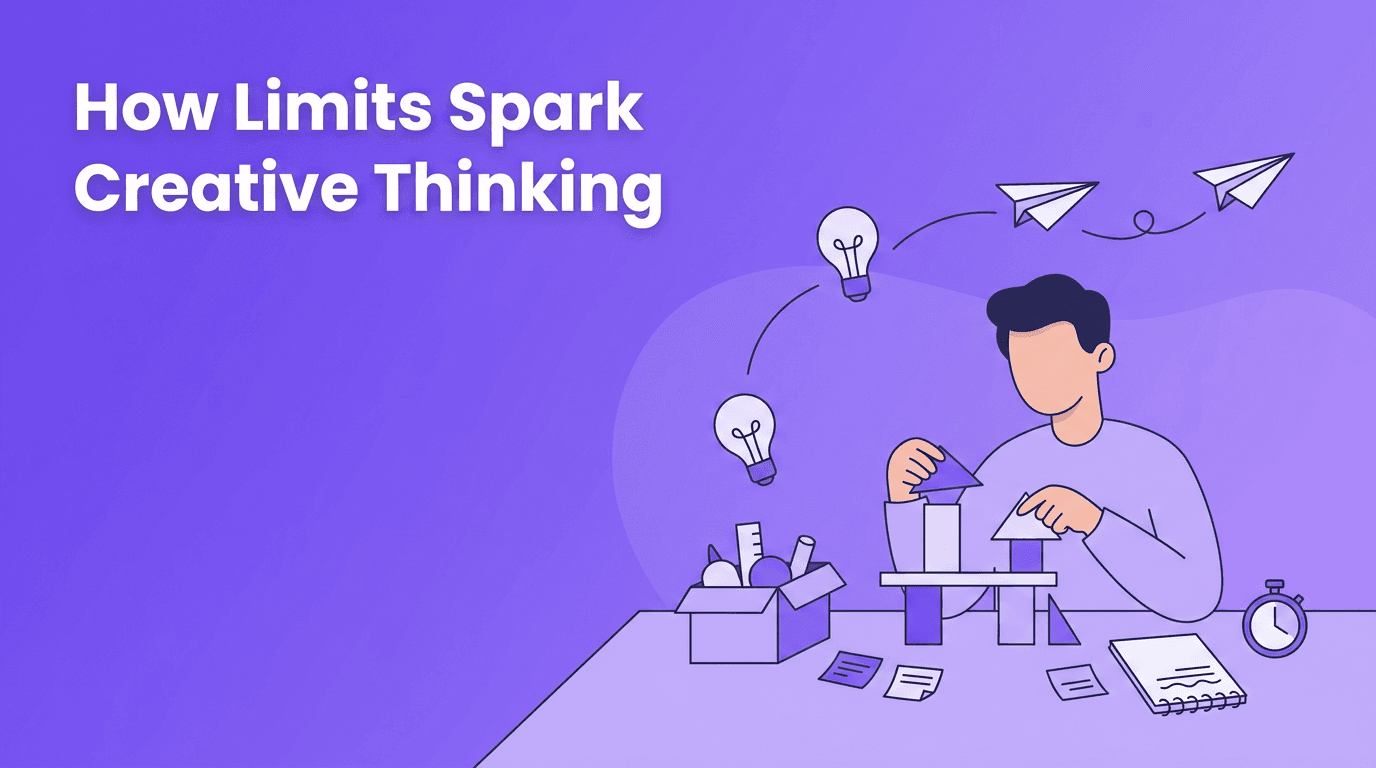
Why constraints help creative thinking
When everything is possible, the brain can stall. A blank page, an open calendar, or endless tools can create pressure instead of momentum. Constraints reduce decision fatigue and give your mind a smaller, clearer playground. That is where creative thinking becomes more focused and more usable.
- A time limit forces action instead of endless planning.
- A smaller budget pushes resourcefulness and originality.
- A specific format gives shape to raw ideas.
- A narrow theme helps your imagination go deeper, not just wider.
"Creativity is not the absence of limits. It is the art of using limits well."
5 practical creative constraints to try
1. Set a short timer
Give yourself 10 or 15 minutes to make a first draft, sketch, outline, or solution. Fast rounds are powerful for brainstorming because they lower the pressure to be brilliant. The goal is movement, not mastery.
2. Use fewer tools
Try writing with only a pen and notebook, taking photos with one lens, or designing with just two fonts. Fewer choices can wake up your imagination because you start exploring possibilities inside the tool, not outside it.
3. Pick one tiny problem
Instead of asking, "How do I reinvent my whole career?" ask, "How can I make tomorrow's meeting more engaging?" Small questions create faster wins and make innovation feel practical instead of distant.
4. Create within a theme
Choose a theme such as "simplicity," "play," or "connection" for a week. Let that theme guide your ideas, writing, or projects. This gives creative thinking a clear direction while still leaving room for surprise.
5. Limit your output
Write 100 words. Sketch with 10 lines. Generate 7 ideas, not 50. A cap on output helps you focus on quality patterns and makes starting easier.
A simple weekly practice for more creativity and innovation
Try this 4-step routine three times a week. It works for work projects, art, writing, content creation, and personal problem-solving.
- Choose one challenge: Name a specific problem or project.
- Add two constraints: Example, 15 minutes and one tool only.
- Generate options: Write or sketch at least 5 possible ideas.
- Reflect quickly: Ask what felt energizing, surprising, or useful.
Build your creative habit with support
Want more consistency with your creative practice? Haply is an AI life coaching app for iOS and Android with Creativity coaches, daily guidance, streaks, and the Idea Board mini-app to capture ideas before they disappear.
Try Haply FreeIf you struggle to stay consistent, tools matter. With chat-based coaching, reminders, and a personalized Today Dashboard, Haply can help you turn random inspiration into a repeatable creative rhythm.
How to use constraints without feeling trapped
The key is to treat limits as temporary experiments, not permanent rules. You are not shrinking your potential. You are giving your brain a sharper challenge. If one constraint kills energy, change it. If another creates momentum, keep it.
- Use constraints for one session, not forever.
- Keep the stakes low while testing new methods.
- Review what helped your focus and what felt forced.
- Save your best constraints as repeatable rituals.
The surprising link between imagination and structure
Many people think imagination needs chaos. Often, it needs structure first. A little structure creates safety, and safety makes experimentation easier. That is why children can play creatively inside simple rules, and why adults can do the same when they stop waiting for perfect conditions.
Frequently Asked Questions
How can I improve creative thinking every day?
Practice with small daily challenges, clear time limits, and simple prompts. Consistency matters more than intensity.
Do constraints really help creativity?
Yes. Constraints reduce overwhelm, improve focus, and often lead to more original solutions because they force resourcefulness.
What are good creative thinking exercises for adults?
Try timed idea lists, one-tool projects, theme-based journaling, and solving one tiny problem in five different ways.
How does brainstorming fit into creative thinking?
Brainstorming is one tool inside creative thinking. It helps generate options, while creative thinking also includes refining, testing, and applying ideas.