Microlearning Coaching Explained: The Thinking Behind Haply's Design
Microlearning coaching is more than short advice. Learn how Haply uses brief sessions, habit streaks, personalization, and specialized AI coaches to improve coaching effectiveness over time.

By Haply Team
Haply Editorial Team
Microlearning coaching sounds simple on the surface: shorter sessions, smaller steps, less overwhelm. But the real value is deeper than convenience. Haply built its coaching approach around the idea that meaningful change happens when insight is delivered in manageable moments, repeated consistently, and shaped to the person using it. That is why the app combines short coaching conversations, habit tools, streaks, and specialized guidance into one system designed for real life.
Why Haply starts with smaller coaching moments
Many self-improvement tools fail for a predictable reason: they ask people to make big decisions when they are already mentally overloaded. Haply takes a different path. Instead of assuming transformation requires long sessions and heavy reflection every time, it uses short, focused interactions that fit into an ordinary day. This approach reflects core ideas from behavioral psychology and microlearning research, which suggest that people retain and apply information better when it is broken into digestible units.
- Short sessions reduce friction, making it easier to start even on busy days.
- Focused prompts improve clarity because users work on one challenge at a time.
- Frequent repetition strengthens learning, which supports more durable behavior change.
- Small wins build momentum, helping motivation grow from evidence instead of pressure.
Why 10-15 minute sessions work
A 10-15 minute session is long enough to create a meaningful shift, but short enough to repeat consistently. In coaching, that balance matters. People do not just need insight, they need a format they can return to. Coaching effectiveness improves when reflection is paired with action, and action is more likely when the next step feels realistic. A short session can help someone identify a problem, reframe it, choose a next move, and leave with momentum instead of fatigue.
"Lasting growth is usually not the result of one perfect breakthrough. It comes from many small decisions made easier to repeat."
The AI coaching science behind repetition and streaks
The phrase AI coaching science can sound abstract, but in practice it often comes down to a few proven ideas: cues matter, repetition matters, and visible progress matters. Haply's habit tracker and streak system are built around these principles. A streak does more than count days. It creates a simple feedback loop that says, "I am someone who shows up." That identity signal can be surprisingly powerful in sustaining behavior.
Research in habit formation suggests that consistent repetition in stable contexts increases the chance that a behavior becomes easier over time. Haply supports this with daily reminders, a clear Today Dashboard, and progress markers that make repetition visible. Instead of relying on motivation alone, the app helps users create a structure where showing up becomes less mentally expensive.
- Streaks reward consistency, not perfection.
- Daily reminders act as cues, which help habits happen at the right time.
- Visible progress reduces ambiguity, making effort feel more meaningful.
- Identity reinforcement helps users see themselves as capable and improving.
Why streaks work when they are used thoughtfully
Not all streak systems are helpful. When they create guilt, they can backfire. Haply's approach works best because streaks are part of a broader coaching system, not a pressure tactic. The goal is not obsessive tracking. The goal is to make progress noticeable, so the brain has a reason to keep investing effort. In other words, the streak is not the transformation. It is a signal that the transformation is being practiced.
How personalized coaching gets better over time
One of the biggest limits of traditional self-help content is that it stays the same while the user changes. Personalized coaching solves that problem by adapting as goals, struggles, and patterns become clearer. Haply uses goal-based onboarding and ongoing chat-based interaction to tailor support across areas like productivity, wellness, career, learning, finance, creativity, and relationships. This means the advice can become more relevant as the app learns what helps each person move forward.
This is also where AI can outperform static courses or generic motivational content. A user working on focus may need different prompts than someone working on sleep or confidence. Over time, personalization improves coaching effectiveness because recommendations are not one-size-fits-all. They become shaped by patterns: what the user responds to, which habits are sticking, when motivation tends to drop, and what kinds of next steps feel realistic.
Why specialized coaches outperform generic chatbots
Generic chatbots are designed to answer almost anything. That breadth can feel impressive, but it often comes at the cost of coaching depth. Haply uses specialized AI coaches across key life areas so the experience is more structured, intentional, and relevant. A productivity coach should think differently than a wellness coach. A finance conversation should not sound like a creativity session. Specialization helps each coaching flow reflect the logic of that domain.
- Specialized coaches ask better questions because they are oriented around specific goals.
- Domain-focused support feels more relevant, which increases trust and follow-through.
- Structured coaching pathways reduce the randomness common in generic chatbot conversations.
- Better context leads to better next steps, especially when habits and tools are tied to the goal.
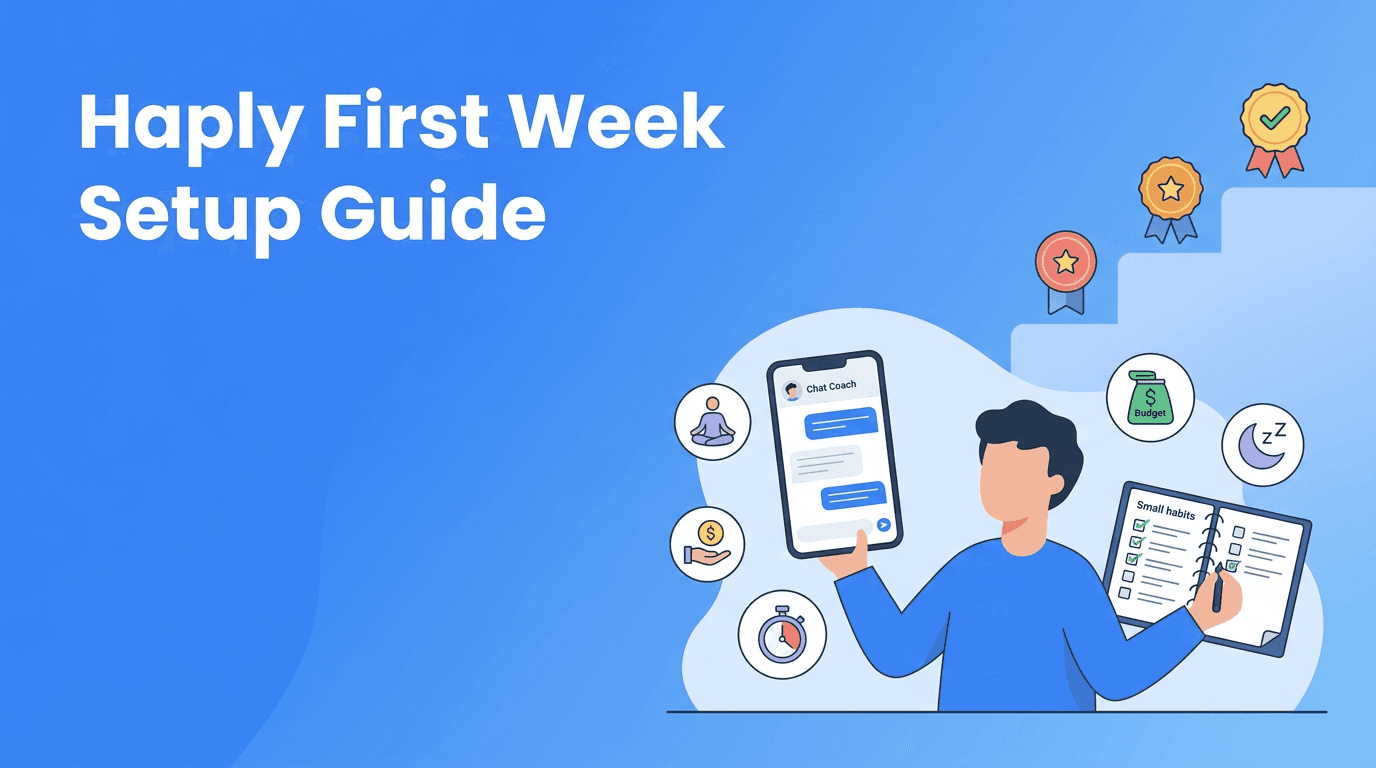
This design choice matters for people who want more than a pleasant conversation. They want a system that helps them make decisions, practice skills, and stay engaged. That is why Haply combines specialized coaching with practical mini-apps like a Focus Timer, Task Planner, Meditation and Breathe tools, Sleep Stories, Budget Tracker, and Idea Board. Each feature exists to support behavior, not just discussion.
The role of levels and achievements in behavior change
Gamification is often misunderstood as making serious growth feel like a game. Used poorly, it becomes shallow. Used well, it becomes a form of behavioral reinforcement. Haply's levels and achievements help users mark progress that might otherwise feel invisible. Since personal growth can be slow and non-linear, these signals provide encouragement at moments when internal change has started but external results are not obvious yet.
This matters because motivation is easier to sustain when effort gets acknowledged. Levels and achievements create moments of recognition that say, your actions count. They also support autonomy by letting users see progress across multiple dimensions, from consistency to skill-building. In this way, gamification supports the deeper purpose of microlearning coaching: making growth easier to repeat.
Curious how this feels in practice?
Try Haply on iOS or Android to experience short, personalized coaching sessions, streak tracking, and specialized support built for real-life change.
Try Haply FreeA methodology designed for real life, not ideal conditions
The philosophy behind Haply is not that people need more information. It is that they need better-timed support, lower-friction action steps, and a coaching system that adapts as they grow. That is why the app's Today Dashboard, reminders, mini-apps, level progression, and chat-based sessions are connected. Each part serves the same goal: to turn self-improvement into something repeatable under normal human conditions, including busy schedules, changing moods, and imperfect motivation.
For thoughtful users, that design matters. It shows that Haply is not trying to overwhelm people with endless advice. It is trying to increase the odds that insight becomes action, and action becomes identity. That is the real promise of personalized coaching supported by behavioral science: not dramatic intensity, but sustainable progress.
Frequently Asked Questions
What is microlearning coaching?
Microlearning coaching is a coaching approach built around short, focused sessions that are easier to complete regularly. It helps people turn insight into action without the mental load of long sessions.
Why are 10-15 minute coaching sessions effective?
They are long enough to create clarity and identify a next step, but short enough to fit into daily life. That balance makes consistency more likely, which improves results over time.
How do habit streaks improve coaching effectiveness?
Habit streaks make consistency visible, reinforce identity, and give users immediate feedback. When used thoughtfully, they support motivation without requiring perfection.
Why is personalized coaching better than generic advice?
Personalized coaching adapts to a user's goals, patterns, and challenges, so the guidance becomes more relevant over time. This makes the support feel more practical and actionable.
How are specialized AI coaches different from generic chatbots?
Specialized AI coaches are designed around specific life areas like productivity, wellness, or finance. That focus helps them ask more relevant questions and guide users toward better next steps.