The Science of Personalized Coaching: Why Haply's Method Works
Personalized coaching works best when it is short, specific, and adaptive. Learn how Haply applies personalized coaching science through microlearning, habit design, and specialized AI support.

By Haply Team
Haply Editorial Team
Personalized coaching is more than a convenient feature. It is the core idea behind why Haply feels different from a generic self-help app or an open-ended chatbot. Instead of giving broad advice, Haply uses short sessions, behavior-change principles, and adaptive support to help people make steady progress in real life.
If you want to understand the thinking behind the product before you commit, it helps to look at the research logic underneath it. Haply's approach combines AI coaching science, microlearning coaching, habit psychology, and guided personalization so each interaction becomes more useful over time. The result is a coaching experience built for follow-through, not just inspiration.
Why personalized coaching starts with smaller sessions
One of Haply's most practical design choices is the use of short, focused coaching sessions. Many people assume longer sessions must be better, but behavior research often suggests the opposite for everyday growth. When support feels manageable, people are more likely to return, reflect, and apply what they learned.
Why 10-15 minute sessions work
- Lower friction: A 10-15 minute session feels possible even on a busy day, which increases consistency.
- Better attention: Shorter learning windows align with how people naturally process and retain information.
- Faster action: Brief coaching nudges users toward one next step instead of overwhelming them with too many ideas.
- Easier repetition: Coaching effectiveness improves when reflection and action happen repeatedly, not only in rare deep-dive moments.
This is where microlearning coaching becomes useful. Instead of asking users to absorb a full personal development framework at once, Haply breaks growth into smaller units. A short chat, one reflection prompt, a quick planning exercise, or a mini-app session can create enough momentum to change the rest of the day.
"Real change often begins with a step small enough to repeat tomorrow."
The microlearning coaching logic behind Haply
Microlearning is often discussed in education and workplace training, but its logic applies strongly to personal growth too. People rarely struggle because they lack access to advice. They struggle because advice arrives in forms that are too abstract, too long, or too hard to use in the moment.
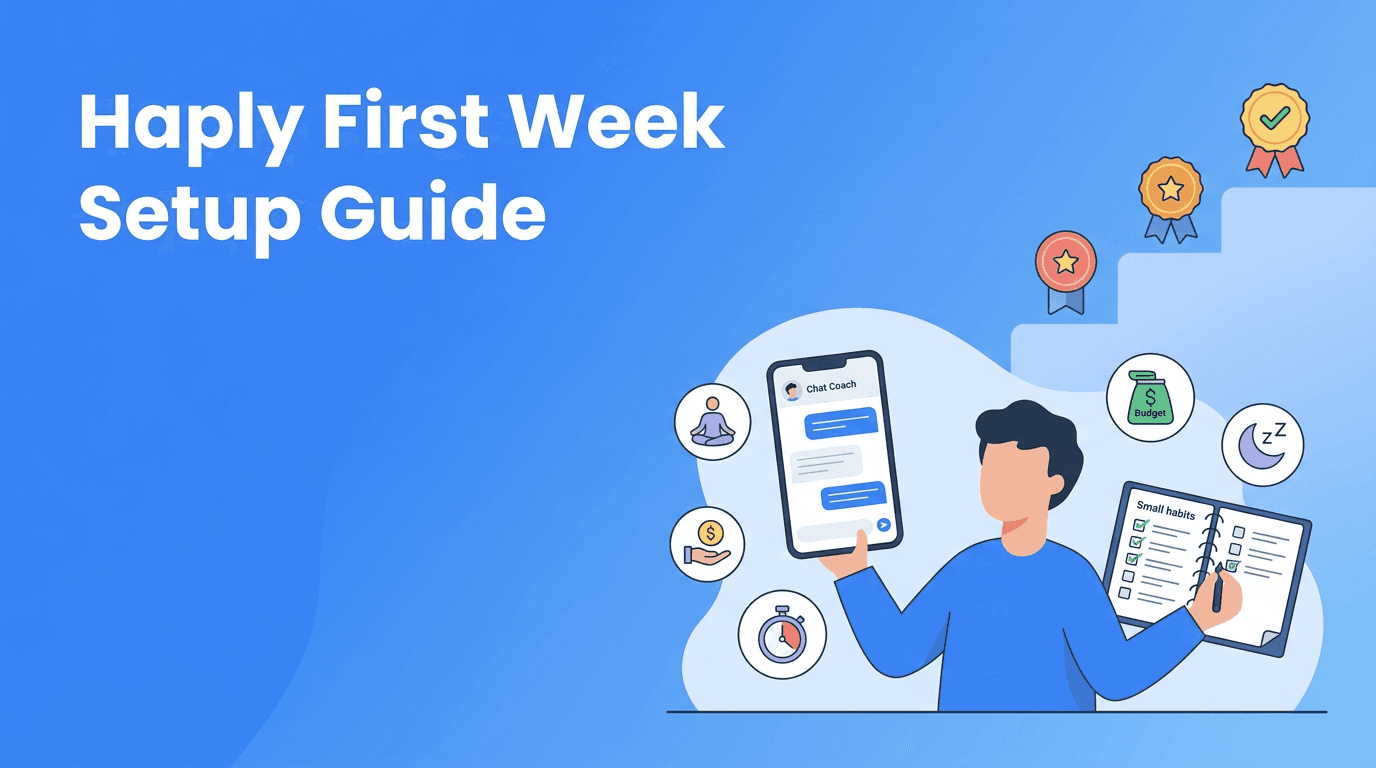
Haply addresses that gap by turning coaching into shorter, context-friendly experiences. On iOS and Android, users can move from a personalized chat to tools like the Focus Timer, Task Planner, Meditation/Breathe, Budget Tracker, or Idea Board without losing momentum. Each feature supports a specific behavior, which makes learning easier to apply.
- Microlearning coaching reduces cognitive overload by narrowing attention to one problem at a time.
- It supports memory and retention because ideas are revisited in smaller, repeated formats.
- It improves coaching effectiveness by linking insight directly to action.
- It fits modern schedules better than systems that depend on long, infrequent sessions.
How habit streaks strengthen coaching effectiveness
Advice matters, but repeated behavior matters more. That is why streaks and daily reminders are not just decorative app elements. In well-designed behavior systems, they function as commitment cues. A visible streak gives people evidence that they are becoming the kind of person who shows up regularly.
The science behind habit streaks
- Consistency builds identity: Repeating a behavior helps users see growth as part of who they are, not just what they attempt occasionally.
- Immediate feedback reinforces action: A streak turns an invisible habit into something concrete and trackable.
- Small wins increase motivation: Progress markers make effort feel meaningful before major results appear.
- Reminders support follow-through: Daily prompts reduce the chance that a good intention disappears in a busy routine.
Haply combines streaks, reminders, and the Today Dashboard to make progress visible. This matters because motivation is often unstable. Systems that reduce reliance on willpower tend to work better over time. In other words, personalized coaching becomes more effective when the environment supports repetition.
Why AI personalization improves over time
A strong coach does not repeat the same script forever. They notice patterns, adapt questions, and respond to the person's goals. Haply is designed around that same principle. During goal-based onboarding, users signal what matters most, whether that is productivity, wellness, career growth, learning, finance, creativity, or relationships.
From there, the coaching experience becomes more tailored. The app can align sessions, reminders, and tools with a user's focus area, making personalized coaching feel more relevant and less generic. Over time, this increases engagement because people are more likely to return to support that reflects their actual challenges.
What better personalization looks like in practice
- More relevant prompts based on goals and patterns.
- Better timing through reminders that support intended routines.
- More useful tool suggestions connected to current needs, like planning, breathing, budgeting, or idea capture.
- More focused conversations that feel closer to coaching and less like random chat.
This is a key part of AI coaching science. The value of AI is not only speed. It is the ability to adapt structure, questions, and support around the individual, while still keeping sessions short enough to be usable.
Why specialized coaches outperform generic chatbots
Generic chatbots can be interesting conversational partners, but conversation alone does not guarantee transformation. When a tool tries to be everything at once, it often becomes vague. Coaching works better when guidance is shaped by a clear purpose.
Haply uses specialized AI coaches across major life areas, including Productivity, Wellness, Career, Learning, Finance, Creativity, and Relationships. This matters because each domain involves different obstacles, decision patterns, and useful interventions. A productivity challenge is not the same as a relationship challenge, and neither should be coached in the same way.
- Specialization creates sharper guidance because the coaching framework matches the problem.
- Users get better questions instead of generic motivational language.
- Recommendations become more actionable because they connect to the right tools and habits.
- Trust improves when the experience feels intentionally designed rather than randomly generated.
For thoughtful users comparing options, this is one of the clearest differences between a research-informed coaching app and a general chatbot. The goal is not endless conversation. The goal is coaching effectiveness that helps users think clearly and act consistently.
"The best coaching does not simply respond. It redirects attention toward the next useful action."
The role of gamification in sustainable behavior change
Gamification is often misunderstood as superficial motivation. Used poorly, it can feel childish. Used well, it can reinforce persistence at the exact moments when progress still feels fragile. Haply's levels and achievements are best understood as behavioral feedback, not entertainment for its own sake.
- Levels signal progression and help users feel that effort is accumulating.
- Achievements reward milestones that might otherwise go unnoticed.
- Visible progress increases engagement during the early stages of habit formation.
- Structured rewards support long-term adherence when paired with meaningful goals.
This design choice connects directly to coaching effectiveness. People are more likely to continue when they can see movement. A sense of progress, even modest progress, helps bridge the gap between intention and identity. That is especially important in self-directed coaching, where external accountability is limited.
Curious how this feels in practice?
Haply combines short coaching chats, specialized AI support, habit streaks, mini-apps, and daily structure into one personalized system. You can explore it with a 7-day free trial on iOS or Android.
Try Haply FreeA methodology built for real life, not perfect routines
What ties the whole system together is not any single feature. It is the philosophy that growth should be practical, repeatable, and personalized. Haply is built for people who want support they can actually use on ordinary days, not only when they have ideal energy, time, or motivation.
That is why the methodology matters. Personalized coaching works best when advice is short enough to use, specific enough to trust, adaptive enough to stay relevant, and structured enough to turn insight into action. Haply's design reflects that logic from onboarding to daily use.
Frequently Asked Questions
Why are 10-15 minute coaching sessions effective?
Short sessions reduce friction, improve attention, and make it easier to act immediately. They are easier to repeat consistently, which is essential for behavior change.
How does personalized coaching help more than generic advice?
Personalized coaching connects guidance to your goals, routines, and challenges. That makes advice more relevant, actionable, and easier to follow over time.
Do habit streaks actually help build routines?
Yes, habit streaks provide visible feedback and reinforce consistency. They make progress feel real and can strengthen motivation during early habit formation.
Why are specialized AI coaches better than generic chatbots?
Specialized AI coaches use frameworks tailored to specific life areas like productivity, wellness, or finance. This leads to more focused questions and more useful next steps.