Career Portfolio for a Career Change: How to Present Your Value Beyond the Resume
A strong career portfolio can make a career change easier by showcasing proof of your skills beyond the resume, LinkedIn, and job interview. Learn how to build one that supports confidence and better conversations, including salary negotiation.

By Haply Team
Haply Editorial Team
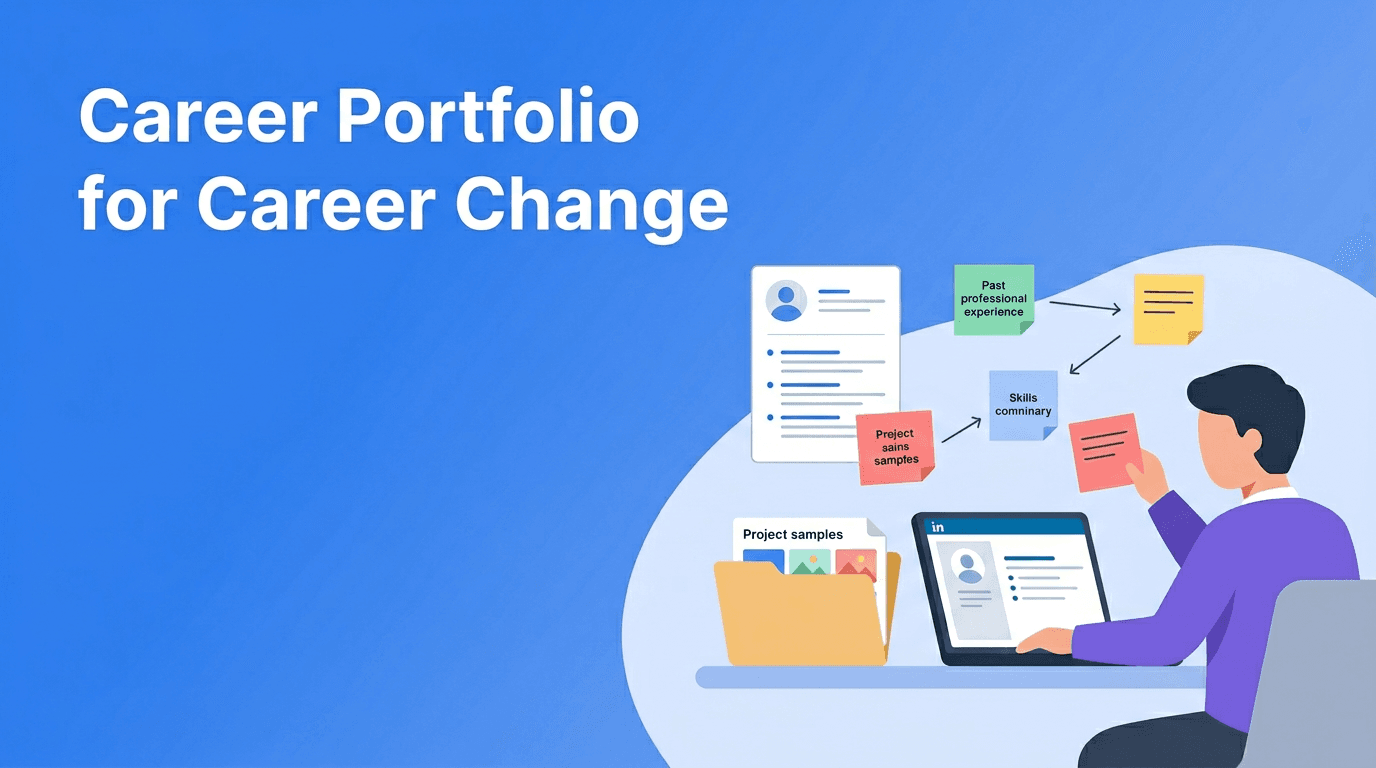
If you are planning a career change, your career portfolio can become the missing bridge between your past experience and the role you want next. While a resume summarizes your background, a portfolio gives hiring managers real proof they can see, discuss in a job interview, and even use to justify stronger positioning in salary negotiation.
Why a career portfolio matters more than you think
Many job seekers assume portfolios are only for designers, writers, or developers. That is outdated thinking. A career portfolio helps professionals in operations, project management, customer success, marketing, HR, sales, finance, and many other fields show impact with clarity. If you are changing industries, this is especially useful because it shifts attention away from job titles and toward evidence.
- Use project examples to show transferable skills like communication, leadership, analysis, and problem-solving.
- Include metrics, screenshots, process documents, presentations, templates, or short case studies.
- Turn vague claims from your resume into visible proof that builds trust faster.
- Give recruiters and hiring managers material they can remember after reviewing your LinkedIn profile.
What to include in a career portfolio
Start with a simple professional summary
Open your career portfolio with a short page that explains who you are, what kind of roles you are targeting, and what strengths you bring. Keep it focused on outcomes. For example, instead of saying you are "passionate and hardworking," say you help teams improve workflows, increase client retention, or organize complex projects.
Add proof, not just claims
- A one-page bio tailored to your target role
- 2 to 4 short case studies showing a challenge, your actions, and the result
- Work samples such as reports, slide decks, plans, dashboards, training materials, or process improvements
- Testimonials, performance feedback, or recommendations that support your credibility
- A link section with your LinkedIn, personal website, or selected public work
"People do not just hire experience. They hire evidence that you can create results in a new context."
The best portfolios make it easy for someone to connect your past work to future value. This is why case studies work so well. They help hiring teams understand your thinking, not just your duties.
How to build a career portfolio when you lack direct experience
This is where many career changers get stuck. You may not have the exact title yet, but you likely have relevant proof. Look for overlap between your previous roles and your target role. Did you lead projects, improve systems, train others, analyze data, solve customer problems, or manage deadlines? Those are portfolio-worthy achievements.
- Reframe old projects around the needs of your target field.
- Create one or two sample projects if your past work is confidential or hard to show.
- Use volunteer work, freelance tasks, coursework, certifications, or self-directed projects.
- Write mini case studies that explain the business problem, your approach, and the result.
For example, someone moving from teaching into learning and development could include lesson plans, training frameworks, workshop outcomes, and learner feedback. Someone shifting from retail into operations could highlight scheduling systems, inventory improvements, and team coordination wins.
Need help organizing your next move?
Haply is an AI life coaching app for iOS and Android that can help you clarify career goals, break your career change into weekly steps, and stay consistent with habit tracking, reminders, and personalized coaching chats.
Try Haply FreeHow your portfolio supports your resume, LinkedIn, and job interview
Think of these tools as a system, not separate tasks. Your resume opens the door. Your LinkedIn expands your visibility. Your career portfolio deepens credibility. Then, in the job interview, you use portfolio examples to make your answers more specific and memorable.
Use the same core stories everywhere
- Choose 3 to 5 professional stories that represent your strongest skills.
- Reflect those stories in bullet points on your resume.
- Mention them in the About section or featured content on LinkedIn.
- Bring them into the job interview using concise challenge-action-result examples.
- Keep your messaging consistent so employers see a clear professional identity.
This consistency matters. If your resume says one thing, your LinkedIn says another, and your interview stories feel improvised, employers may hesitate. A portfolio helps you align the narrative.
Using a career portfolio in salary negotiation
A career portfolio will not replace market research, but it can strengthen your case in salary negotiation. When you can show measurable outcomes, strategic thinking, and relevant work samples, you make it easier for employers to see the level you operate at. That can support a higher-value conversation.
- Highlight outcomes with numbers where possible, such as time saved, revenue influenced, retention improved, or errors reduced.
- Choose examples that match the priorities of the new role.
- Bring one or two strongest case studies into final-stage conversations.
- Frame your value around impact and readiness, not just effort or enthusiasm.
If salary conversations make you nervous, structured preparation helps. Haply's Career coach can help you practice talking points, while its Today Dashboard, reminders, and progress tools can keep your search organized without feeling overwhelming.
A simple 7-day plan to create your portfolio
- Day 1: Pick your target role and identify the 5 skills it requires most.
- Day 2: Gather old projects, metrics, feedback, presentations, and notes.
- Day 3: Choose 3 strong examples that show transferable value.
- Day 4: Write short case studies using challenge, action, and result.
- Day 5: Update your resume and LinkedIn to match those stories.
- Day 6: Put everything into a simple PDF, slide deck, or personal website.
- Day 7: Practice using your portfolio in a mock job interview and review how it can support salary negotiation.
Keep it simple. Your first version does not need to be perfect. It just needs to make your value easier to understand.
Final thought
A career change becomes easier when you stop trying to fit your whole story into a few resume bullets. A career portfolio gives your experience shape, proof, and direction. If you want to stand out with more confidence, this may be the most practical tool you build this year.
Frequently Asked Questions
What is a career portfolio?
A career portfolio is a collection of materials that show your skills, achievements, and work examples. It adds proof beyond a resume and can support interviews and career changes.
Do I need a career portfolio for a job interview?
You do not always need one, but it can help you stand out. It is especially useful for career changers or anyone who wants to show concrete examples of their work.
How is a career portfolio different from a resume?
A resume is a brief summary of your experience, while a portfolio includes evidence such as case studies, work samples, and results. The portfolio adds depth and credibility.
Can a career portfolio help with salary negotiation?
Yes. A portfolio can support salary negotiation by giving employers clearer evidence of your impact and readiness for the role.