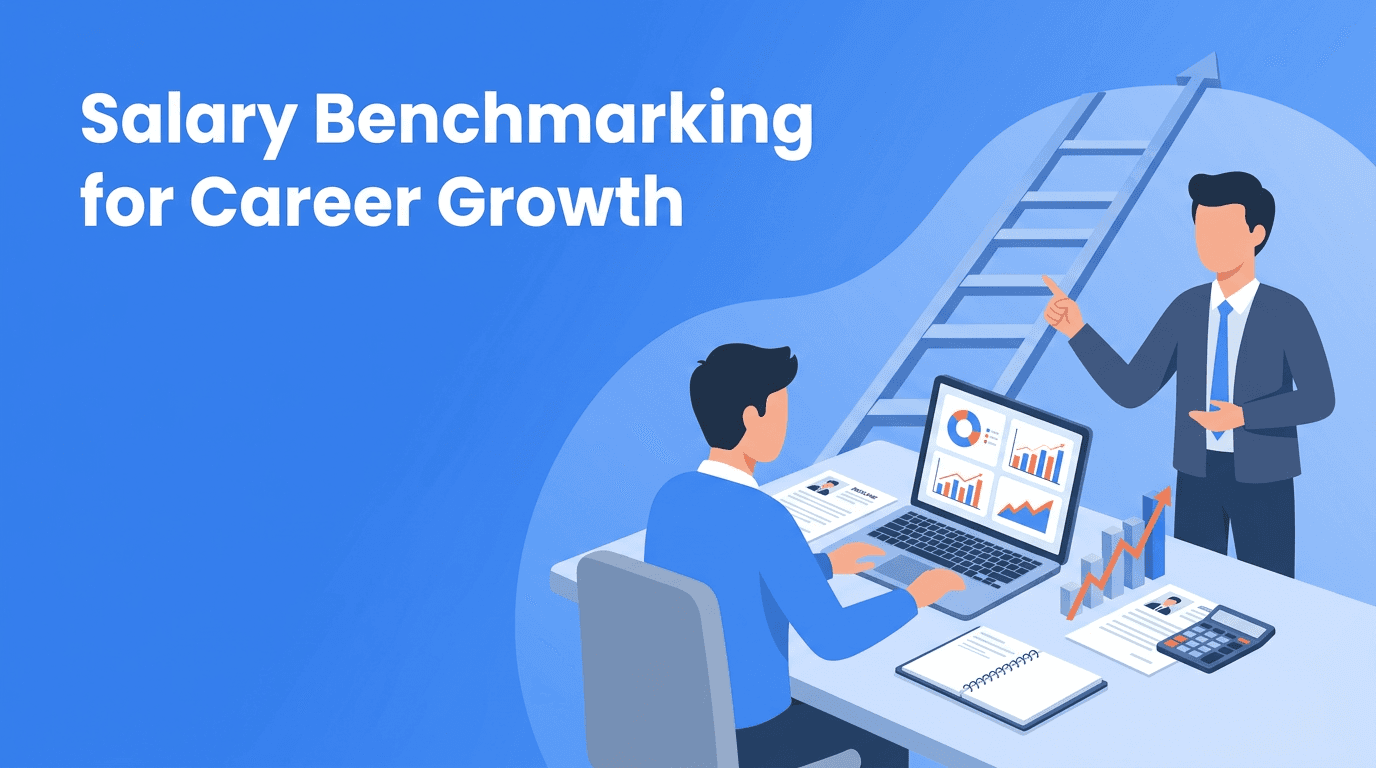
Salary Benchmarking for Career Growth: Use Market Data to Strengthen Professional Development
Salary benchmarking helps you connect career growth, professional development, and personal finance into one smarter strategy. Learn how to use market data to improve money management and negotiate with confidence.

By Haply Team
Haply Editorial Team
Salary benchmarking is one of the most practical skills you can build if you care about career growth, professional development, and stronger personal finance decisions. Most professionals work hard to improve performance, but far fewer learn how to measure their market value. That gap can quietly cost you thousands over time and weaken your overall money management strategy.
If you know what similar roles pay, which skills command higher compensation, and how your industry values experience, you can make better decisions about promotions, job changes, certifications, and even monthly budgeting. In other words, salary research is not just about asking for more. It is about building a career that pays in proportion to your value.
Why salary benchmarking matters for career growth
Many people treat compensation as a once-a-year conversation. That is a mistake. Salary benchmarking gives you a clearer map for long-term career growth because it shows whether your current path is increasing your value in the market or simply increasing your workload.
- It helps you identify whether you are underpaid, fairly paid, or competitively paid.
- It reveals which skills, certifications, or leadership responsibilities increase earning potential.
- It supports smarter job search and promotion timing.
- It connects professional development choices to real financial outcomes.
- It improves personal finance planning because income expectations become more realistic.
"Your career is not just a ladder to climb. It is an asset to manage."
What salary benchmarking actually includes
Good salary benchmarking is more than checking one number on a job board. A reliable benchmark considers your role, location, seniority, company size, industry, and total compensation. Base salary matters, but so do bonuses, equity, retirement contributions, learning budgets, and flexibility benefits.
The five data points to compare
- Job title and scope - Compare responsibilities, not just titles. A "manager" role at one company may look like a senior individual contributor role elsewhere.
- Location - Compensation often changes by city, country, or remote policy.
- Experience level - Years alone do not define value, but they still affect market ranges.
- Industry and company stage - Startups, enterprises, nonprofits, and tech firms often pay differently.
- Total rewards - Include bonus potential, stock options, paid time off, and development support.
How to do salary benchmarking without overcomplicating it
Use a simple process. Start with three to five trusted sources such as job listings with pay ranges, salary databases, recruiter insights, and conversations with peers. Then look for a realistic range, not a perfect number. The goal is to understand the market well enough to make stronger decisions, not to predict compensation down to the dollar.
A practical 30-minute monthly routine
- Review 5 recent job postings for roles similar to yours.
- Save salary ranges in a spreadsheet or notes app.
- Track which skills or tools appear most often in higher-paying roles.
- Write one sentence about how your current role compares to the market.
- Choose one next step, such as updating your resume, building a skill, or preparing for a compensation conversation.
This is where tools can help. Haply, an AI life coaching app for iOS and Android, can support this habit through its Career coach, Finance coach, and mini-apps like the Task Planner and Budget Tracker. You can turn salary research into a repeatable routine instead of something you only do when you feel frustrated.
How salary benchmarking improves professional development
Not all learning creates equal career returns. Salary benchmarking helps you focus your professional development on capabilities the market actually rewards. Instead of collecting random courses, you can prioritize skills that increase both performance and compensation.
- If leadership roles in your field pay more, build people management and communication skills.
- If technical certifications raise compensation, choose credentials tied to active hiring demand.
- If cross-functional experience commands higher pay, volunteer for projects that expand business exposure.
- If strategic thinking is valued, document measurable outcomes and decision-making impact.
This approach prevents a common mistake: investing time and money into development that feels productive but does not move your career forward. Growth is not only about becoming better. It is about becoming more relevant.
The personal finance side most professionals miss
There is a direct relationship between salary benchmarking and personal finance. When you understand your earning potential, you can make better choices about savings goals, emergency funds, debt payoff pace, housing decisions, and lifestyle inflation. Strong money management starts with realistic income planning, not wishful thinking.
Use salary data to make better money decisions
- Set a savings target based on your current pay band, not an optimistic future raise.
- Avoid lifestyle creep if your compensation is already below market and may need correction time.
- Decide whether a certification or degree is financially sensible based on likely salary impact.
- Prepare for job transitions with a cash buffer if your research shows better opportunities elsewhere.
- Adjust your budget when total compensation changes, not just base salary.
Turn career data into daily progress
Want help turning salary research, skill building, and money management into consistent habits? Haply offers personalized AI coaching, reminders, and tools to help you follow through.
Try Haply FreeHow to use salary benchmarking in a negotiation
The best negotiation approach is calm, specific, and evidence-based. Salary benchmarking works when you present it as context, not a threat. Focus on your value, your results, and the market range for comparable roles.
- Lead with your business impact, such as revenue, efficiency, retention, or project delivery.
- Share a market range from multiple sources rather than one dramatic figure.
- State a clear target that fits your experience and responsibilities.
- Be ready to discuss total compensation, not only base salary.
- If the answer is no, ask what milestones would justify a future increase and when it will be reviewed.
"Confidence in negotiation comes from preparation, not personality."
Red flags that your salary is out of sync
- You have taken on significantly more responsibility without a compensation review.
- New job postings for similar work consistently show higher pay ranges.
- Your manager praises performance but avoids concrete discussions about growth or pay.
- Your skills have advanced, but your compensation has remained flat for years.
- Your budget feels increasingly tight despite strong performance and disciplined money management.
These signs do not always mean you must quit immediately. But they do mean you need better data and a clearer strategy.
Build a salary benchmarking habit that lasts
The real advantage comes from consistency. Professionals who review market data regularly make better moves than those who only react during burnout or layoffs. A lightweight monthly check-in can protect your earning power, sharpen your career growth strategy, and support healthier personal finance decisions over time.
Start simple. Track your market range, note your strongest results, and align your next learning goal with real compensation trends. That one habit can improve how you work, what you earn, and how confidently you manage your future.
Frequently Asked Questions
What is salary benchmarking?
Salary benchmarking is the process of comparing your compensation to market rates for similar roles based on title, responsibilities, location, experience, and industry.
How often should I do salary benchmarking?
A monthly or quarterly review is usually enough. Regular check-ins help you spot trends without becoming distracted by every market change.
Can salary benchmarking help with career growth?
Yes. It shows which roles, skills, and responsibilities are rewarded in the market, helping you make smarter professional development choices.
How does salary benchmarking support personal finance?
It improves income planning, budgeting, and savings decisions because you are working from realistic compensation expectations rather than guesses.
What should I use for salary benchmarking?
Use a mix of job postings, salary databases, recruiter conversations, and peer insights. Comparing multiple sources gives you a more reliable range.