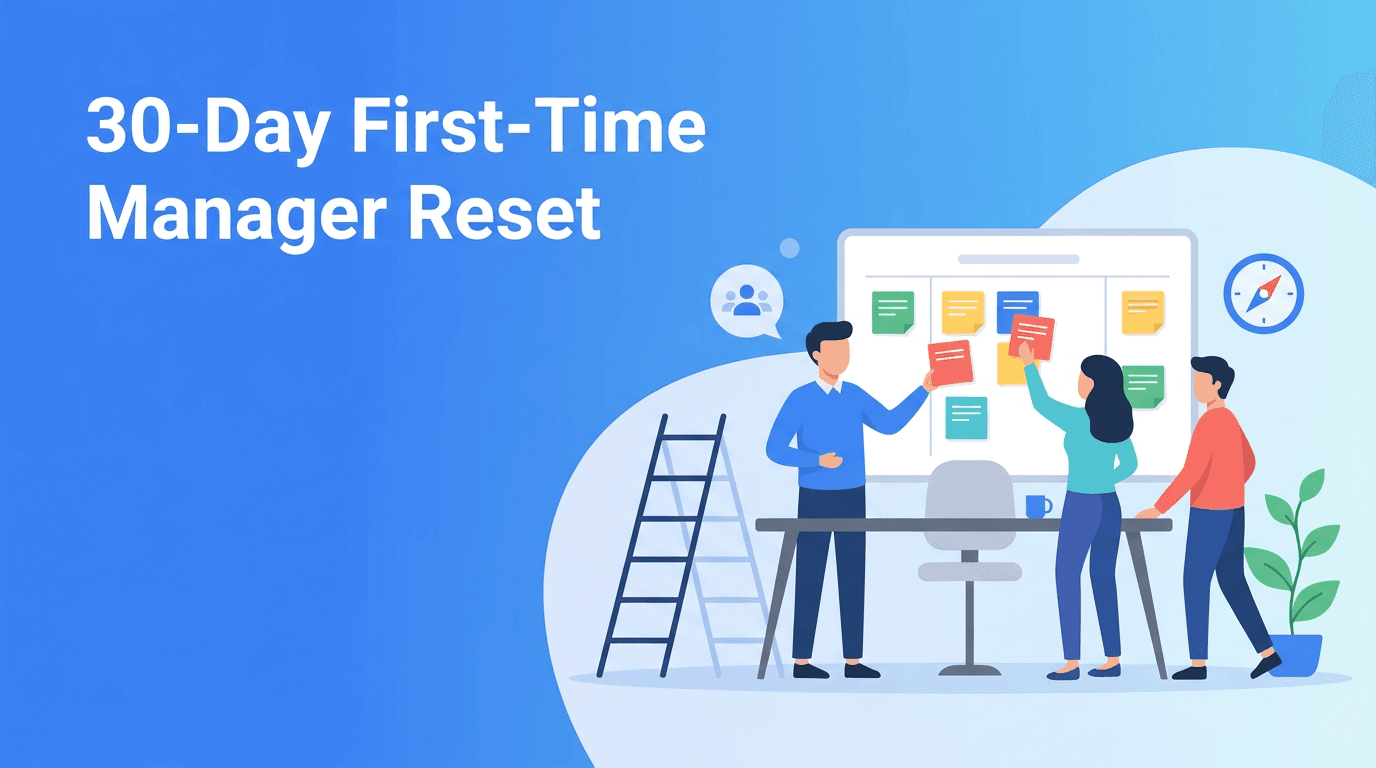
First-Time Manager Training: A 30-Day Leadership Reset for Stronger Team Building
First-time manager training does not need to be overwhelming. This 30-day leadership reset helps new managers build confidence in management, team building, and smart delegation.

By Haply Team
Haply Editorial Team
First-time manager training often fails because it gives new leaders theory when they really need a simple system for the first month. If you have just stepped into leadership, your biggest win is not looking impressive, it is building repeatable management habits that help your team trust you, communicate clearly, and perform without confusion.
This guide takes a practical angle: a 30-day reset built for people who are learning leadership, navigating team building, and trying to improve delegation without becoming controlling. Instead of chasing perfect manager energy, you will focus on a few small actions that create momentum.
Why the first 30 days matter in first-time manager training
Your early behavior becomes your team's reference point. In the first month, people notice how you run meetings, respond to problems, assign work, and handle uncertainty. Strong first-time manager training helps you create clarity early so your team does not have to guess what good work looks like.
- Week 1: Learn the team before trying to fix the team
- Week 2: Set operating norms for communication and priorities
- Week 3: Practice delegation with follow-through, not micromanagement
- Week 4: Build a review rhythm and adjust your leadership approach
Week 1: Observe before you overhaul management
New managers often rush to prove value by changing everything. A better move is to listen first. Spend your first week asking each team member what is working, what is slowing them down, and what support they need from you. This creates trust and gives you real data for better management decisions.
Questions to ask in one-on-ones
- What part of your work feels most clear right now?
- Where do you usually get stuck or wait too long?
- What does helpful support from a manager look like to you?
- What is one process we should simplify?
- What strengths do you want to use more often?
"People support what they help create." That is especially true in leadership. Teams commit faster when they feel heard before they are directed.
Week 2: Build team building through clarity, not forced bonding
Real team building is less about trust falls and more about reducing friction. Teams work better when roles are clear, deadlines are visible, and priorities are shared. In your second week, define how your team communicates, escalates issues, and makes decisions.
- Create a short weekly priorities document
- Agree on response time expectations for messages
- Define which decisions need approval and which do not
- Set a recurring one-on-one and team meeting cadence
- Write down team goals in simple, measurable language
This is where many new leaders discover that leadership is not about having all the answers. It is about making work easier to understand. If your team knows what matters most, performance usually improves before motivation talks even begin.
Need support while growing into leadership?
Haply is an AI life coaching app on iOS and Android with personalized coaching for Career, Productivity, and Wellness. Use it to reflect after tough meetings, track habits, and stay consistent with your new manager routines.
Try Haply FreeWeek 3: Use delegation to grow people, not just move tasks
Many managers misunderstand delegation. They either keep too much or hand off work with no context. Good delegation means assigning ownership, explaining the outcome, and agreeing on checkpoints. That is one of the most useful skills in first-time manager training because it protects your time while developing your team.
A simple delegation script
- Explain the outcome: What does success look like?
- Share the context: Why does this task matter?
- Clarify the boundaries: What decisions can they make alone?
- Set the checkpoints: When should you review progress?
- Confirm the support: What resources do they need from you?
If you feel nervous about letting go, start with low-risk tasks and review the process afterward. Over time, smart delegation turns you from a bottleneck into a coach.
Week 4: Review, coach, and adjust your leadership style
By week four, your job is to notice patterns. Who needs more direction? Who is ready for more ownership? Which meetings help, and which waste time? Effective management is iterative. You do not need a fixed personality style, you need a feedback loop.
- Review wins and missed expectations with specifics
- Ask your team what has become clearer in the last month
- Identify one process to remove, simplify, or automate
- Choose one person to stretch with a bigger responsibility
- Block 15 minutes weekly for self-review on your leadership habits
This is also a good time to use tools that reinforce consistency. For example, Haply's chat-based coaching and habit tracker can help you reflect on daily leadership behaviors, maintain one-on-one routines, and build the self-awareness that strong managers need.
Common mistakes first-time managers should avoid
- Talking more than listening in early meetings
- Changing too much too fast before understanding the workflow
- Avoiding difficult feedback because you want to be liked
- Delegating tasks without authority or context
- Treating team building as an event instead of an operating system
The goal of first-time manager training is not perfection. It is helping you replace reactive habits with intentional ones. Small systems beat big promises.
A simple weekly scorecard for new leaders
- Did I have meaningful one-on-ones this week?
- Did I clarify priorities for the team?
- Did I delegate at least one task with clear ownership?
- Did I recognize progress, not just problems?
- Did I make time to reflect on my management decisions?
Use this scorecard every Friday. Strong leadership grows when you review behavior consistently, not only when something goes wrong.
Frequently Asked Questions
What is the best first-time manager training approach?
The best approach is practical and behavior-based. Focus on communication, clear expectations, delegation, and weekly feedback loops during your first month.
How can a first-time manager improve delegation skills?
Start by delegating low-risk tasks with clear outcomes, context, decision boundaries, and check-in points. Review what worked and improve from there.
What are the most important leadership skills for new managers?
The most important skills are listening, setting priorities, giving feedback, delegating clearly, and building trust through consistency.
How do you build a team as a first-time manager?
Strong team building starts with role clarity, communication norms, shared goals, and regular one-on-ones. Trust usually grows from clear work systems, not forced activities.