Creative Cross-Training: How to Build Creative Thinking by Borrowing From Other Arts
Creative thinking grows faster when you step outside your usual medium. Learn a practical cross-training method to boost creativity, innovation, brainstorming, and imagination.

By Haply Team
Haply Editorial Team
Most people try to improve creative thinking by working harder inside the same routine. But fresh ideas often appear when you borrow methods from a different craft. A writer can learn from photography. A designer can learn from music. A founder can learn from improv. This is where creativity, innovation, and imagination start to feel less mysterious and more trainable.
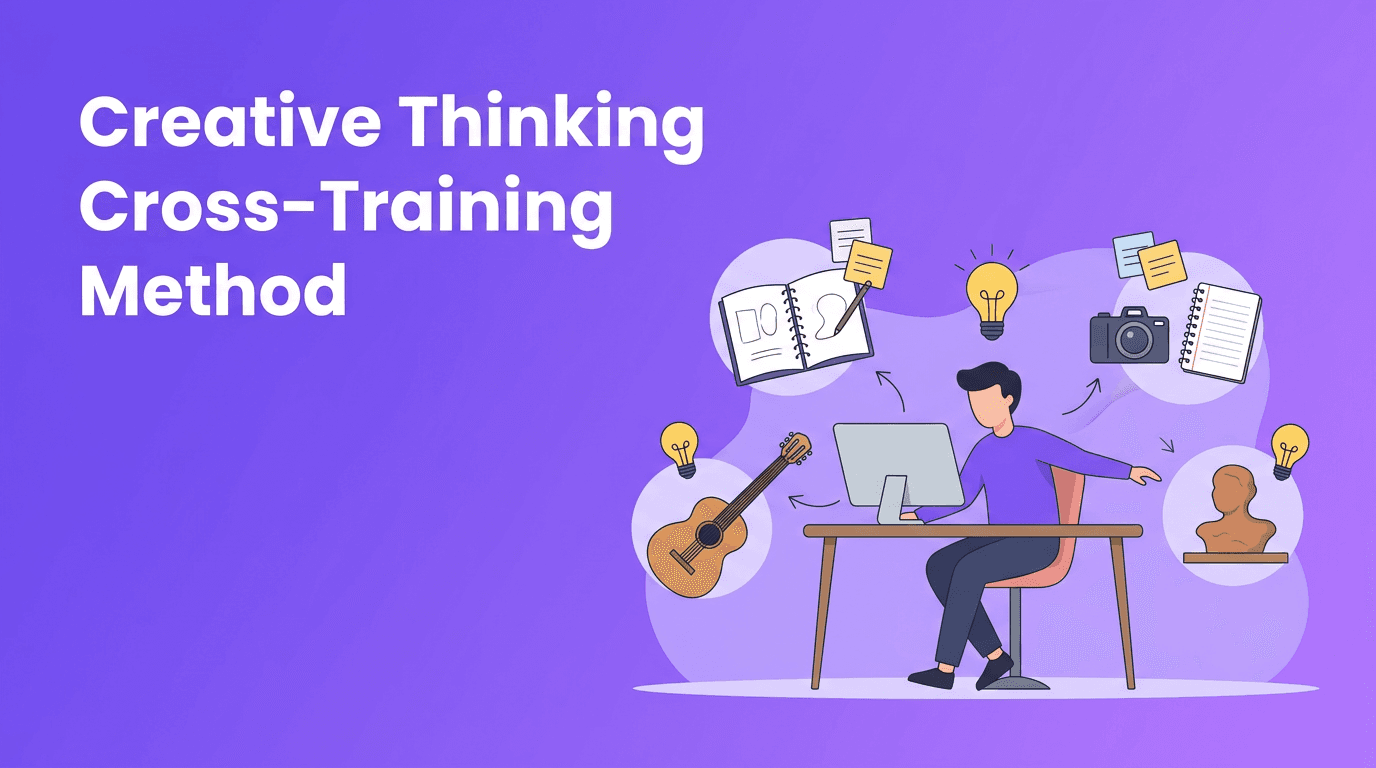
Think of it as cross-training for the mind. Just as athletes build strength by using different muscle groups, creative people expand their range by practicing outside their main medium. The goal is not to become an expert in everything. The goal is to expose your brain to new patterns, constraints, and ways of seeing.
Why creative thinking improves with creative cross-training
Your brain loves efficiency. It builds shortcuts based on what you do repeatedly. That helps you work faster, but it can also make your ideas predictable. Cross-training interrupts those defaults. When you switch mediums, you notice details you usually ignore, and that opens space for better brainstorming and more original connections.
- Writers learn composition and mood from photography.
- Musicians learn pacing and narrative from storytelling.
- Designers learn rhythm and contrast from dance or music.
- Entrepreneurs learn spontaneity and collaboration from improv.
- Anyone can strengthen imagination by making things with their hands.
Creativity is not a lightning strike. It is often the result of mixing patterns that were never supposed to meet.
A simple 4-step creative thinking practice
1. Choose your home medium
Start with the area where you most want better ideas. It could be writing, content creation, product design, painting, business problem-solving, or even planning your week. Name the exact challenge so your practice has direction.
2. Pick a contrast medium
Choose a second art or skill that works very differently from your main one. If your work is verbal, try something visual. If it is highly structured, try something playful. If it is digital, try something tactile. This contrast is what helps creative thinking stretch.
3. Steal one rule, not the whole craft
You do not need to master the second medium. Just borrow one principle. From photography, borrow framing. From music, borrow repetition. From sculpture, borrow form. From theater, borrow tension. Then ask, "How would this rule change my current project?"
4. Turn the insight into a small experiment
Apply the borrowed rule in a low-pressure way. Rewrite one paragraph using rhythm from music. Design one slide using photographic framing. Plan one meeting like an improv scene with prompts instead of scripts. Small experiments create momentum without triggering perfectionism.
5 cross-training pairings to spark innovation
- Writing + photography: Before drafting, capture three photos that match the mood of your piece. Use them to guide tone and detail.
- Product design + improv: Run a 10-minute idea jam where every teammate must build on the last suggestion with "yes, and." This improves collaborative brainstorming.
- Painting + music: Listen for tempo changes and translate them into line, spacing, or brush movement.
- Marketing + poetry: Use tighter word limits to sharpen emotion and clarity.
- Strategy + collage: Cut out words and images from old materials to reveal unexpected themes and patterns.
How to use cross-training when you feel creatively stuck
When you are blocked, the problem is often not a lack of talent. It is a lack of movement. You are staring at the same problem through the same lens. Cross-training gives your mind a side door. Instead of asking for a brilliant answer, ask for a new angle.
- Set a timer for 15 minutes.
- Choose one different medium.
- Create something fast and unfinished.
- Write down three patterns you noticed.
- Bring one pattern back to your original project.
Want guided support for your creative process?
Haply is an AI life coaching app for iOS and Android that can help you build a consistent creativity habit. Use the Creativity coach, daily reminders, and the Idea Board mini-app to capture sparks before they disappear.
Try Haply FreeMake creative thinking a weekly ritual
The easiest way to lose creative momentum is to wait for inspiration. Instead, schedule a weekly cross-training session. Keep it short, playful, and repeatable. Over time, this becomes a system for stronger innovation, not just a one-time burst of energy.
- Pick one hour each week for creative cross-training.
- Rotate through three contrast mediums each month.
- Save your best ideas in one place, such as a notes app or Haply's Idea Board.
- Review what worked at the end of the week.
- Track streaks so your creative identity grows through action.
The real goal is range, not perfection
You do not need to become a painter, musician, actor, and novelist all at once. You only need to become more flexible in how you see problems and possibilities. That flexibility is the heart of creative thinking. The more patterns you can recognize and remix, the more naturally creativity shows up in your work and life.
Frequently Asked Questions
How can I improve creative thinking every day?
Practice small idea exercises daily, switch mediums regularly, and capture insights quickly. Consistency matters more than intensity.
What are the best creative thinking exercises for adults?
Great options include cross-training with another art form, timed brainstorming, visual note-taking, and remixing one idea into three formats.
Does brainstorming actually improve creativity?
Yes, especially when brainstorming is structured. Using prompts, constraints, and collaboration usually produces better ideas than staring at a blank page.
How does imagination help with innovation?
Imagination helps you picture alternatives before they exist. That ability is essential for innovation because new solutions begin as mental possibilities.