
Idea Quotas: How Daily Brainstorming Builds Creative Thinking
Daily brainstorming is a simple way to strengthen creative thinking, spark innovation, and turn raw imagination into useful ideas. Learn how idea quotas can make creativity more consistent.

By Haply Team
Haply Editorial Team
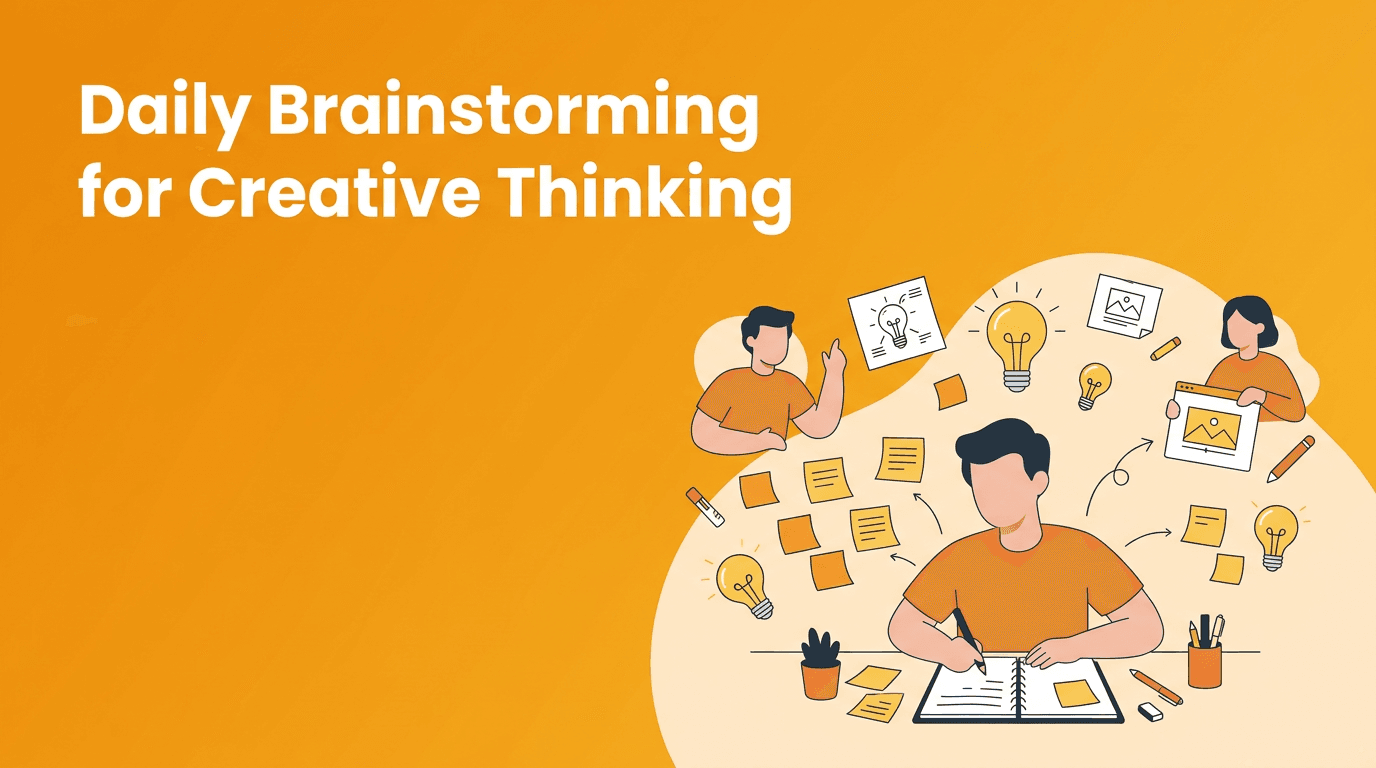
Daily brainstorming is one of the most underrated ways to improve creativity. Instead of waiting for inspiration to appear, you train your mind to generate options on command. That shift matters, because creative thinking grows through repetition, not luck.
Many people assume imagination is something you either have or do not have. In reality, innovation often starts with a simple practice: producing more ideas than you need. When you create a steady flow of possibilities, better ideas have a chance to surface naturally.
Why daily brainstorming works
A daily idea habit reduces pressure. If every session must produce a brilliant concept, your mind tightens. But if the goal is simply to generate 10 rough ideas, your brain relaxes and becomes more playful. That is where imagination becomes useful instead of intimidating.
- Quantity creates quality. A larger pool of ideas gives you more material to shape and refine.
- Consistency beats intensity. Ten minutes a day often helps more than one big burst once a month.
- Low-stakes practice builds confidence. You stop fearing bad ideas because they become part of the process.
- Pattern recognition improves over time. Repeated brainstorming helps you notice what themes and solutions keep returning.
"You do not need a perfect idea to begin. You need enough ideas to discover the one worth building."
The idea quota method for creativity
An idea quota means choosing a small number of ideas to generate every day. For example, you might write 10 product ideas, 10 blog topics, 10 ways to solve one problem, or 10 fun ways to improve your weekend routine. This structure keeps daily brainstorming practical and measurable.
How to start small
- Pick one prompt for the week, such as marketing ideas, personal projects, or ways to improve a routine.
- Set a fixed quota, like 5 or 10 ideas per day.
- Use a timer for 10 to 15 minutes.
- Do not judge ideas while writing. Editing comes later.
- At the end of the week, highlight the 3 ideas with the most potential.
The goal is not to prove your talent. The goal is to build a repeatable system for creative thinking. Over time, your mind gets faster at connecting unrelated things, spotting opportunities, and exploring unusual angles.
Brainstorming prompts that spark innovation
- How could I make this task simpler, faster, or more enjoyable?
- What would this look like for a completely different audience?
- How would a child, designer, teacher, or founder solve this?
- What if I had to solve this with half the time or half the budget?
- What would the most playful version of this idea be?
- What could I combine that usually stays separate?
These prompts stretch creative thinking because they interrupt your default patterns. That is often the beginning of innovation. New ideas rarely appear from familiar questions alone.
How to make daily brainstorming stick
Attach the habit to an existing routine. Try it with your morning coffee, after lunch, or before you close your laptop for the day. If you use Haply, its Creativity coach can help you turn daily brainstorming into a repeatable habit with reminders, streaks, and personalized encouragement. The Idea Board mini-app is especially useful for capturing and revisiting promising ideas.
Turn ideas into a creative habit
Use Haply's AI coaching, habit tracking, and Idea Board to make daily brainstorming easier, more consistent, and more motivating.
Try Haply FreeA simple weekly rhythm
- Monday: Generate fresh ideas.
- Tuesday: Expand the strongest 2 ideas.
- Wednesday: Look for combinations between ideas.
- Thursday: Test one idea in a small way.
- Friday: Reflect on what surprised you and save your best insights.
This rhythm keeps brainstorming connected to action. Creativity becomes more satisfying when ideas are not just captured, but explored.
What to do when your imagination feels flat
If your mind feels empty, change the input before forcing the output. Go for a walk, switch locations, read outside your usual interests, or describe a problem out loud. Fresh input gives imagination something to work with.
- Use constraints, such as generating ideas with only one tool or in five words.
- Borrow from another field, like music, architecture, or nature.
- Ask better questions instead of demanding better answers.
- Save every idea in one trusted place so nothing gets lost.
The truth is that creativity is not always blocked. Sometimes it is simply underfed, overtired, or overjudged. A gentler process often restores momentum faster than pushing harder.
Frequently Asked Questions
How does daily brainstorming improve creativity?
Daily brainstorming trains your brain to produce ideas more easily and with less pressure. Over time, this improves flexibility, confidence, and creative thinking.
What is a good number of ideas to brainstorm each day?
A good starting point is 5 to 10 ideas per day. The number matters less than staying consistent and reducing self-judgment.
Can brainstorming really lead to innovation?
Yes. Innovation often begins with a wide range of possibilities. Brainstorming increases the chance of finding useful, original combinations.
What if I am bad at brainstorming?
Most people are not bad at brainstorming, they are just editing too early. Use a timer, lower the pressure, and focus on quantity first.