The Haply Methodology: Why Short, Personalized Coaching Works
The Haply methodology blends microlearning, habit science, and AI personalization to make coaching more practical, effective, and easier to sustain over time.

By Haply Team
Haply Editorial Team
The Haply methodology is built on a simple idea: coaching works better when it is short enough to repeat, personal enough to matter, and structured enough to lead to action. Instead of overwhelming users with long sessions or generic advice, Haply uses research-backed design to make progress feel doable in everyday life.
If you have ever started a self-improvement routine with good intentions and then dropped it a week later, the problem was probably not motivation alone. It was likely friction, cognitive overload, or lack of relevance. Haply's approach responds to those barriers by combining microlearning coaching, personalized coaching, and behavior change tools that fit real human attention spans.
What the Haply methodology is really designed to solve
Many coaching tools assume people have unlimited time, steady willpower, and a clear sense of what to do next. Real life does not work that way. People are juggling work, stress, relationships, health goals, and decision fatigue. A useful coaching system has to meet people where they are, not where they wish they were.
- Reduce overwhelm by breaking growth into smaller steps
- Improve coaching effectiveness through clear prompts and immediate action
- Support consistency with reminders, streaks, and visible progress
- Adapt over time so the guidance becomes more personally relevant
- Focus by domain through specialized coaches for productivity, wellness, career, learning, finance, creativity, and relationships
Why microlearning coaching makes behavior change more realistic
One of the core principles behind the Haply methodology is microlearning coaching. In education and training research, microlearning refers to delivering content in short, focused segments that are easier to absorb and apply. That matters in coaching because insight without action rarely changes behavior.
A 10-15 minute session is long enough to help someone reflect, decide on a next step, and commit to a small action. It is also short enough to fit into a lunch break, commute pause, or evening reset. That balance matters. When coaching feels easy to begin, people are more likely to return to it consistently.
Why 10-15 minute sessions work
- Lower activation energy - starting feels manageable, even on busy days
- Improve focus - short sessions reduce mental drift and keep the topic clear
- Encourage application - users can act on one idea immediately instead of storing many ideas for later
- Fit memory limits - people retain more when they process information in smaller chunks
- Create repeatability - change comes from regular practice, not occasional intensity
"Behavior change is rarely built through one dramatic breakthrough. More often, it grows through small actions repeated under the right conditions."
This is where AI coaching science becomes practical rather than abstract. Coaching is not only about saying insightful things. It is about structuring conversations so people can notice patterns, choose a next step, and repeat that process often enough for growth to stick.
The science behind habit streaks and daily momentum
Streaks can seem simple, but they reflect several principles from behavioral psychology. When people see evidence of continuity, they are often more motivated to protect it. A visible streak turns an invisible behavior into a concrete signal: I am becoming someone who shows up.
Haply supports this through habit tracking, reminders, and a Today Dashboard that makes progress visible. This is not about guilt. It is about creating feedback loops. When users complete a short session, log a habit, or finish a mini-app exercise like the Focus Timer or Meditation/Breathe tool, the app reinforces the connection between action and identity.
Why streaks improve coaching effectiveness
- They reward consistency, which matters more than intensity for most goals
- They provide immediate feedback, making progress easier to notice
- They strengthen self-trust, because each completed action becomes proof of follow-through
- They reduce decision fatigue, since the next step is simply to continue
- They support identity change, helping users think of themselves as focused, calm, disciplined, or proactive
The key is that streaks work best when paired with realistic actions. That is another reason the Haply methodology emphasizes short sessions and manageable commitments instead of idealized routines that collapse under pressure.
How AI personalization improves coaching over time
Generic advice often fails because it ignores context. Good coaching pays attention to patterns: what someone struggles with, what motivates them, when they lose momentum, and what kinds of goals actually matter to them. Personalized coaching becomes more effective when it reflects those specifics.
Haply begins personalizing from onboarding, where users select goals and life areas they want to improve. From there, chat-based coaching sessions, habit patterns, preferred tools, and daily interactions help shape a more relevant experience. Over time, the app can surface better prompts, more useful exercises, and coaching styles that fit the user's actual behavior rather than a generic self-help script.
What personalization changes in practice
- Advice becomes more relevant to the user's goals and challenges
- Sessions become more efficient because less time is wasted on broad, generic guidance
- Motivation improves when people feel understood rather than managed
- Reflection gets sharper because patterns are easier to identify over time
- The coaching relationship deepens through continuity and context
This is a major part of AI coaching science. The value of AI in coaching is not just availability. It is the ability to notice, remember, and adapt across many small interactions. Used thoughtfully, that can increase coaching effectiveness by making each session feel more timely and specific.
Why specialized coaches outperform generic chatbots
Not all support problems are the same. Someone trying to fix procrastination needs a different style of guidance than someone working through burnout, budgeting stress, or creative blocks. That is why Haply includes specialized AI coaches across areas like productivity, wellness, career, learning, finance, creativity, and relationships.
A generic chatbot can produce plausible responses on almost any topic, but that does not automatically make it a good coach. Specialized coaches are more useful because they are designed around specific behavior patterns, useful prompts, and practical next steps for a given domain. The result is guidance that feels less vague and more actionable.
- Productivity coaching can focus on planning, prioritization, and follow-through
- Wellness coaching can emphasize stress regulation, sleep, and emotional check-ins
- Career coaching can help with confidence, clarity, and decision-making
- Learning coaching can support study habits, recall, and consistency
- Finance coaching can break money goals into daily behaviors
- Creativity coaching can reduce perfectionism and prompt idea generation
- Relationship coaching can encourage reflection, communication, and boundaries
This domain-specific structure is one reason the app feels thoughtfully designed rather than random. Every feature has a purpose. Mini-apps like the Task Planner, Budget Tracker, Idea Board, Sleep Stories, and Focus Timer are not extra decorations. They create behavioral bridges between insight and action.
The role of levels and achievements in sustainable motivation
Gamification often gets dismissed as superficial, but that usually happens when points and badges are added without a real behavior model behind them. In a well-designed system, levels and achievements can support motivation by making effort visible, rewarding repetition, and helping people notice growth that would otherwise feel intangible.
In Haply, progression systems work best when they reinforce meaningful behaviors: finishing sessions, practicing habits, returning after setbacks, and engaging with tools that support goals. This kind of gamification is less about entertainment and more about motivation architecture.
Why gamification helps behavior change
- It creates small wins, which increase momentum
- It marks progress, even before big outcomes appear
- It adds emotional reward to consistent effort
- It supports persistence after lapses, because users can re-engage with a sense of direction
- It makes growth more visible, which strengthens commitment
How Haply turns coaching into a repeatable system
The deeper philosophy behind the Haply methodology is that personal growth should not depend on rare bursts of inspiration. It should be supported by a system that makes the next helpful action easier to see and easier to do. That is why Haply combines short coaching sessions, specialized guidance, habit tracking, mini-apps, daily reminders, and a personalized dashboard into one experience.
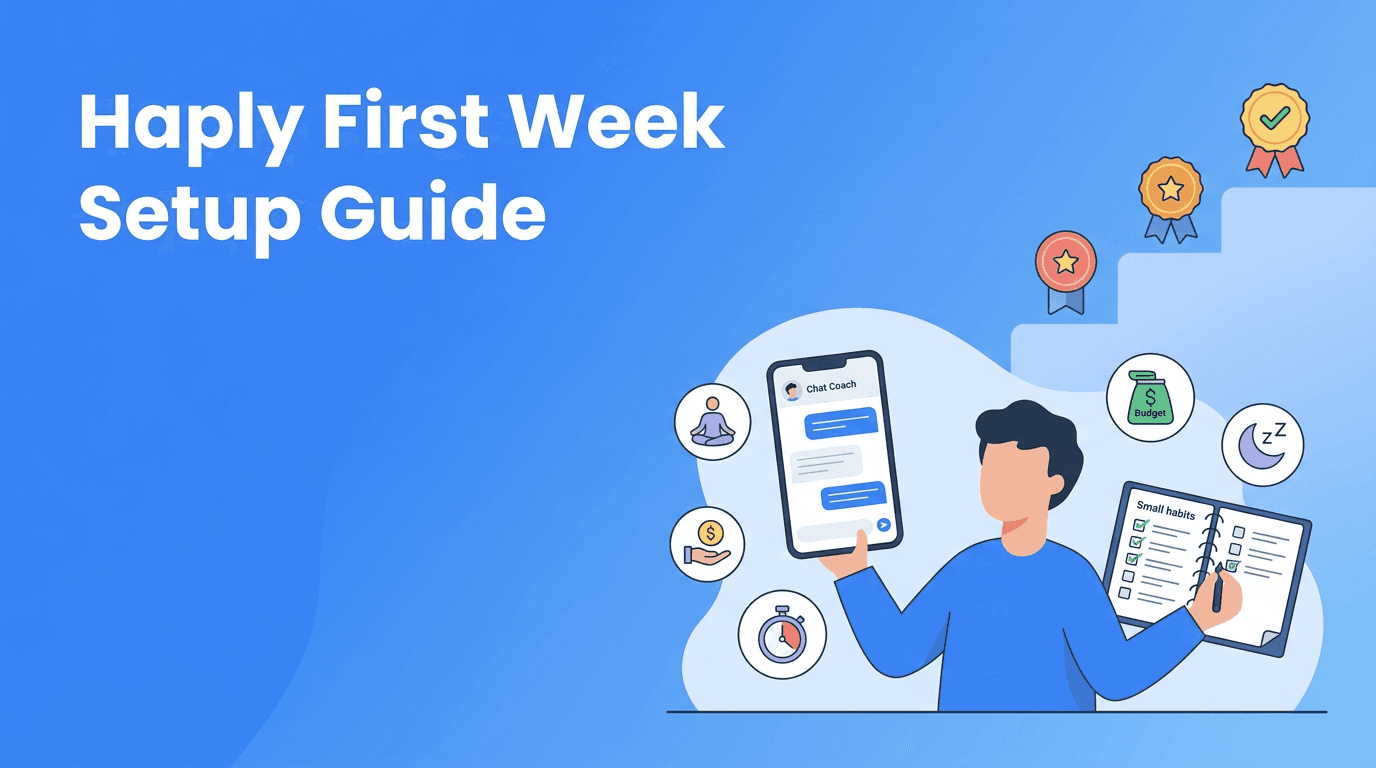
On iOS and Android, users can move from reflection to action in minutes. A person might start with a coaching chat, set a small goal, use the Task Planner to define it, rely on reminders to follow through, and then build momentum through streaks and achievements. This is microlearning coaching applied to everyday life, not as theory, but as repeated practice.
See the method in action
If you want personalized coaching that is built on behavior science, short sessions, and tools designed for real life, Haply offers a practical place to start. The app includes specialized AI coaches, habit streaks, mini-apps, and a 7-day free trial.
Try Haply FreeA more thoughtful model for AI coaching
What makes Haply different is not just that it uses AI. It is that the product reflects a clear point of view about human change. People need support that is timely, specific, and sustainable. They need tools that reduce friction, not add more of it. And they need encouragement that leads to action, not just endless conversation.
That is the promise behind the Haply methodology: use evidence from behavioral psychology, coaching science, and microlearning research to make self-improvement more usable. For thoughtful users who want to understand the why before committing, that design philosophy matters. It suggests the app was built not to impress in a demo, but to help in daily life.
Frequently Asked Questions
What is the Haply methodology?
The Haply methodology is a coaching approach built around short sessions, personalized guidance, habit streaks, and specialized coaches. It uses research from behavioral psychology, microlearning, and coaching science to make change easier to sustain.
Why are 10-15 minute coaching sessions effective?
Short sessions reduce overwhelm, improve focus, and make it easier to take immediate action. They are also easier to repeat consistently, which is essential for long-term behavior change.
How does AI personalization improve coaching?
AI personalization helps coaching become more relevant over time by adapting to a user's goals, habits, preferences, and patterns. This makes sessions feel more specific, timely, and actionable.
Do habit streaks really help build habits?
Yes, streaks can reinforce consistency by making progress visible and rewarding repeat behavior. They work best when the habit is realistic and tied to a clear identity or goal.
Why are specialized AI coaches better than generic chatbots?
Specialized AI coaches are designed for specific life areas, so their prompts and guidance are more targeted and practical. That usually leads to better coaching effectiveness than broad, one-size-fits-all responses.