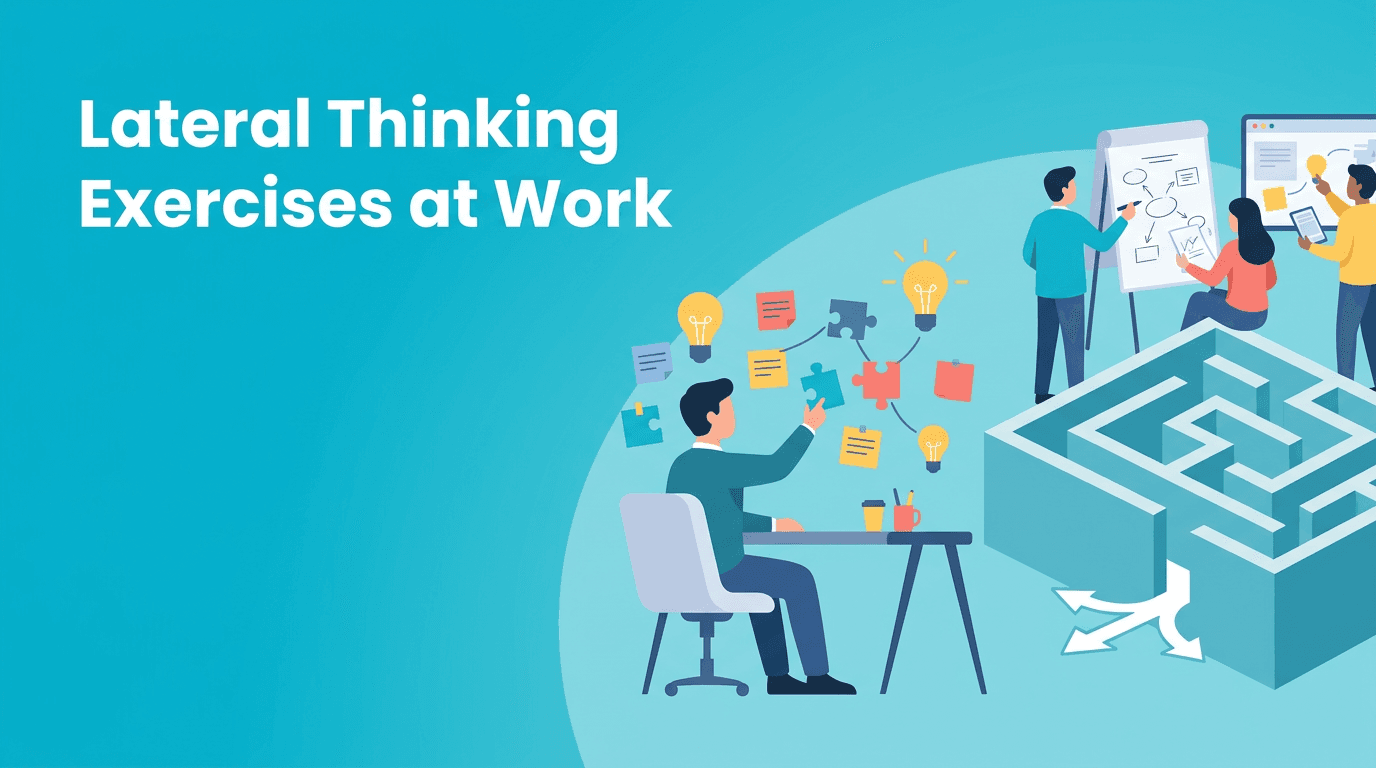
Lateral Thinking Exercises for Better Problem Solving at Work
Lateral thinking exercises can sharpen problem solving, unlock innovation, and help professionals generate creative solutions when standard approaches stop working.

By Haply Team
Haply Editorial Team
Most teams do not struggle because they lack effort. They struggle because they keep using the same mental route for every challenge. Lateral thinking exercises help professionals break that pattern, improve problem solving, and discover creative solutions that feel fresh, practical, and surprisingly effective.
If you lead projects, build products, write content, or run a business, your best advantage is often not speed. It is the ability to see more than one path. That is where innovation, design thinking, and structured idea play become useful. Instead of waiting for inspiration, you can train your mind to generate better options on demand.
Why linear thinking limits problem solving
Linear thinking is useful when the path is known. It works well for checklists, standard operating procedures, and repeatable tasks. But when a customer need changes, a campaign stalls, or a product feature underperforms, linear logic often keeps you circling familiar answers.
- You reuse solutions that worked in the past, even when the context has changed.
- You define the problem too narrowly, which hides better opportunities.
- You reject unusual ideas too early because they seem inefficient at first.
- You confuse fast answers with strong answers, which weakens innovation.
You cannot solve a new problem with an old viewpoint and expect a new result.
How lateral thinking exercises support innovation
At its core, lateral thinking means approaching a challenge from unexpected angles. It does not replace analysis. It expands it. Used well, lateral thinking exercises create more raw material for decision-making, which is essential for both design thinking and strategic problem solving.
What makes this approach effective
- It helps you generate multiple interpretations of the same problem.
- It encourages reframing before execution, which often saves time later.
- It makes room for unconventional combinations that lead to innovation.
- It reduces attachment to the first reasonable answer.
5 lateral thinking exercises you can use this week
1. Reverse the goal
Ask, "How could we make this problem worse?" Then list every possible way. If your team wants better customer retention, brainstorm how to guarantee people leave. You may uncover friction points, weak messaging, or delayed support that were invisible in a normal planning session. This is one of the fastest lateral thinking exercises for surfacing hidden causes.
2. Change the user
Imagine your challenge from the perspective of a completely different person. How would a first-time customer, a child, a skeptical investor, or a busy parent experience the same product or message? This simple shift strengthens empathy, which is also central to design thinking.
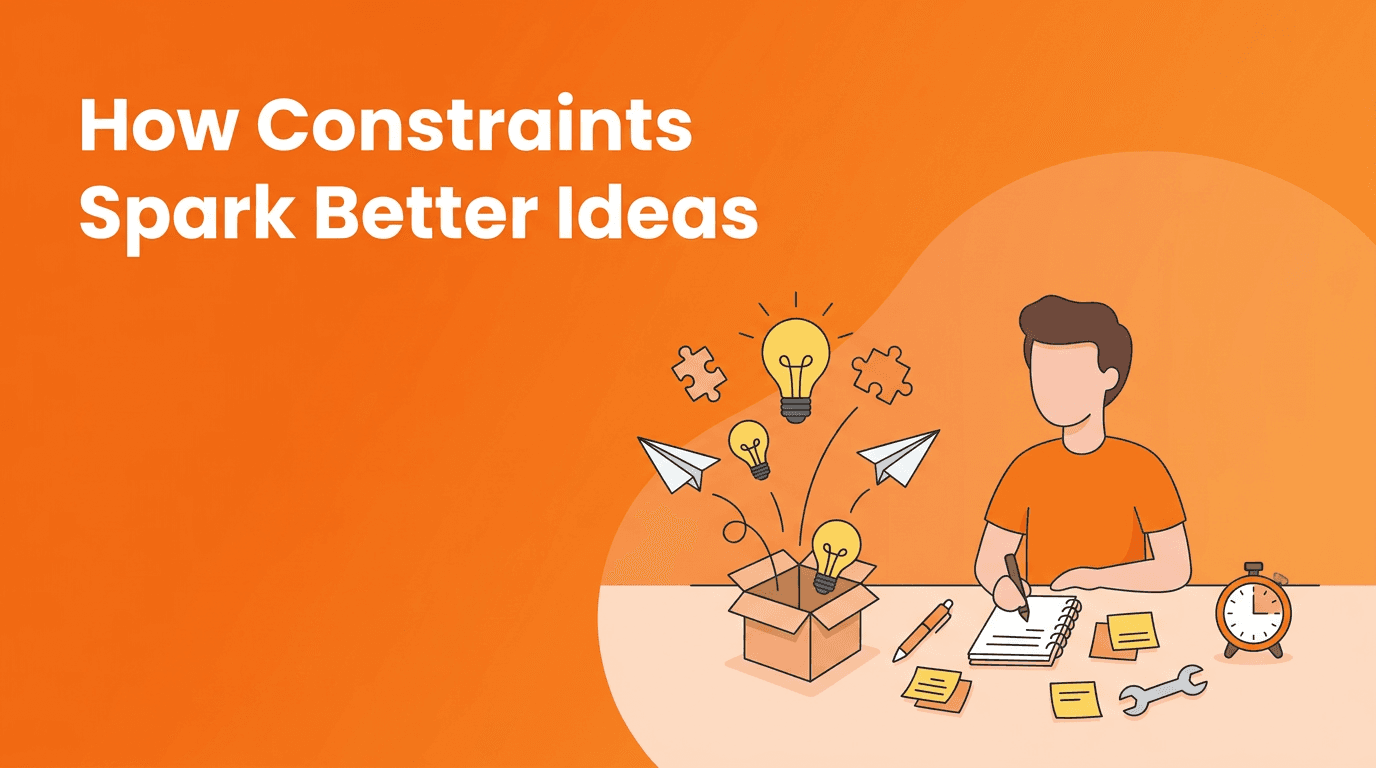
3. Add a constraint
Constraints are often treated as obstacles, but they can force originality. Ask your team to solve the issue with half the budget, one channel, no meetings, or a 24-hour deadline. Artificial limits can trigger more focused creative solutions than unlimited freedom.
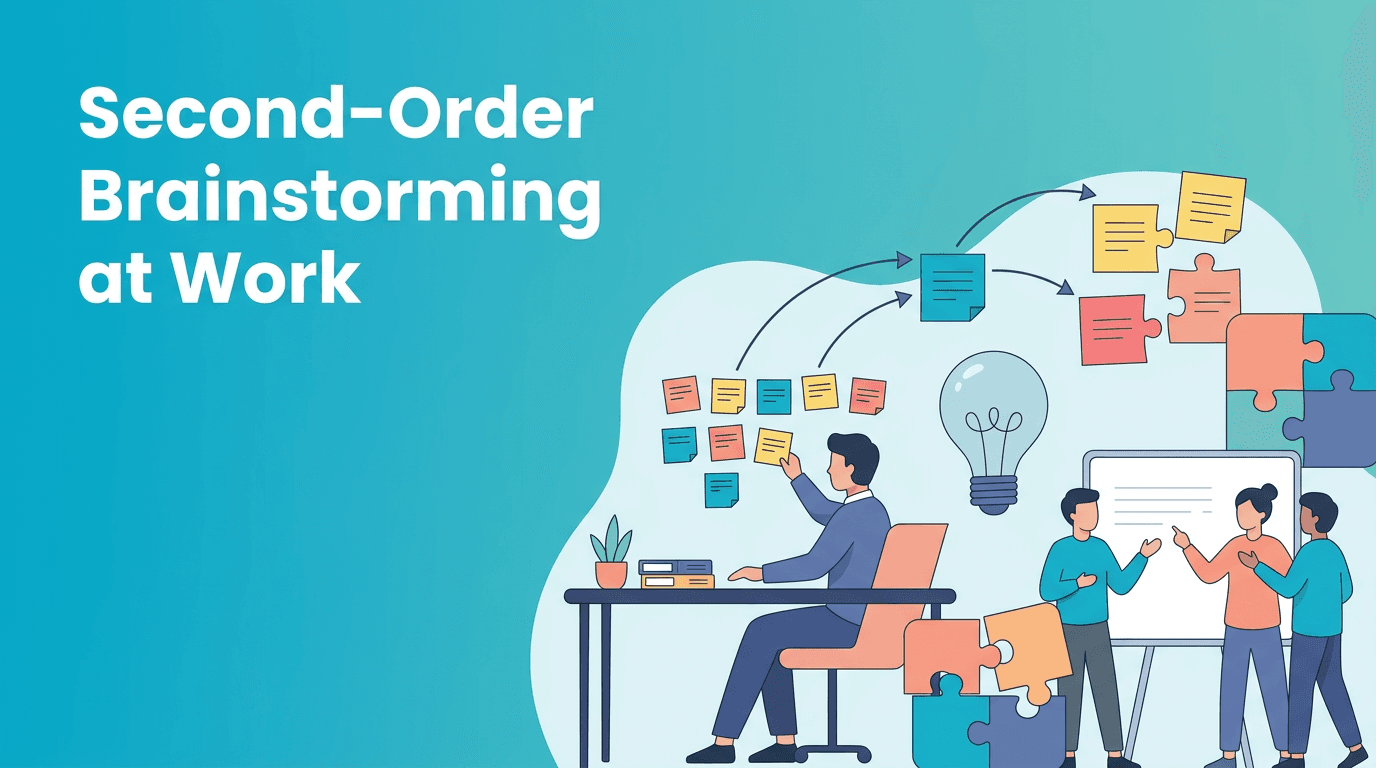
4. Combine unrelated models
Borrow a pattern from another field. What can your onboarding flow learn from museums, gyms, airlines, or video games? Many breakthroughs in innovation happen when one industry imports a useful structure from another.
5. Generate 10 bad ideas first
This lowers pressure and weakens perfectionism. Once the obvious bad ideas are out, people usually relax enough to suggest the interesting ones. For teams that freeze in polished meetings, this exercise opens creative momentum quickly.
A simple framework for using these exercises in meetings
- Start with one clearly defined challenge statement.
- Spend 5 minutes reframing the problem in at least three ways.
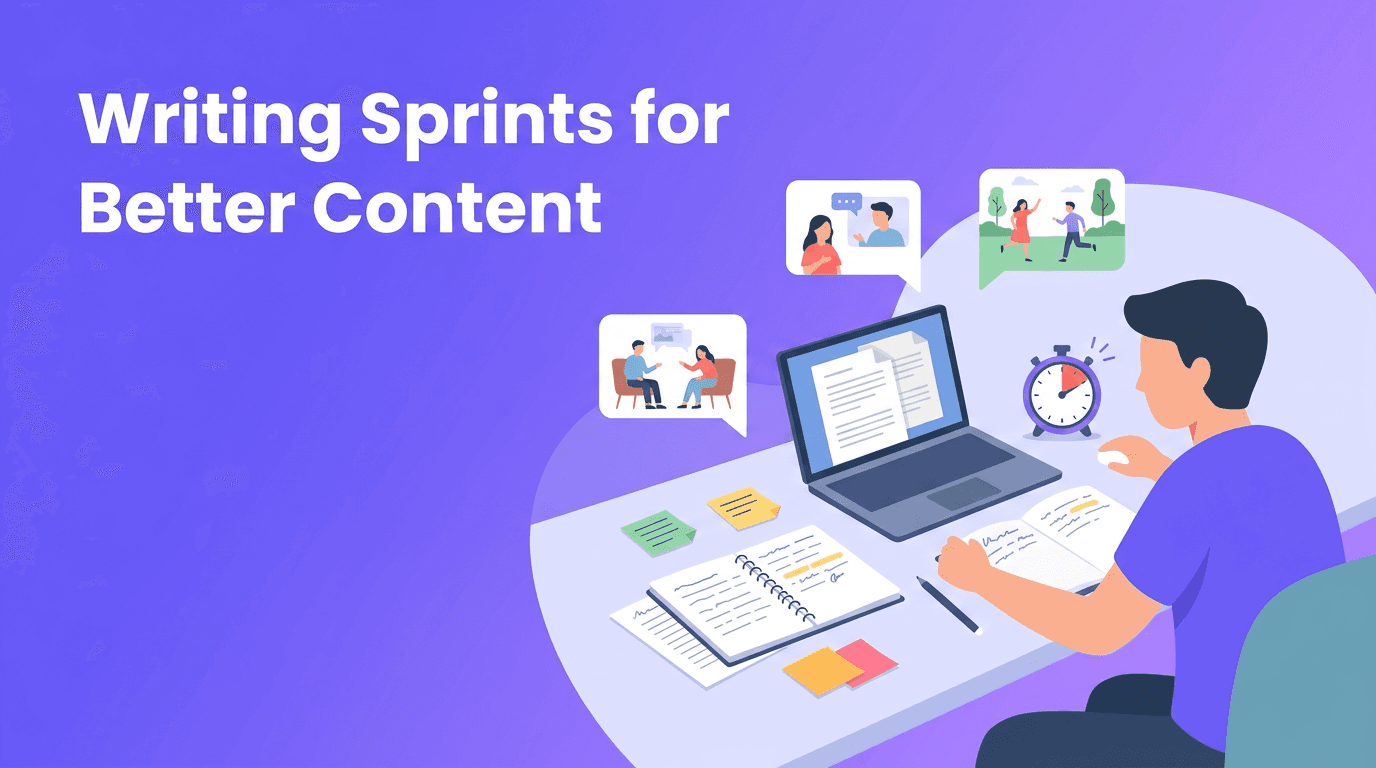
- Choose one exercise and set a timer for 10 minutes.
- Capture every idea without judging it too early.
- Group patterns and select 2 to 3 options for testing.
- Decide on one small experiment, not a perfect final answer.
This process works because it treats ideation as a skill, not a personality trait. The goal is not to sound clever. The goal is to improve problem solving quality through structured exploration.
Build a creative habit with Haply
Want more consistency with idea generation? Haply is an AI life coaching app for iOS and Android that can help you build a creativity routine, track streaks, and use tools like the Idea Board to capture and develop new concepts.
Try Haply FreeHow to make lateral thinking a repeatable practice
The biggest mistake is using creativity only in emergencies. If you want stronger creative solutions, build small repeatable habits. Keep an idea log, schedule 15-minute weekly ideation blocks, and review stalled problems with a new prompt instead of forcing immediate answers.
Apps can help here. With Haply, you can use chat-based coaching to reflect on stuck projects, create reminders for creative practice, and turn insight into action through mini-tools and goal-based planning. For busy professionals, that structure makes experimentation easier to sustain.
When to use design thinking instead of quick brainstorming
Quick ideation is helpful, but not every challenge is just an idea shortage. If the issue involves user behavior, unmet needs, or unclear friction, design thinking gives you a stronger path. It pushes you to understand people first, then prototype possible answers. In many cases, the best workflow is to combine empathy research with lateral thinking exercises.
- Use brainstorming when you need volume fast.
- Use design thinking when you need insight before ideas.
- Use both when your team needs practical innovation, not just novelty.
Final thought: better questions create better solutions
Creativity at work is rarely magic. More often, it is the result of asking better questions, widening the frame, and testing possibilities before dismissing them. When used consistently, lateral thinking exercises can strengthen innovation, improve problem solving, and help you find original answers without waiting for a breakthrough moment.
Frequently Asked Questions
What are lateral thinking exercises?
Lateral thinking exercises are prompts or techniques that help you approach a problem from a new angle. They are designed to break routine thinking and generate fresh ideas.
How do lateral thinking exercises improve problem solving?
They expand the number of possible solutions before you evaluate them. This helps you avoid default answers and uncover more effective options.
What is the difference between lateral thinking and design thinking?
Lateral thinking focuses on generating unexpected ideas from different angles. Design thinking is a broader process that starts with user needs and moves into testing solutions.
Can teams use lateral thinking exercises in meetings?
Yes. They work especially well in short, timed sessions where the goal is to reframe a challenge and produce multiple options quickly.