New Manager Burnout: A Leadership Reset for Better Management and Team Building
New manager burnout can quietly derail leadership, management, and team building. Learn a practical reset that helps first-time managers delegate better and lead with more confidence.

By Haply Team
Haply Editorial Team
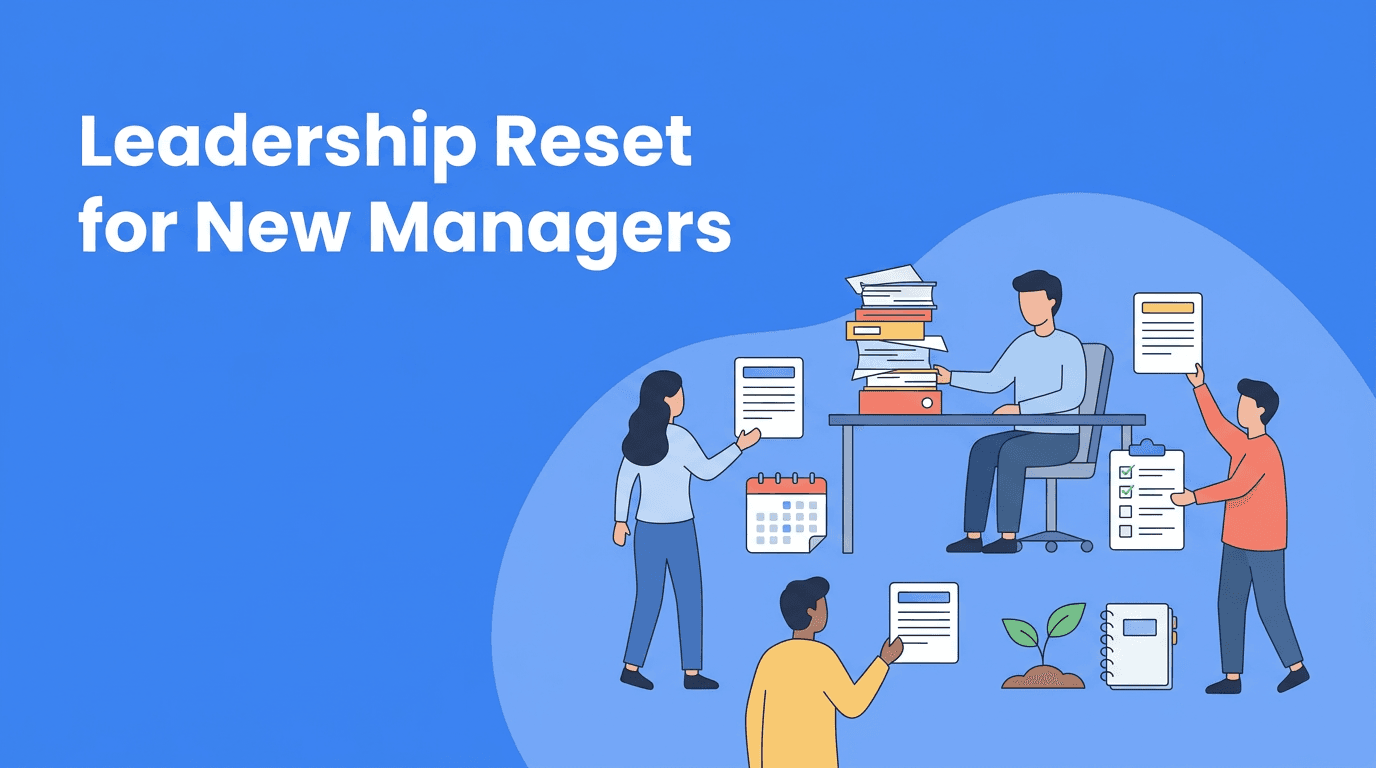
New manager burnout often looks like commitment, not collapse. You say yes to every meeting, review every detail, and carry work your team could handle, all in the name of strong leadership. But for many new leaders, that pattern creates stress, weakens management, and quietly blocks real team building.
If you are a first-time manager, the goal is not to work harder than everyone else. It is to build a team that can perform without your constant rescue. This article offers a practical reset so you can reduce overload, improve delegation, and create a healthier leadership style from the start.
Why new manager burnout happens so fast
Many aspiring leaders are promoted because they were excellent individual contributors. Then the role changes overnight. Success is no longer about doing the work yourself. It is about setting direction, coaching others, and making better decisions with limited time.
- You keep ownership of tasks because it feels faster than explaining them.
- You confuse being available with being responsible for everything.
- You avoid hard feedback, then compensate by fixing problems yourself.
- You try to prove your value through output instead of clarity and support.
- You treat every request as urgent, which destroys focus and energy.
"The first job of a leader is not to be the hero. It is to create more heroes on the team."
The hidden cost of overfunctioning in management
When new manager burnout sets in, the damage is bigger than personal stress. Your team starts waiting for approvals, ownership gets blurry, and performance depends too much on your energy level. That is not sustainable management. It is a bottleneck.
What overfunctioning looks like
- Rewriting team members' work instead of coaching them
- Running status checks so often that people stop thinking independently
- Taking on urgent tasks before asking who actually owns them
- Joining every meeting because you fear missing context
- Solving interpersonal tension alone instead of building team norms
This is where delegation becomes a leadership skill, not just a productivity trick. Good delegation protects your time, develops your people, and improves execution quality over time.
A 4-part reset for first-time manager success
1. Audit your rescue habits
For one week, write down every task you touch that someone else could partly own. Highlight tasks that repeat. These are your best delegation opportunities. If you use a coaching tool like Haply, its Career coach can help you reflect on patterns, while the Task Planner and daily reminders make it easier to follow new manager habits consistently.
2. Delegate outcomes, not just tasks
Weak delegation sounds like, "Can you help with this?" Strong delegation sounds like, "Please own the weekly client update, send it by Thursday noon, and flag risks by Wednesday." Clear outcomes improve trust and reduce back-and-forth.
3. Build team building into your weekly rhythm
Team building does not require forced games. It grows when people understand roles, communication norms, and what good work looks like together. Use one weekly check-in to ask: What is working, where are we stuck, and what should we do differently next week?
4. Protect leadership time
Block time for thinking, coaching, and planning. If your calendar is full of reactive work, your team will feel your stress. Better leadership requires white space for judgment, not just nonstop activity.
Build better leadership habits with Haply
Haply is an AI life coaching app for iOS and Android that helps you turn insight into action. Use the Career coach for leadership reflection, the habit tracker for new routines, and the Today Dashboard to stay grounded during busy management weeks.
Try Haply FreeHow to delegate without feeling like you are losing control
Many new leaders resist delegation because they fear lower quality. The answer is not to hold everything tighter. It is to create simple control points that support accountability.
- Define the result, deadline, and decision rights upfront.
- Ask the team member to summarize the plan in their own words.
- Set one midpoint check, not five unnecessary follow-ups.
- Review the process after delivery so learning compounds.
- Praise ownership publicly, not just flawless execution.
This approach helps prevent new manager burnout because you stop managing by constant interruption. You move toward systems, trust, and repeatable expectations.
Leadership habits that make management easier
- Start one-on-ones with coaching questions, not status updates.
- Document recurring processes so your team does not rely on memory.
- Separate urgent issues from important development work.
- Give feedback while the situation is still fresh and fixable.
- Measure your success by team capability, not personal busyness.
A smarter definition of success for first-time managers
If you are a first-time manager, success is not being the most dependable firefighter in the room. It is building a team that communicates clearly, solves problems earlier, and grows stronger with your guidance. That is the difference between survival mode and sustainable leadership.
The best managers are not the ones carrying everything. They are the ones creating structure, trust, and momentum. When you reduce new manager burnout, you make space for better decisions, stronger relationships, and healthier performance across the team.
Frequently Asked Questions
How do I know if I have new manager burnout?
Common signs include constant overwhelm, difficulty switching off, taking back delegated work, and feeling responsible for every team outcome. If your team depends on your nonstop intervention, burnout may already be building.
What is the best delegation method for first-time managers?
Start by delegating clear outcomes with deadlines, ownership, and one check-in point. This builds trust while keeping accountability visible.
How can team building help reduce manager stress?
Strong team building improves clarity, trust, and communication, which reduces preventable problems and last-minute rescues. A better team system means less pressure on the manager.
What should a first-time manager focus on first?
Focus on role clarity, communication norms, and delegation. These three areas create the foundation for stronger leadership and more effective management.