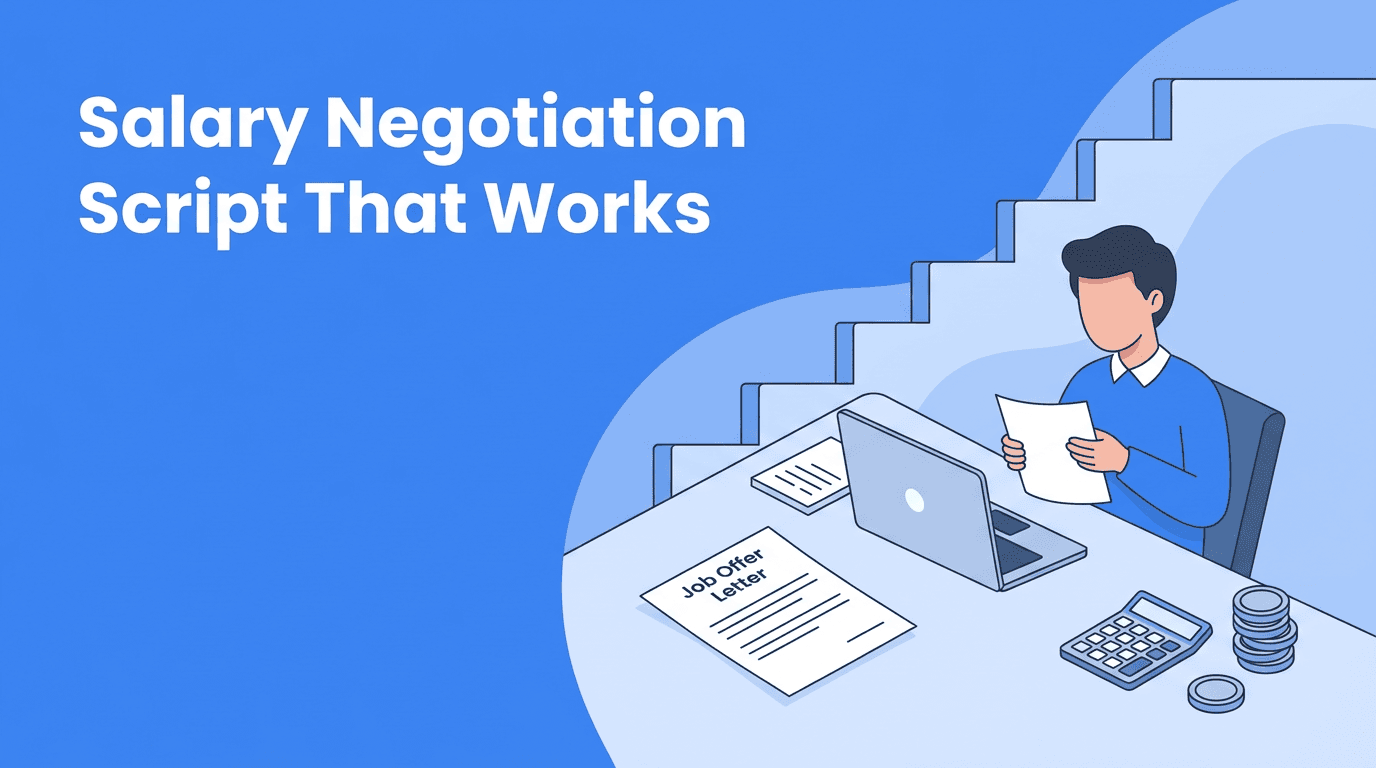
Salary Negotiation Script: How to Ask for More Without Sounding Pushy
A practical salary negotiation script can help you ask for better pay with confidence, protect your budget, and grow long-term financial literacy. Learn what to say and when to say it.

By Haply Team
Haply Editorial Team
A salary negotiation script is one of the simplest tools for increasing income without adding extra hours to your week. If you want stronger budgeting, more room for saving money, and better financial literacy, learning how to ask for higher pay is a practical skill worth building early.
Why a salary negotiation script matters more than people think
Many young professionals focus on cutting expenses first. That matters, but increasing income can create faster momentum. A well-prepared salary negotiation script helps you communicate your value clearly, reduce nerves, and avoid saying yes too quickly to an offer that does not match your market value.
- Higher pay can improve budgeting by giving you more flexibility for rent, debt payments, and essentials.
- Saving money gets easier when your income rises and you set automatic transfers right away.
- Financial literacy improves when you start thinking about compensation as a long-term strategy, not a one-time number.
- A stronger base salary can support future goals like building an emergency fund, exploring entrepreneurship, or launching a small side hustle with less stress.
Use this salary negotiation script before you accept
Step 1: Show appreciation
Start warm and professional. You want the employer to feel that you are excited, thoughtful, and collaborative.
"Thank you for the offer. I am excited about the role and the opportunity to contribute to the team."
Step 2: State your case with evidence
Your salary negotiation script should rely on facts, not emotion. Mention relevant experience, measurable impact, certifications, leadership responsibilities, or market research.
"Based on my experience, the scope of this role, and market data for similar positions, I was hoping for a salary closer to [your target range]."
Step 3: Pause and let them respond
Do not rush to fill silence. A calm pause makes you sound prepared. Negotiation often gets weaker when people over-explain.
Step 4: Negotiate the full package
If the company cannot move much on salary, ask about signing bonuses, remote work support, learning budgets, performance reviews, or extra vacation. A smart salary negotiation script looks at total compensation, not just base pay.
- Ask whether compensation is flexible.
- Request a timeline for the next salary review.
- Explore benefits that reduce monthly costs and support better budgeting.
- Consider professional development funds that strengthen long-term career growth.
What to say in common negotiation moments
If they ask for your current salary
Try redirecting toward the value of the role instead of anchoring yourself too low.
"I would prefer to focus on the value I can bring in this position and the market range for this role."
If they say the offer is final
Stay respectful. Sometimes the number really is fixed, but there may still be room elsewhere.
"I understand. If the base salary is fixed, is there flexibility in bonus structure, professional development support, or a six-month compensation review?"
If you need time to decide
"Thank you. I would like 24 to 48 hours to review the full package carefully before making a final decision."
How to turn a raise into real financial progress
Negotiating better pay only helps if you use the increase well. This is where budgeting, saving money, and financial literacy become practical habits instead of abstract goals.
- Use the first month after a raise to update your budgeting categories.
- Automate saving money by moving part of the increase into an emergency fund immediately.
- Avoid lifestyle inflation by choosing one upgrade, not five.
- Put some of the extra income toward learning, certifications, or a small side hustle idea.
- If you are interested in entrepreneurship, use higher income to create a safety buffer before taking bigger risks.
Build career and money habits in one place
Haply helps you prepare tough conversations, track goals, and stay consistent with better money habits. Use the Career and Finance coaches, habit tracker, and Budget Tracker to turn confidence into action.
Try Haply FreeA simple weekly practice to improve negotiation confidence
Open your notes app and spend 10 minutes each week updating a "proof of value" list. Add wins, revenue impact, positive feedback, project outcomes, and new skills. This makes your next salary negotiation script easier to build because you are not starting from scratch.
- Track metrics you improved.
- Save positive messages from managers or clients.
- Write down problems you solved.
- Note times you showed leadership, initiative, or efficiency.
Final thought
A better career is not only about titles. Sometimes the most practical move is learning one conversation that changes your income trajectory. A strong salary negotiation script can support smarter budgeting, more consistent saving money, stronger financial literacy, and more freedom to explore future goals, from a creative side hustle to long-term entrepreneurship.
Frequently Asked Questions
How do I negotiate salary without sounding rude?
Keep your tone appreciative and use facts about your experience, market value, and the role scope. Confidence sounds professional when it is respectful and specific.
What is a good salary negotiation script example?
A simple example is: "Thank you for the offer. Based on my experience and market research, I was hoping for a salary closer to [range]. Is there flexibility?"
Should I negotiate salary in an email or phone call?
A phone or video call usually works best for back-and-forth discussion, but email can be useful for documenting details and following up clearly.
How can a raise help with budgeting and saving money?
A raise can improve cash flow, making it easier to cover essentials, build an emergency fund, and automate savings. The key is adjusting your budget before lifestyle inflation absorbs the difference.