AI Accountability: How Coaching Technology Can Turn Good Intentions Into Daily Action
AI accountability is changing personal development by helping people turn goals into consistent action. Learn how coaching technology creates structure, feedback, and momentum.

By Haply Team
Haply Editorial Team
AI accountability is quickly becoming one of the most practical uses of AI coaching. Instead of waiting for motivation to appear, people are using coaching technology to create steady follow-through, better self-awareness, and more consistent personal development. When artificial intelligence is designed well, it does not just give advice. It helps you act on it.
Why AI accountability matters more than motivation
Most goals fail for a simple reason: people rely on mood instead of systems. You may know what to do, but remembering it, tracking it, and adjusting it in real life is harder. AI accountability works by closing that gap between intention and execution. It creates small moments of support exactly when you are most likely to drift.
- Motivation is unpredictable, but systems can be repeated.
- Feedback helps you notice patterns before a goal collapses.
- Reminders reduce the mental load of self-management.
- Progress tracking makes effort visible, which builds momentum.
- Personalized prompts help goals fit your real schedule, not an ideal fantasy version of your life.
What AI coaching looks like in practice
Many people hear AI coaching and imagine a chatbot that gives generic advice. In reality, the best tools are more useful when they act like a flexible support layer for daily life. They help you clarify goals, break them into smaller actions, reflect on obstacles, and stay engaged over time.
A simple example of coaching technology at work
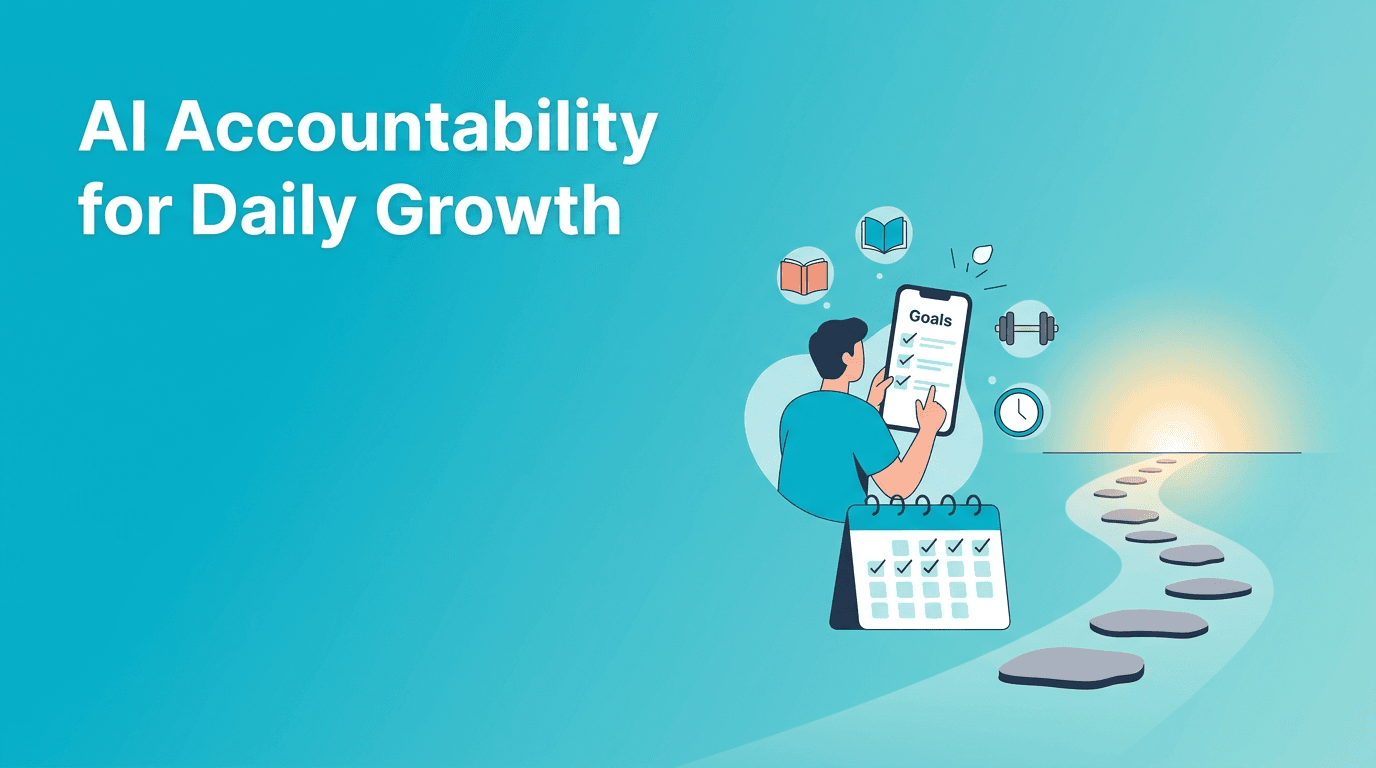
Imagine someone who wants to improve focus, sleep better, and stop feeling behind every evening. An AI accountability system can prompt a morning plan, suggest a short work sprint, encourage a breathing break after stress spikes, and ask for a quick evening review. That is where artificial intelligence becomes meaningful in personal development. It supports decisions in context, not just theory.
"Lasting growth usually comes from repeated small adjustments, not one perfect breakthrough."
The mechanics behind AI accountability
Strong coaching technology creates change through a few simple mechanisms. None of them are magical on their own, but together they can make a major difference.
- Prompting at the right moment: Timely nudges help you act before procrastination takes over.
- Pattern recognition: Artificial intelligence can spot recurring obstacles, such as low-energy hours or missed habits on busy days.
- Micro-reflection: Short check-ins make it easier to learn from your behavior without starting a long journaling session.
- Adaptive support: Good AI coaching adjusts recommendations based on your progress, setbacks, and priorities.
- Visible wins: Streaks, milestones, and daily completion cues reinforce follow-through.
How Haply brings AI accountability into everyday routines
A tool like Haply shows how AI accountability can feel practical instead of overwhelming. As an AI life coaching app on iOS and Android, it offers specialized coaches across productivity, wellness, career, learning, finance, creativity, and relationships. You can use chat-based coaching sessions to clarify a goal, then support it with mini-tools like a Focus Timer, Task Planner, Meditation/Breathe, Sleep Stories, Budget Tracker, and Idea Board.
What makes this useful for personal development is not just having features. It is how the parts connect. Goal-based onboarding personalizes the experience, the Today Dashboard creates daily visibility, and habit tracking with streaks and reminders helps you stay engaged even when life gets messy.
Want support that helps you follow through?
Use Haply to turn goals into daily actions with AI coaching, habit tracking, reminders, and personalized check-ins across every major life area.
Try Haply FreeHow to use AI accountability without becoming dependent on it
The goal of AI accountability is not to make you outsource your judgment. It is to strengthen your ability to notice, choose, and repeat better actions. The healthiest use of coaching technology supports autonomy rather than replacing it.
- Start with one clear behavior, such as planning tomorrow in 3 minutes each night.
- Use short check-ins instead of trying to optimize your entire life at once.
- Review what the system suggests, then decide what actually fits your values.
- Track consistency, not perfection.
- Use the data to learn about yourself, not to criticize yourself.
A practical setup for beginners
If you are new to AI coaching, choose one goal for the next seven days. Set a daily reminder, define the smallest successful action, and add an evening reflection question like: "What made this easier or harder today?" This simple loop is often enough to make personal development feel more real and less abstract.
The future of coaching may be more continuous, not more intense
Traditional coaching often happens in scheduled sessions. That model can be powerful, but it is limited by time, cost, and access. The future may involve lighter, more frequent support through artificial intelligence, where coaching shows up in the moments between decisions. Instead of one big conversation each week, people may benefit from dozens of tiny moments of reflection and adjustment.
This shift could make AI coaching especially valuable for people who want support but cannot access traditional coaching consistently. In that sense, coaching technology is not just a convenience. It is part of how personal development becomes more available to more people.
What to remember about AI accountability
The real promise of AI accountability is simple: it helps people do what they already know matters. With the right design, artificial intelligence can reduce friction, create structure, and support better decisions without making growth feel complicated. If you want change that survives real life, consistent support often beats occasional inspiration.
Frequently Asked Questions
What is AI accountability?
AI accountability uses artificial intelligence to help you follow through on goals through reminders, check-ins, progress tracking, and personalized support.
How is AI accountability different from AI coaching?
AI coaching is broader and may include guidance, reflection, and planning. AI accountability focuses more specifically on helping you stay consistent with actions and habits.
Can AI accountability help with personal development?
Yes. It can support personal development by making goals more visible, breaking them into smaller steps, and helping you reflect on what is working.
Is AI coaching better than human coaching?
They serve different purposes. AI coaching is accessible, frequent, and affordable, while human coaching may offer deeper nuance and emotional insight in complex situations.
What is the best way to start using coaching technology?
Begin with one small goal, set a daily check-in, and track progress for a week. This makes coaching technology easier to test and more likely to stick.