Evidence-Based Coaching: How AI Turns Coaching Psychology Into Daily Practice
Evidence-based coaching is reshaping personal growth by translating coaching psychology, positive psychology, and behavior change research into daily action. Learn how AI makes the process practical.

By Haply Team
Haply Editorial Team
Evidence-based coaching sounds academic, but its real promise is practical: it helps people change what they actually do, not just what they intend to do. As AI enters personal development, the most important question is not whether technology feels futuristic. It is whether it can apply coaching psychology, positive psychology, and behavior change research in ways that improve daily decisions.
That is where the conversation gets interesting. The future of coaching may belong less to charismatic advice and more to systems that reliably support reflection, motivation, and follow-through. For analytically-minded people, this shift matters because it moves coaching from vague inspiration toward a more testable, repeatable process.
Why evidence-based coaching matters now
Traditional self-help often fails for a simple reason: information is not the same as implementation. People usually know they should sleep better, plan their day, regulate stress, or build healthier routines. What they lack is a structure that converts insight into consistent action. Evidence-based coaching addresses that gap by drawing from tested psychological principles rather than intuition alone.
- Coaching psychology contributes models of goal setting, self-regulation, motivation, and reflective learning.
- Positive psychology adds tools for strengths, meaning, optimism, and well-being.
- Behavior change research explains how cues, repetition, rewards, and environmental design shape action.
- AI systems can deliver these principles at the moment they are most useful, which is often between major life decisions, not only during scheduled sessions.
"Insight changes the mind, but repetition changes the life."
From theory to practice: how AI can operationalize coaching psychology
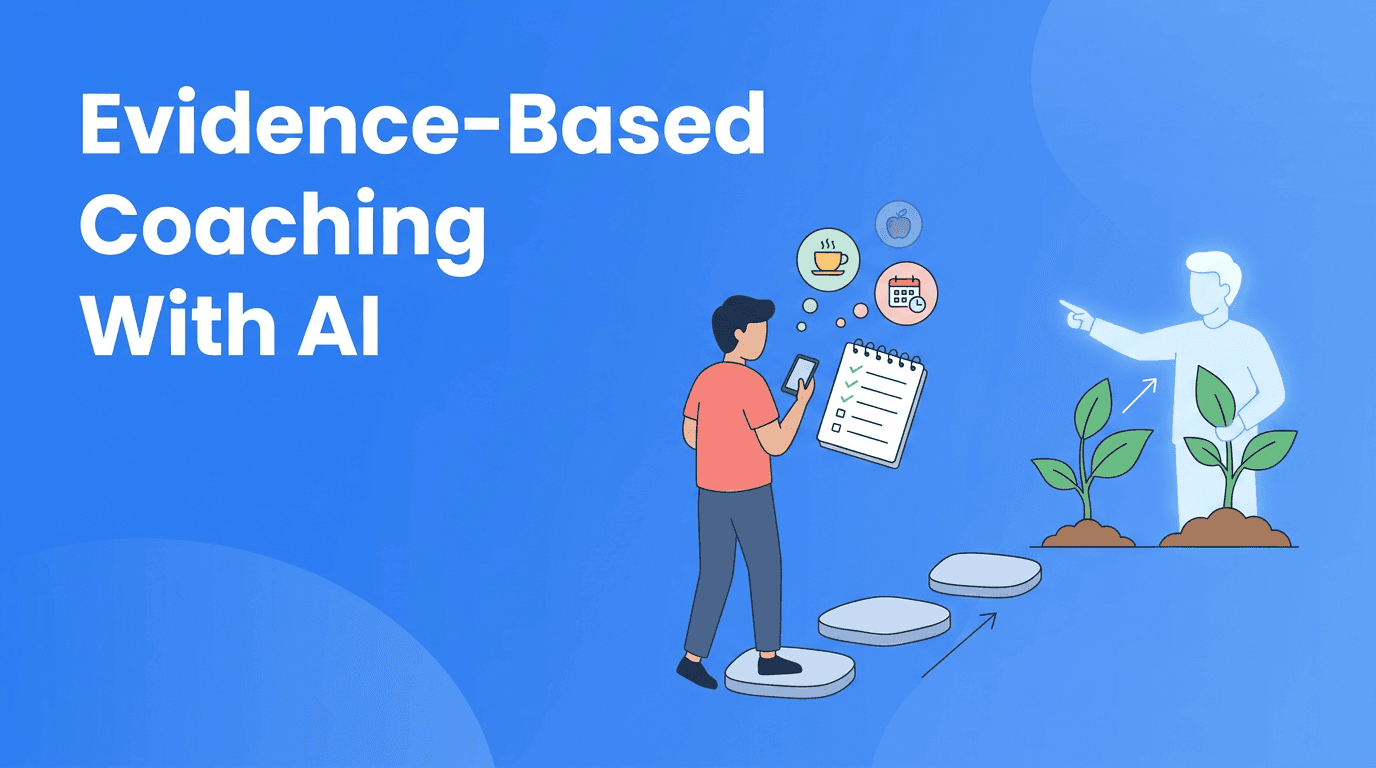
The strongest case for AI in coaching is not that it replaces human wisdom. It is that it can operationalize good coaching principles with unusual consistency. A digital coach can ask reflective questions every day, track patterns over time, notice missed habits, and prompt small adjustments before motivation collapses.
What this looks like in real life
- A user sets a goal to improve focus at work.
- The system breaks that goal into smaller behaviors, such as planning the first task the night before or using timed work intervals.
- Daily check-ins identify friction points like low energy, distraction triggers, or unrealistic task load.
- The coaching process adapts by recommending smaller targets, better cues, or recovery practices instead of relying on guilt.
This is one reason evidence-based coaching fits AI so well. Good coaching is often less about dramatic breakthroughs and more about frequent micro-interventions. Technology can deliver those interventions at scale.
The science behind behavior change in coaching
When people fail to sustain a new habit, they often assume the problem is willpower. Research suggests something more nuanced. Behavior is shaped by context, emotional state, reward expectations, identity, and perceived difficulty. Effective coaching therefore focuses on designing conditions for success, not merely demanding more discipline.
- Specific goals outperform vague intentions because they reduce ambiguity.
- Self-monitoring increases follow-through because tracked behavior becomes visible behavior.
- Immediate feedback helps people adjust faster than delayed reflection alone.
- Small wins build efficacy, which increases the probability of continued effort.
- Environmental cues often matter more than motivation in repetitive behaviors.
An app like Haply can support this process naturally. Its chat-based coaching, habit tracker, daily reminders, and mini-apps like Focus Timer or Task Planner create a behavioral architecture around the user. Instead of asking someone to remember every good intention, the system helps make action easier in the moment.
Turn growth science into a daily system
Use Haply on iOS or Android to apply evidence-based coaching through personalized AI guidance, habit tracking, and practical mini-tools for real behavior change.
Try Haply FreePositive psychology without the fluff
Some analytically-minded readers are skeptical of positive psychology because it is often reduced to slogans about gratitude or optimism. That skepticism is fair. At its best, however, positive psychology is not about forced positivity. It studies the conditions that help people function well, sustain motivation, and use their strengths effectively.
Useful positive psychology applications in coaching
- Strengths identification helps people build systems that fit their natural tendencies.
- Hope theory supports pathway thinking, meaning the ability to generate routes around obstacles.
- Self-compassion reduces the all-or-nothing collapse that often follows setbacks.
- Meaning-based reflection improves persistence by connecting tasks to values rather than pressure alone.
In technology-powered coaching, these ideas become actionable when they are embedded into prompts, journaling flows, progress reviews, and adaptive goals. The value is not in sounding encouraging. The value is in increasing the odds that a person continues after a difficult day.
What makes AI coaching credible, not just convenient
Convenience is not enough. If digital coaching is to earn trust, it must be judged by better standards: Does it encourage realistic goal formation? Does it support reflection instead of dependence? Does it align with established principles from coaching psychology? Does it help users learn patterns about themselves over time?
A strong system usually includes several elements: personalized onboarding, regular check-ins, measurable progress, practical tools, and feedback loops that connect intention with outcome. Haply, for example, combines goal-based onboarding with specialized AI coaches across productivity, wellness, career, learning, finance, creativity, and relationships. That breadth matters because behavior rarely changes in isolation. Sleep affects focus, stress affects spending, and work habits affect relationships.
A better way to think about the future of coaching
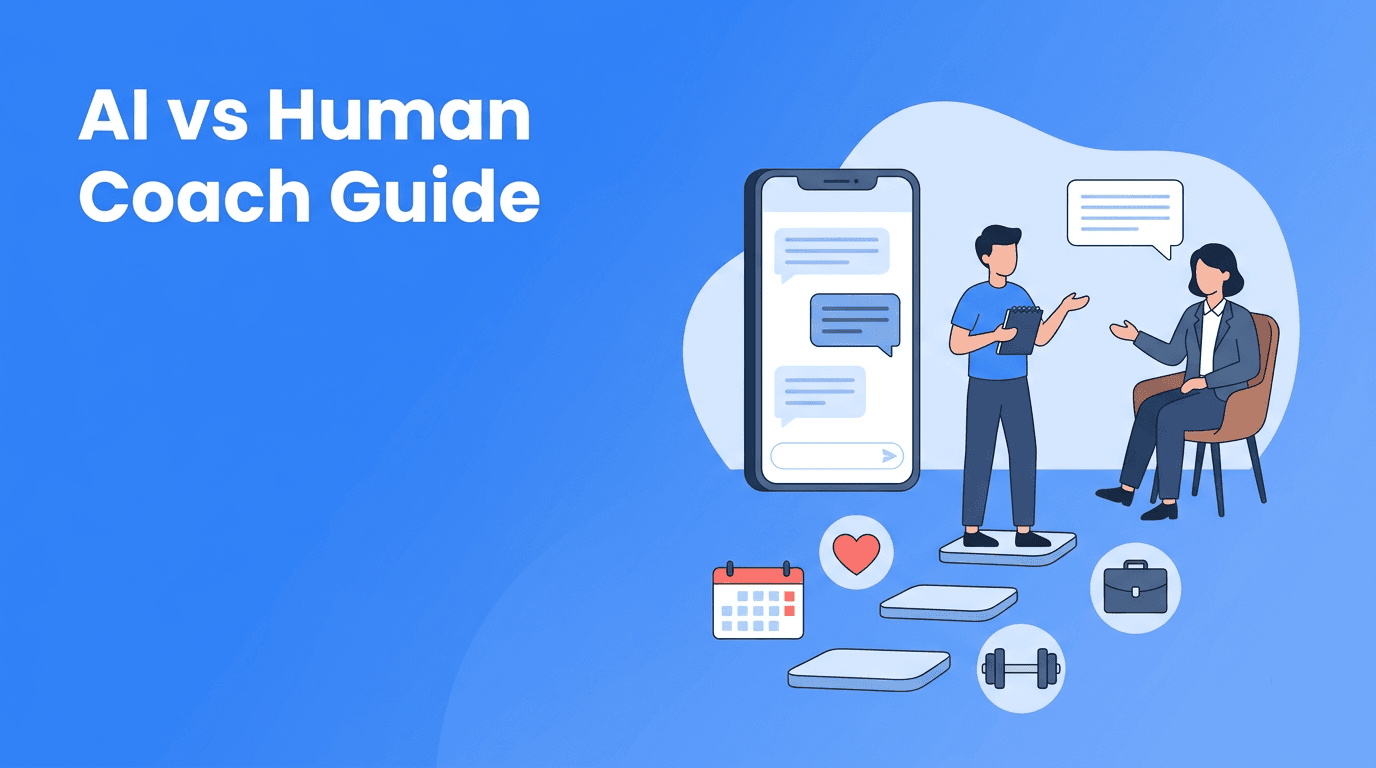
The future of coaching is unlikely to be a winner-takes-all contest between humans and machines. A more plausible model is layered support. Human coaches may remain especially valuable for deep nuance, identity work, and complex life transitions. AI may excel at continuity, repetition, pattern tracking, and daily accountability.
- Use human coaching for high-complexity reflection and relational depth.
- Use AI support for everyday execution, habit consistency, and structured self-observation.
- Use both together when you want strategic insight plus daily follow-through.
For many people, the biggest breakthrough is not access to perfect advice. It is access to timely, affordable, ongoing support. That is how technology can democratize personal development without trivializing it.
How to evaluate an evidence-based coaching app
- Look for systems that emphasize specific goals rather than generic motivation.
- Check whether the app supports daily reflection and not just content consumption.
- Prioritize tools that create feedback loops, such as tracking, reminders, and progress reviews.
- Choose platforms that connect growth to multiple life domains instead of isolated hacks.
- Ask whether the product helps you learn your patterns, not just complete streaks.
The best digital coaching tools do not overwhelm users with features. They create a structured path from intention to action. If an app can help you notice what works, repeat it, and refine it, then it is doing something genuinely useful.
Frequently Asked Questions
What is evidence-based coaching?
Evidence-based coaching uses findings from psychology and behavior science to guide goal setting, motivation, and habit formation. It focuses on methods that are supported by research rather than opinion alone.
How does AI help with behavior change?
AI helps with behavior change by providing timely reminders, adaptive check-ins, progress tracking, and personalized prompts. These tools make it easier to turn intentions into repeatable actions.
Is coaching psychology the same as therapy?
No. Coaching psychology focuses on goal pursuit, performance, self-regulation, and growth, while therapy often addresses mental health conditions, distress, or clinical concerns. They can complement each other, but they are not the same service.
Can positive psychology improve coaching results?
Yes. Positive psychology can improve coaching by strengthening hope, resilience, self-compassion, and strengths use. These factors often support motivation and persistence over time.
What should I look for in an AI coaching app?
Look for personalization, measurable goals, habit tracking, reflective prompts, and tools that support daily action. The strongest apps combine convenience with principles from evidence-based coaching.