AI vs Human Coach: How to Choose the Right Support for Real-Life Change
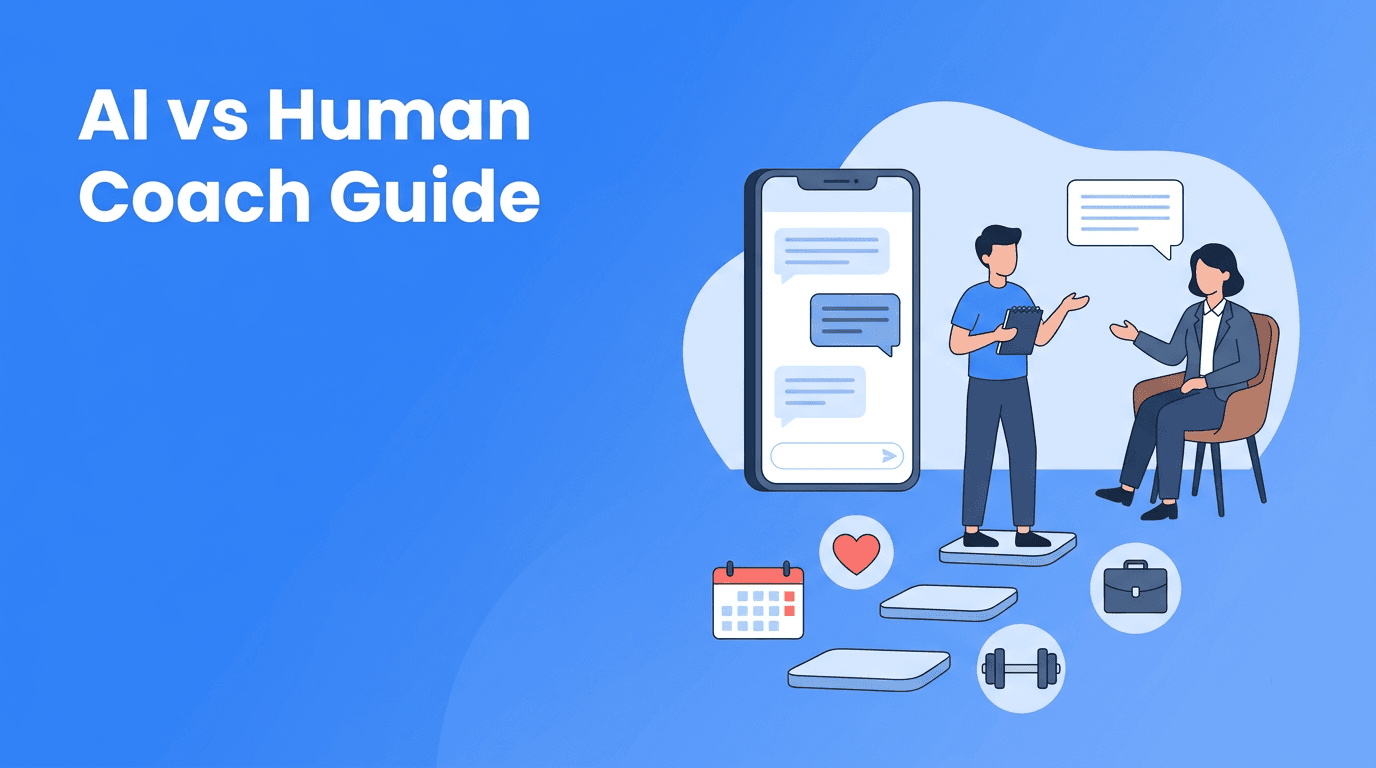
AI vs human coach is a practical question for anyone exploring life coaching, online coaching, or a coaching comparison. Learn how to choose the right fit for your goals, budget, and support style.

By Haply Team
Haply Editorial Team
AI vs human coach is no longer a niche question. As life coaching becomes more digital, more people are comparing traditional sessions with online coaching apps and chat-based support. The best choice depends less on hype and more on what kind of change you want, how often you need support, and what level of accountability fits your daily life.
Why the AI vs human coach question matters now
Coaching used to mean scheduled meetings, a fixed method, and a higher price point. Today, technology has expanded the field. You can work with a certified professional, use an app for daily guidance, or combine both. This shift makes a serious coaching comparison more important, because convenience alone does not guarantee results.
- Choose AI coaching tools when you want frequent check-ins, structured prompts, and lower-cost support.
- Choose a human coach when you need deep reflection, nuanced feedback, or help navigating emotionally complex situations.
- Choose a hybrid approach when you want daily momentum from technology and occasional high-context conversations with a person.
What an AI coach does well
An AI coach is strongest at consistency. It can be available when motivation drops, when your schedule changes, or when you need a quick reset before a meeting, workout, or difficult conversation. In practical terms, this means more touchpoints and less friction between intention and action.
Where AI coaching fits best
- Building routines like sleep, focus blocks, budgeting, journaling, or daily planning
- Breaking large goals into small next actions
- Providing reminders, streaks, and habit tracking
- Offering immediate reflection prompts after setbacks
- Making online coaching accessible for people who prefer privacy or flexible timing
Apps like Haply show this model clearly. As an AI life coaching app on iOS and Android, it offers chat-based coaching across productivity, wellness, career, learning, finance, creativity, and relationships. It also includes practical tools like a Focus Timer, Task Planner, breathing exercises, sleep support, and a personalized dashboard. For many users, that kind of built-in structure matters as much as advice.
"The best coaching system is the one you will actually use consistently, especially on ordinary days, not just ambitious ones."
What a human coach still does better
A human coach brings context, lived experience, and relational depth. They can notice hesitations, contradictions, and emotional undertones that may not be obvious in text-based interactions. In a thoughtful coaching comparison, this is often the biggest advantage on the human side.
When human coaching may be the better fit
- You are working through identity shifts, burnout, grief, or major life transitions
- You want challenging, nuanced dialogue that adapts in real time
- You value being witnessed by another person, not just guided
- You are comfortable with higher costs in exchange for deeper personalization
- You want coaching that draws heavily on professional judgment and interpersonal chemistry
This does not mean human coaching is automatically superior. It means it serves different needs. Some people do not need a long weekly session. They need a prompt at 7:15 AM, a midday reset, and an evening review. Others need exactly the opposite.
A practical coaching comparison: 6 factors to weigh
1. Frequency of support
If you benefit from daily accountability, AI often wins. If you benefit from slower, deeper conversations, a human coach may be more effective.
2. Budget
Life coaching with a human can be expensive, especially over several months. AI tools usually offer a much lower entry point, which makes experimentation easier.
3. Privacy and comfort
Some people open up more easily in online coaching environments because there is less social pressure. Others feel safer and more motivated with a trusted person.
4. Complexity of the goal
Simple and repeatable goals, like routines, productivity, and habit formation, often work well with AI. Complex personal decisions may benefit from human interpretation.
5. Speed of feedback
AI gives feedback immediately. A human coach usually offers richer but less frequent feedback. Think about whether your biggest challenge is staying on track or making sense of deeper patterns.
6. Long-term sustainability
The best system is one you can sustain. A brilliant coaching plan that is too expensive, too time-consuming, or too emotionally draining may not help for long.
Curious what everyday AI coaching feels like?
If you want low-friction support for goals, habits, focus, or personal growth, try Haply's chat-based coaching, habit tracking, and mini-app tools with a 7-day free trial.
Try Haply FreeHow to choose without overthinking it
If you are stuck on AI vs human coach, start with the problem, not the platform. Ask: What am I trying to change in the next 30 days? What support would make follow-through easier? Do I need emotional depth, or do I need a system that helps me act?
- Pick AI coaching first if your main issue is inconsistency, forgotten goals, or lack of structure.
- Pick human coaching first if your main issue is confusion, emotional complexity, or a major life decision.
- Pick both if you want a person for strategic insight and an app for daily execution.
This simple filter prevents a common mistake in life coaching decisions: choosing based on trends instead of needs. Technology-powered personal development works best when the tool matches the behavior you are trying to change.
The future is not AI or human, but better matching
The future of coaching will likely be less about replacement and more about fit. AI can expand access, reduce cost, and support people between moments of insight. Human coaches can continue to offer depth, challenge, and relationship. The real opportunity is matching the right kind of support to the right goal at the right time.
For people exploring online coaching, that is good news. You no longer have to choose one model forever. You can test, combine, and adjust. The smartest approach is not asking which option sounds more advanced. It is asking which one helps you take the next meaningful step.
Frequently Asked Questions
Is AI vs human coach a fair comparison?
Yes, if you compare them by purpose. AI is often better for daily structure and accessibility, while human coaching is often better for depth and complex personal challenges.
Can AI coaching replace life coaching?
Sometimes, for routine goals and habit support. But many people still prefer a human coach for emotionally nuanced or high-stakes situations.
What is the best option for online coaching?
The best option depends on your goal, budget, and preferred support style. Many people do well with an app for daily guidance and a human coach for occasional deeper sessions.
Is AI coaching cheaper than a human coach?
In most cases, yes. AI coaching tools usually cost much less than recurring one-on-one coaching sessions, which makes them easier to try and sustain.