AI Coaching Case Studies: 7 Small Wins That Led to Big Change
These AI coaching case studies show how small daily shifts can spark lasting personal transformation. See practical patterns, AI coaching results, and ways to start.

By Haply Team
Haply Editorial Team
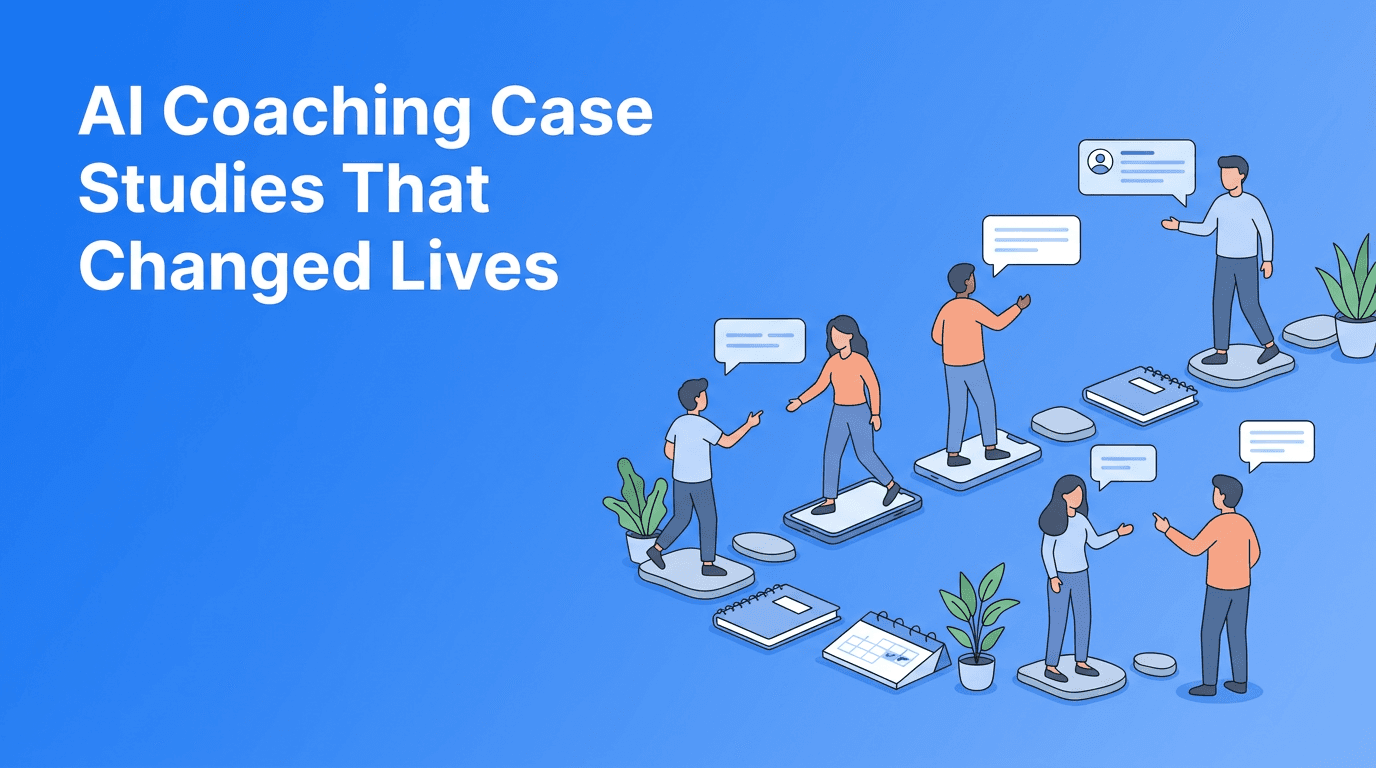
Most people imagine personal transformation as a dramatic before-and-after moment. But the most convincing AI coaching case studies usually look quieter than that. A late-night stress spiral interrupted by a breathing exercise. A skipped task replaced by a 10-minute focus sprint. A difficult conversation rehearsed before it happens. Those small decisions often create the AI coaching results people remember months later.
This article follows seven realistic stories inspired by common coaching patterns across productivity, wellness, career, learning, finance, creativity, and relationships. If you have ever wondered whether technology-powered coaching can lead to real change, these examples show how progress often begins with one small prompt at exactly the right time.
Why small wins matter in AI coaching results
One reason AI coaching results can feel surprisingly powerful is that they do not depend on motivation alone. Good coaching breaks change into repeatable actions. Instead of asking, "How do I become a completely different person?" it asks, "What can I do today that my future self will thank me for?" That shift makes personal transformation feel less intimidating and more doable.
- Small actions reduce resistance. A 5-minute check-in is easier to start than a full life overhaul.
- Fast feedback builds trust. When people see a tiny win quickly, they are more likely to continue.
- Consistency beats intensity. Repeated support often matters more than one breakthrough session.
- Context matters. Coaching works best when advice matches the moment someone is actually in.
7 AI coaching case studies that feel real
1. The overwhelmed project manager who stopped ending every day in guilt
Maya, 34, was good at her job and exhausted by it. Her to-do list kept growing, and every evening felt like evidence that she had failed again. What changed was not a new productivity system. It was a coaching routine built around daily triage. Each morning, she identified one must-do task, one nice-to-do task, and one task to deliberately postpone.
Using a chat-based coach and a simple focus timer, she stopped measuring success by total completion and started measuring it by intentional completion. Within three weeks, she was still busy, but no longer emotionally crushed by unfinished work. That is an underrated form of personal transformation - less self-judgment, more clarity.
2. The student who replaced panic studying with repeatable learning habits
Eli, 21, only studied when deadlines became scary enough. He did not need more advice about discipline. He needed a system that made starting easier. His coach helped him build a study sequence: open notes, set a 15-minute timer, answer one practice question, then decide whether to continue.
That sequence worked because it made the first step obvious. Over time, his sessions became longer without forcing them. The result was not perfect academic discipline. It was reliable momentum. Among many AI coaching case studies, this pattern appears often: remove friction first, then build confidence.
"People do not change because they are pushed harder. They change because the next step becomes clear enough to take."
3. The new manager who learned to pause before reacting
Jon had just been promoted and was surprised by how often he felt defensive in meetings. He wanted to be respected, but under pressure he became sharp and dismissive. His coaching focused on one micro-skill: a 20-second pause before responding to conflict. He used short prompts before recurring meetings and reflected afterward on what triggered him.
After a month, his team did not describe him as "more confident." They described him as easier to talk to. That distinction matters. Some of the best AI coaching case studies are not about external achievement at all. They are about becoming someone other people can trust more easily.
How technology supports personal transformation in daily life
The strongest coaching systems do not only deliver advice. They support follow-through inside normal routines. That is where apps like Haply can be useful. On iOS and Android, Haply offers chat-based coaching across areas like Productivity, Wellness, Career, Learning, Finance, Creativity, and Relationships. Instead of one generic path, users can start with goal-based onboarding and get support that matches what they are actually trying to improve.
- Use the Today Dashboard to see a clear daily overview instead of carrying everything in your head.
- Turn goals into repeatable behavior with the habit tracker, streaks, and reminders.
- Use mini-apps like the Focus Timer, Task Planner, Meditation/Breathe, or Budget Tracker when insight needs to become action.
- Stay motivated through level progression and achievements, which make consistency more visible.
Want coaching support that fits real life?
Try Haply if you want personalized AI coaching, practical tools, and daily structure that makes growth easier to sustain.
Try Haply Free4. The freelancer who finally looked at their finances
Tara avoided money admin for months at a time. Not because she was careless, but because every spreadsheet triggered anxiety. Her breakthrough came from reducing the emotional load. Once a week, she completed a 12-minute money check-in with prompts like: What came in? What went out? What needs attention next?
This is where AI coaching results can be especially practical. Coaching does not magically remove fear. It helps people act while fear is still present. After two months, Tara had better visibility, fewer surprise expenses, and less dread. The change was not glamorous. It was life-giving.
5. The parent who rebuilt an exercise habit without starting from zero
Leah used to believe exercise only counted if it looked like her old routine from before kids. Her coach challenged that all-or-nothing mindset. For six weeks, the target was not fitness performance. It was identity repair: prove to yourself that you are still someone who moves your body regularly.
She tracked 10-minute walks, short stretching sessions, and quick bodyweight workouts. Because the habit was small enough to survive chaotic days, it stuck. Many AI coaching case studies point to the same lesson: sustainable change often begins when people stop trying to resume their old life and start designing for their current one.
6. The aspiring creator who stopped waiting to feel inspired
Noah wanted to write but kept confusing creativity with mood. If inspiration did not arrive, the day felt lost. His coaching introduced a different rule: create on a schedule, evaluate later. He used an idea board to capture rough thoughts and committed to writing badly for 20 minutes before editing anything.
This produced one of the clearest AI coaching results in the group. He did not just create more. He argued with himself less before beginning. That reduction in internal friction is a powerful form of personal transformation, especially for people whose goals are blocked by perfectionism.
7. The partner who learned to have calmer conversations
Aisha noticed that difficult conversations with her partner often escalated before either of them said what they actually meant. Her coaching sessions focused on preparing one sentence in advance: "What I want you to understand is..." That simple structure helped her enter conversations with more honesty and less emotional fog.
She also started reflecting after conflict instead of only during it. Over time, the biggest change was not that arguments disappeared. It was that repair happened faster. In many real-world AI coaching case studies, improvement means better recovery, not perfect behavior.
What these coaching success stories have in common
- They start with specific behaviors, not vague self-improvement goals.
- They respect the person's real constraints, including stress, time, and energy.
- They focus on repeatable systems instead of dramatic motivation spikes.
- They measure progress in practical terms, like calmer meetings, fewer skipped tasks, or faster recovery after setbacks.
- They treat personal transformation as a process of identity built through action.
That is the deeper lesson inside these stories. Coaching becomes effective when it helps people do the next right thing consistently enough that their self-image begins to change. First the behavior feels different. Then life feels different. Eventually, the person does too.
How to create your own AI coaching results
- Pick one area only for the next two weeks: focus, sleep, confidence, learning, money, or relationships.
- Define a win that is small enough to repeat, such as 10 minutes, one page, one conversation, or one check-in.
- Use prompts and reminders at the exact time you usually get stuck.
- Track completion, not perfection. Missed days are data, not failure.
- Review what worked every week so your system gets easier, not heavier.
If you want your own version of these outcomes, start smaller than your ambition tells you to. The strongest AI coaching results often come from goals that seem almost too simple at first. Simplicity creates consistency, and consistency is where change compounds.
Frequently Asked Questions
What are AI coaching case studies?
AI coaching case studies are real or realistic examples showing how people use digital coaching tools to improve habits, mindset, relationships, work, or wellbeing over time.
Can AI coaching really lead to personal transformation?
Yes, especially when it helps people practice small behaviors consistently. Personal transformation often comes from repeated daily actions, not one dramatic breakthrough.
What kind of AI coaching results can people expect?
Common results include better focus, improved routines, calmer communication, stronger accountability, and more follow-through on goals. Results vary based on consistency and fit.
Is an AI life coaching app enough without a human coach?
For many everyday goals, an AI life coaching app can provide structure, reflection, and accountability. Some people still prefer human support for deeper or more complex issues.