AI Accountability: How Coaching Technology Can Turn Good Intentions Into Weekly Progress
AI accountability is changing personal development by turning vague goals into practical weekly actions. Learn how coaching technology and artificial intelligence can support real follow-through.

By Haply Team
Haply Editorial Team
AI accountability is emerging as one of the most useful applications of AI coaching because it solves a common problem in personal development: knowing what to do is not the same as doing it consistently. With the help of artificial intelligence and modern coaching technology, people can create a lighter, more responsive system for reflection, planning, and follow-through.
Why AI accountability matters more than motivation
Many people assume progress depends on feeling inspired. In reality, progress usually depends on clear next steps, regular check-ins, and a system that helps you recover quickly when life gets messy. That is where AI accountability stands out. Instead of waiting for motivation, it supports momentum through structure.
- Motivation fades, but scheduled check-ins keep goals visible.
- Small weekly reviews help you notice patterns before they become setbacks.
- Personalized prompts can turn vague intentions into concrete actions.
- Low-friction support makes personal development easier to maintain during busy weeks.
"People do not need more pressure. They need clearer feedback, better reflection, and a simpler path to the next step."
What AI accountability looks like in practice
A useful accountability system does not just ask, "Did you do it?" It helps you understand why progress stalled, what changed, and what the next realistic move should be. This is where coaching technology becomes powerful. Instead of generic reminders, AI can respond to your patterns, goals, and obstacles in real time.
A simple weekly AI coaching loop
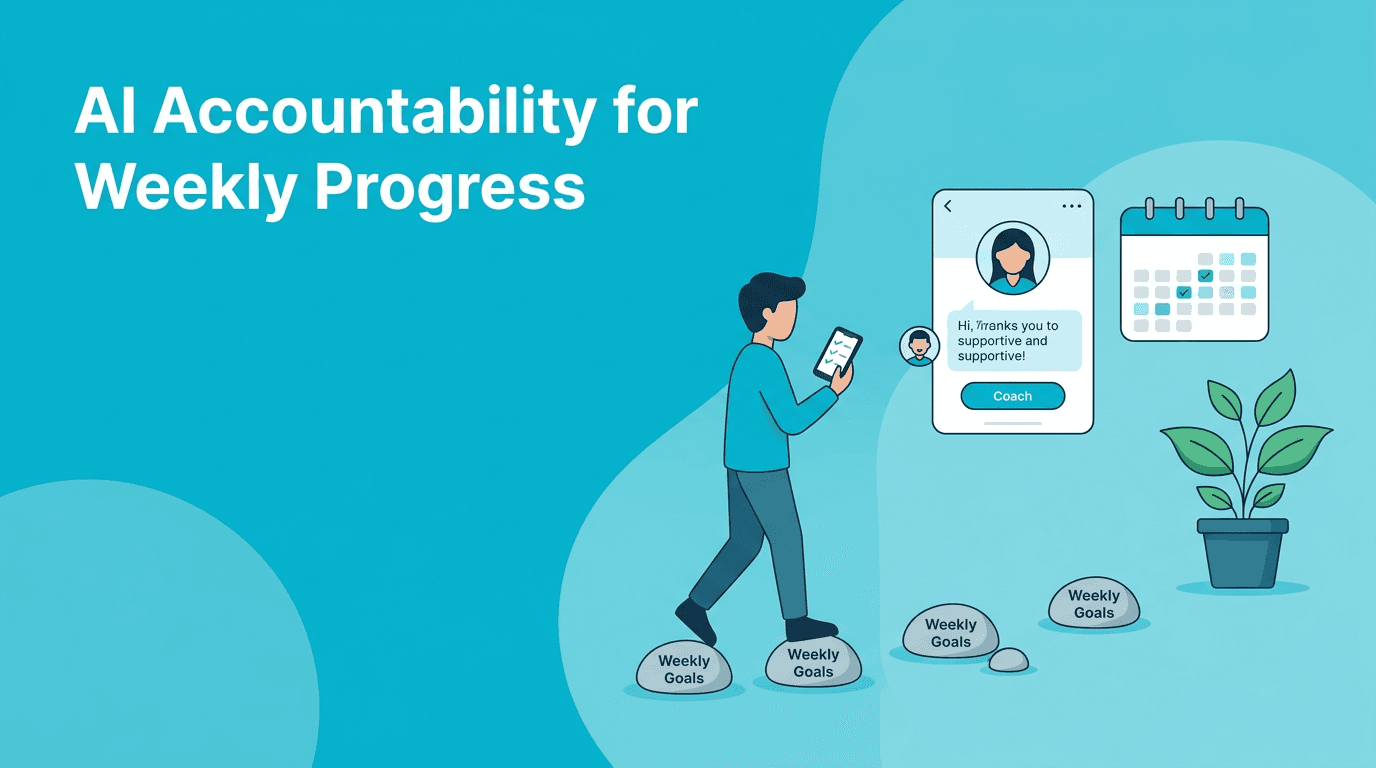
- Set one weekly focus such as sleep, learning, productivity, or confidence.
- Break that focus into 2-3 measurable actions you can complete this week.
- Use a short daily check-in to track what happened, not what you hoped would happen.
- Review the week with an AI coach and identify one lesson and one adjustment.
- Start the next week with a smaller, clearer plan if the previous one felt too ambitious.
This loop is especially effective because it keeps personal development grounded in behavior. You are not just thinking about becoming better. You are building a repeatable process for acting better.
Want guided accountability that fits your life?
Haply is an AI life coaching app for iOS and Android with specialized coaches, habit tracking, daily reminders, and mini-tools that help you turn reflection into action.
Try Haply FreeHow coaching technology reduces friction
One reason traditional self-improvement systems fail is that they ask too much at the wrong time. A journal can be useful, but it still requires you to know what to ask yourself. A planner can help, but it does not adapt when your week changes. AI accountability works best when it reduces friction between intention and action.
- Chat-based coaching can help you process a setback in minutes.
- Habit tracking with streaks gives visible feedback without overcomplicating the process.
- Daily reminders keep goals present without needing constant willpower.
- Mini-apps like focus timers, task planners, breathing tools, and budget trackers support action in the moment, not just reflection afterward.
For example, Haply combines chat-based coaching with practical tools like a Focus Timer, Task Planner, Meditation/Breathe, Sleep Stories, Budget Tracker, and Idea Board. That matters because good coaching technology should help you do the work, not just think about it.
The future of AI coaching is adaptive accountability
The next wave of AI coaching will likely move beyond generic encouragement. We will see more adaptive systems that understand energy levels, changing priorities, and the difference between resistance and overload. In other words, artificial intelligence will become more useful when it gets better at context.
What this future may include
- Smarter check-ins that adjust based on your recent behavior and time availability.
- Goal pathways that change when your routines break down.
- Cross-area coaching that connects productivity, wellness, career, and relationships.
- More accessible support for people who cannot afford or schedule traditional coaching.
This broader access is one of the most exciting parts of AI-powered personal development. Not everyone needs a deep weekly session with a human coach. Many people first need affordable, immediate support that helps them think clearly and stay consistent.
How to start using AI accountability this week
If you are curious about AI accountability, start small. The goal is not to build a perfect system. The goal is to create a feedback loop you will actually use.
- Choose one area where follow-through has been inconsistent.
- Define one weekly outcome that is specific and realistic.
- Schedule a 2-minute daily check-in and a 10-minute weekly review.
- Ask your AI coach to help you spot obstacles, patterns, and simpler next steps.
- Track progress for two weeks, then refine the system instead of abandoning it.
Final thought on AI coaching and real progress
The promise of AI coaching is not that a machine will magically transform your life. It is that better systems can make change more practical, more consistent, and more accessible. AI accountability is a strong example of that shift. When artificial intelligence is used to support reflection, planning, and action, personal development stops being a vague aspiration and starts becoming a weekly practice.
Frequently Asked Questions
What is AI accountability?
AI accountability is a system where artificial intelligence helps you stay consistent with goals through reminders, reflection prompts, progress tracking, and adaptive coaching support.
How is AI coaching different from traditional coaching?
AI coaching is available on demand, often more affordable, and useful for frequent check-ins. Traditional coaching can offer deeper human nuance, while AI is strong at structure and daily support.
Can AI coaching really help with personal development?
Yes, especially when it helps you break goals into smaller actions, review progress regularly, and adjust after setbacks. Consistency is often more important than intensity.
What makes coaching technology effective?
Effective coaching technology reduces friction, personalizes feedback, and connects reflection to action through tools like habit tracking, reminders, planning, and guided check-ins.