AI Accountability Tools: How Coaching Technology Turns Good Intentions Into Daily Action
AI accountability tools use artificial intelligence to turn personal development goals into daily action. Learn how coaching technology creates structure, feedback, and momentum that actually lasts.

By Haply Team
Haply Editorial Team
AI accountability tools are changing how people approach personal development. Instead of relying on motivation alone, these systems use artificial intelligence and smart coaching technology to create check-ins, reminders, reflections, and next steps that make progress feel easier to repeat day after day.
Why accountability is the missing piece in personal development
Most people do not struggle because they lack goals. They struggle because goals are often too abstract, too large, or too easy to ignore when life gets busy. Accountability bridges the gap between intention and action. When that accountability is built into a digital system, it becomes available at the exact moment you need support, not just during a scheduled session.
- Goals feel real when they are broken into small actions.
- Consistency improves when reminders appear at the right time.
- Self-awareness grows when you track patterns instead of guessing.
- Momentum builds when progress is visible, even in tiny wins.
How AI accountability tools actually work
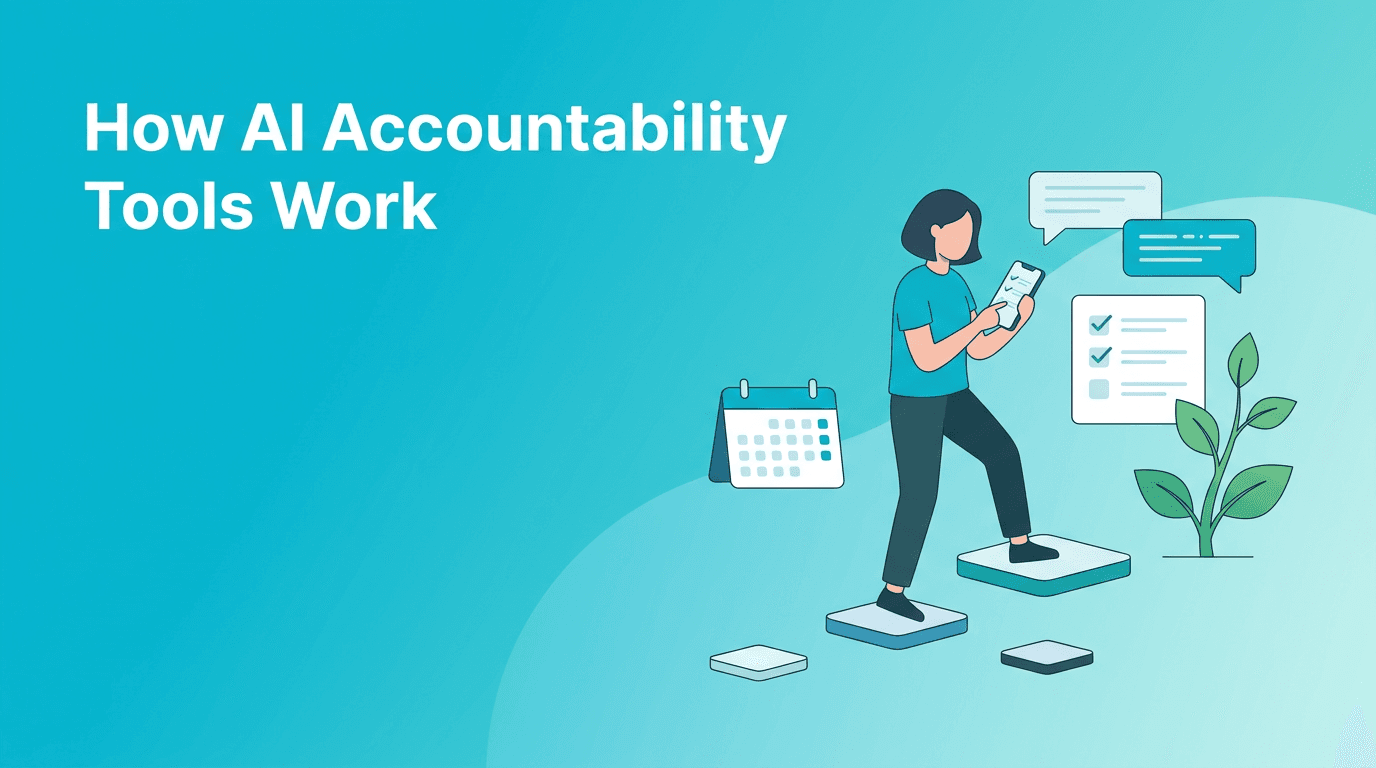
The best AI accountability tools do more than send generic reminders. They gather context from your goals, habits, energy levels, and previous behavior. Then they respond with useful prompts like, "What is the smallest step you can finish in 10 minutes?" or "You usually skip this task on busy days. Want a lighter version today?" That is where AI coaching becomes practical rather than futuristic.
From static plans to adaptive support
Traditional planning tools are often passive. You create a list, then the list waits for you. With artificial intelligence, the experience becomes more adaptive. A coaching system can notice missed streaks, suggest easier targets, encourage reflection after a setback, and help you restart without the guilt spiral that stops many personal growth efforts.
"Lasting change rarely comes from one big breakthrough. It comes from small actions repeated with awareness."
What makes coaching technology more effective than basic productivity apps
A standard to-do app helps you remember tasks. Coaching technology helps you understand behavior. That difference matters. If you keep postponing workouts, overspending late at night, or losing focus in the afternoon, a coaching-based system can guide you to notice triggers and adjust the plan, instead of simply marking another task incomplete.
- Productivity apps organize tasks.
- AI coaching apps connect tasks to goals, emotions, habits, and motivation.
- Basic trackers show what happened.
- AI accountability tools help explain why it happened and what to do next.
Real-life use cases for AI accountability tools
Building a morning routine
If you want a calmer start to the day, an AI coach can help you define a realistic routine, track it, and adapt it over time. Instead of pushing a perfect 90-minute ritual, it might suggest a 5-minute stretch, one journal prompt, and a short focus session. That makes follow-through more likely.
Staying on track with career goals
For career growth, AI accountability tools can turn vague ambitions like "be more strategic" into measurable weekly actions. You might get prompts to prepare for a meeting, reflect on feedback, or complete one learning step per day. Progress becomes visible, which increases motivation.
Improving wellness habits
Wellness goals often fail because people only think in extremes. Coaching systems can support a more flexible approach by helping users recover quickly after missed days. A short breathing session, sleep reflection, or hydration reminder may be enough to preserve the habit loop.
How Haply puts AI coaching into practice
Haply is an AI life coaching app on iOS and Android that shows what modern accountability can look like in everyday life. Users can chat with specialized AI coaches across Productivity, Wellness, Career, Learning, Finance, Creativity, and Relationships, then turn insights into action with tools like a habit tracker, Focus Timer, Task Planner, Meditation/Breathe, Sleep Stories, Budget Tracker, and Idea Board.
What makes this especially useful is the combination of coaching and structure. Goal-based onboarding personalizes the experience from the start. The Today Dashboard creates a clear daily view. Streaks, reminders, achievements, and level progression add motivation without making growth feel rigid or overwhelming.
Try AI coaching with real daily structure
If you want more than inspiration, Haply combines chat-based coaching with practical tools that help you act on your goals every day.
Try Haply FreeHow to use AI accountability tools without becoming overly dependent
The goal of personal development is not to let an app think for you. It is to use support wisely while building your own judgment. The healthiest way to use accountability tech is as a mirror and a guide, not as a source of pressure.
- Start with one goal instead of tracking every area of life at once.
- Use check-ins to build honesty, not perfection.
- Review patterns weekly so the data leads to better decisions.
- Treat reminders as prompts for action, not proof that you are failing.
- Let the system reduce friction, while you keep ownership of the goal.
The future of coaching may be quieter, smarter, and more personal
The future of AI coaching is not just more automation. It is better timing, stronger personalization, and more accessible support for people who may never hire a traditional coach. As artificial intelligence improves, coaching experiences will likely become more conversational, context-aware, and integrated into daily life. The biggest shift may be simple: support will show up in the moments where change actually happens.
Frequently Asked Questions
What are AI accountability tools?
AI accountability tools are apps or systems that use artificial intelligence to help you follow through on goals with reminders, check-ins, habit tracking, and personalized guidance.
How is AI coaching different from a regular habit tracker?
A regular habit tracker records actions, while AI coaching adds context, reflection, and adaptive suggestions based on your behavior and goals.
Can AI accountability tools help with personal development?
Yes. They can support personal development by turning big goals into manageable actions, offering timely feedback, and making progress easier to measure.
Are AI coaching apps effective for busy people?
They can be very effective for busy people because support is available on demand, and plans can adapt to changing schedules and energy levels.