Attention Residue: The Hidden Reason Your Goal Achievement Keeps Stalling
Attention residue may be the missing link between personal transformation and real goal achievement. Learn how to reduce mental carryover, protect your morning routine, and build self-discipline that lasts.

By Haply Team
Haply Editorial Team
If your goal achievement efforts keep losing momentum, attention residue may be the reason. This invisible mental carryover happens when part of your mind stays stuck on a previous task, conversation, or worry, making it harder to fully engage with what matters now. For anyone pursuing personal transformation, understanding this pattern can change the way you approach focus, your morning routine, and self-discipline.
What Attention Residue Really Means
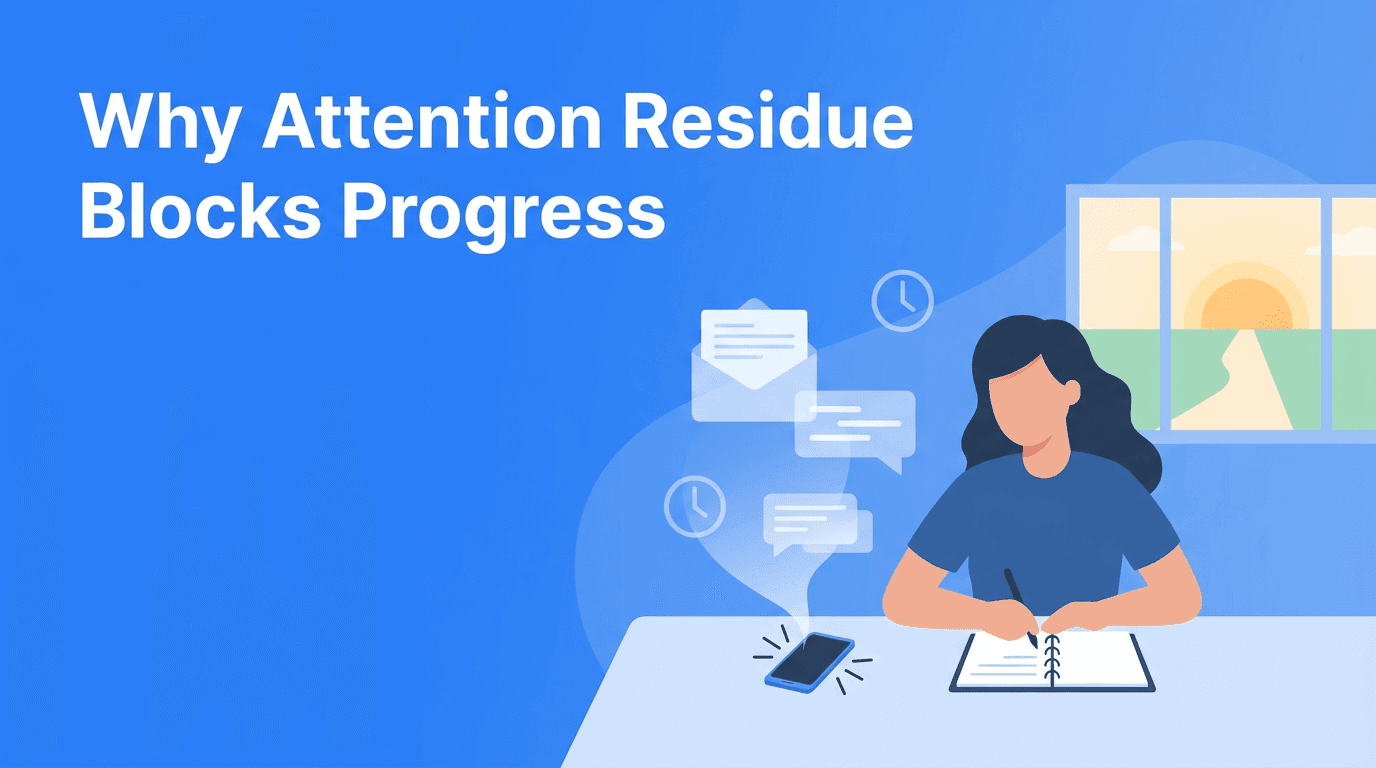
Attention residue is what remains in your mind after you switch from one task to another before mentally finishing the first one. You may close a tab, leave a meeting, or put your phone down, but your brain is still processing the unfinished thread. The result is lower concentration, slower thinking, and more frustration than the current task deserves.
"You cannot do today's best work with yesterday's unfinished thoughts running in the background."
Why it matters for personal growth
Many people assume they need more motivation, stronger willpower, or a stricter system. Sometimes the real issue is simpler: your focus is divided. When your mind is constantly carrying residue from one activity to the next, even a strong growth mindset can feel ineffective because your attention is never fully available.
How Attention Residue Sabotages Goal Achievement
When you are trying to make meaningful changes, progress often depends on consistent, high-quality attention. Attention residue quietly interferes with that process by making every task feel heavier than it is. That is why even a well-planned week can collapse into avoidance, procrastination, or shallow work.
- You start your most important task while still thinking about messages, errands, or unfinished work
- Your morning routine feels rushed because you mentally skip ahead to the rest of the day
- You confuse being busy with making progress toward goal achievement
- You become harder on yourself, which weakens self-discipline over time
- You finish the day exhausted but unclear about what actually moved your life forward
The hidden cost of constant switching
Every unnecessary switch asks your brain to reorient. That reorientation has a cost. Over time, the cost becomes emotional as well as cognitive. You may start believing you are inconsistent, when in reality your environment and habits are training your attention to scatter.
A Better Morning Routine for Cleaner Focus
Your morning routine can either reduce residue or multiply it. If your first 30 minutes are filled with notifications, news, and half-decisions, your mind begins the day already fragmented. A calmer start helps create the mental clarity needed for personal transformation.
- Delay checking messages for the first 20 to 30 minutes after waking
- Write down the top one task that would make the day feel meaningful
- Do a 5-minute brain dump to clear open loops from your mind
- Pair movement, hydration, or breathing with your focus ritual
- Begin one important task before consuming more input from the outside world
This does not need to be perfect. The goal is to protect your early attention so it serves your priorities instead of reacting to everyone else's.
Build Focus With Daily Coaching
Haply is an AI life coaching app for iOS and Android that can help you reduce mental clutter, strengthen habits, and stay consistent with personalized coaching, reminders, and tools like the Focus Timer and Task Planner.
Try Haply FreeHow to Build Self-Discipline Without Fighting Yourself
Real self-discipline is not only about forcing action. It is also about reducing friction before action begins. When you lower attention residue, discipline becomes less dramatic and more repeatable. You no longer need to battle your brain every time you sit down to do meaningful work.
Use this 3-step reset between tasks
- Close the loop: Write one sentence about where you stopped and what the next step is
- Clear the trigger: Shut tabs, silence alerts, or move your phone out of reach
- Choose the entry point: Start the next task with a tiny first action, like opening the document or writing one line
This reset takes less than two minutes, but it protects your attention in a way that supports long-term growth. It also makes transitions feel cleaner, which helps you trust yourself more.
Personal Transformation Comes From Protected Attention
We often talk about changing our lives through better habits, stronger routines, and smarter goals. All of that matters. But personal transformation also depends on what you protect. If you protect your attention, you give your best intentions a real chance to become behavior.
This is where tools can help. With Haply, you can work with specialized AI coaches across productivity, wellness, learning, and more. Its chat-based coaching, habit tracker, Today Dashboard, and mini-apps can help you stay grounded in the actions that matter instead of getting lost in mental spillover.
A Simple Weekly Practice to Reduce Attention Residue
Once a week, spend 10 minutes reviewing where your attention leaked. Ask yourself: What kept following me from one task to another? Which open loops created stress? What part of my environment encouraged constant switching? This kind of reflection turns vague frustration into useful data.
- List unfinished tasks that keep replaying in your head
- Decide whether to do, schedule, delegate, or delete each one
- Notice which apps, people, or times of day create the most mental residue
- Adjust your next week so your hardest work happens during your clearest hours
- Celebrate one improvement, because awareness itself is part of growth
Frequently Asked Questions
What is attention residue in simple terms?
Attention residue is the mental leftover from a previous task that makes it harder to focus on the next one. It often shows up when you switch tasks too quickly or leave things unfinished.
How does attention residue affect goal achievement?
It reduces the quality of your focus, which slows progress on important goals. Even small amounts of mental carryover can make meaningful work feel harder than it should.
Can a morning routine reduce attention residue?
Yes. A calm, intentional morning routine can reduce early distractions and help you begin the day with clearer attention and better momentum.
How can I improve self-discipline when I feel mentally scattered?
Start by reducing task switching and creating clean transitions between activities. When your mind is less overloaded, self-discipline becomes easier to maintain.