Emotional Agility for Self-Improvement: A Practical Skill for Real Personal Growth
Emotional agility is a powerful self-improvement skill that helps you handle setbacks, strengthen resilience, and build habits that support lasting personal growth.

By Haply Team
Haply Editorial Team
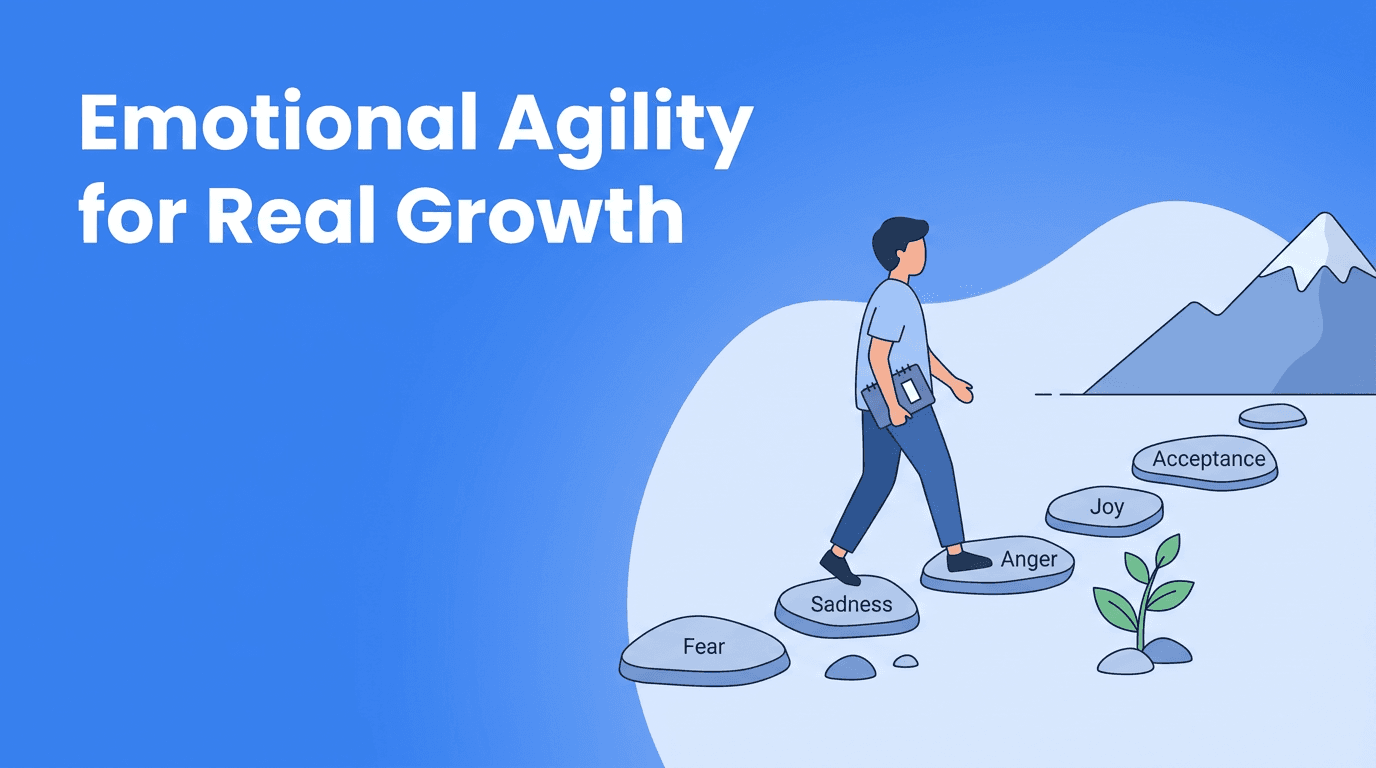
Most people approach self-improvement as a battle against bad habits, low motivation, or difficult emotions. But a more useful path is often emotional agility - the ability to notice what you feel, respond with intention, and keep moving toward what matters. This skill supports personal growth because it helps you stay flexible under pressure instead of getting stuck in avoidance, overthinking, or self-criticism.
Why emotional agility matters for self-improvement
When people struggle with change, the problem is not always a lack of discipline. Often, they are reacting automatically to discomfort. You may want to build better habits, speak up more confidently, or recover from setbacks faster, but frustration, shame, fear, or doubt keep pulling you off track. Emotional agility helps you work with those emotions instead of letting them run your decisions.
- It strengthens resilience by helping you recover without denying what you feel.
- It improves emotional intelligence because you get better at naming, understanding, and managing reactions.
- It supports healthier habits by reducing all-or-nothing thinking.
- It makes personal growth more sustainable because progress no longer depends on feeling motivated all the time.
"You do not have to control every emotion to make a wise next move. You only need enough awareness to choose your direction."
The hidden trap: treating emotions like obstacles
A common mistake in self-improvement is believing that negative emotions are signs of failure. If you feel anxious before a hard conversation or discouraged after missing a routine, you may assume you are not cut out for growth. In reality, discomfort is often part of the process. Emotional agility teaches you that emotions are data, not commands.
What emotional agility looks like in daily life
- You notice, "I am feeling defensive," instead of instantly arguing.
- You say, "I missed two days of my routine," instead of, "I always fail."
- You pause before reacting to criticism and ask what is actually useful.
- You keep showing up for a goal even when your mood is inconsistent.
This is where emotional intelligence becomes practical. It is not just about understanding feelings in theory. It is about using that awareness to make better choices in real time.
A 4-step emotional agility practice
1. Name the emotion precisely
Instead of saying, "I feel bad," get specific. Are you disappointed, embarrassed, overwhelmed, lonely, or impatient? Precise labeling lowers emotional intensity and improves decision-making. This small act can boost both resilience and self-awareness.
2. Separate the feeling from your identity
Try language like, "I am noticing anxiety" rather than, "I am an anxious person." This creates space between you and the emotion. That space is where personal growth happens, because you can respond rather than react.
3. Ask what the emotion is pointing to
Every emotion highlights something. Frustration may point to blocked progress. Guilt may point to misalignment with your values. Fear may point to uncertainty, but sometimes also to something important. Emotional agility means staying curious long enough to learn from the feeling.
4. Choose the smallest values-based action
Do not wait to feel perfect. Pick a small action that matches who you want to be. Send the email. Take the walk. Apologize. Open the book. Repeat the habit for two minutes. Tiny actions keep self-improvement grounded in behavior, not just intention.
Build emotional agility with daily support
If you want help turning insight into action, Haply offers chat-based AI coaching, habit tracking, reminders, and mini-apps that make personal growth easier to practice every day.
Try Haply FreeHow emotional agility helps you build better habits
Many habit failures are emotional, not logistical. People know what to do, but they stop when boredom, stress, or self-doubt shows up. Emotional agility helps you stay consistent by expecting discomfort instead of being surprised by it.
- When you feel bored, you reduce the habit instead of quitting it.
- When you feel ashamed after missing a day, you restart quickly.
- When you feel overwhelmed, you scale the routine to a minimum version.
- When you feel discouraged, you measure effort, not just results.
That is how habits become stronger over time. You stop needing the perfect mindset to do the next right thing.
Use emotional agility during setbacks
Setbacks are where resilience is built. The goal is not to avoid hard days. The goal is to recover without turning one mistake into a story about your identity. A simple reset question can help: "What would a steady, self-respecting response look like right now?"
This question shifts you away from panic and toward action. It also strengthens emotional intelligence, because you learn to respond to your inner state with clarity instead of judgment.
A simple reset routine
- Pause and take 3 slow breaths.
- Write down what happened without drama or blame.
- Identify the emotion underneath the setback.
- Choose one repair action you can do in under 10 minutes.
- Return to your normal routine at the next opportunity.
Make personal growth easier with the right tools
You do not need to manage everything alone. Tools can make reflection and consistency much easier, especially when life gets busy. With Haply, you can use specialized AI coaches for areas like Productivity, Wellness, Career, Learning, and Relationships. The app also includes a habit tracker, daily reminders, a Today Dashboard, and mini-tools like a Focus Timer and Meditation feature to support ongoing self-improvement.
Final thought: flexibility beats force
The most effective personal growth is not built on constant intensity. It is built on the ability to stay present with your experience, adapt under pressure, and keep acting on your values. Emotional agility gives you that flexibility. And over time, flexibility often beats force.
Frequently Asked Questions
What is emotional agility in self-improvement?
Emotional agility is the ability to notice emotions, understand them, and choose helpful actions instead of reacting automatically. It supports better self-improvement decisions and long-term growth.
How does emotional agility help build resilience?
It helps you recover from setbacks without getting trapped in shame, avoidance, or overreaction. That makes it easier to adapt and move forward.
Can emotional agility improve habits?
Yes. Emotional agility helps you stay consistent when boredom, stress, or self-doubt show up, which is often when habits break down.
Is emotional agility the same as emotional intelligence?
Not exactly. Emotional intelligence is broader, while emotional agility focuses on responding flexibly and effectively to emotions in real situations.