The Reverse Bucket List: A Self-Awareness Practice for Personal Growth and Confidence
A reverse bucket list helps you spot progress you've already made, build confidence, and create smarter self-improvement goals with more self-awareness.

By Haply Team
Haply Editorial Team
If your self-improvement routine always starts with what is missing, a reverse bucket list can be a powerful reset. Instead of listing everything you still want to do, this practice helps you see what you have already done, learned, survived, and become. That shift can spark personal growth, strengthen your mindset, and rebuild confidence in a surprisingly practical way.
Why a reverse bucket list works for personal growth
Most people treat growth like a constant chase. New goals, better habits, bigger milestones, more discipline. That ambition is not bad, but it can make you overlook evidence that you are already changing. A reverse bucket list gives your brain proof of progress, which is essential for self-awareness and long-term motivation.
- It helps you notice wins that your brain quickly normalized
- It turns vague memories into clear evidence of personal growth
- It builds confidence by reminding you that you have handled hard things before
- It creates a healthier mindset around goals, effort, and setbacks
- It helps you spot which habits and choices actually moved your life forward
"Confidence grows faster when you remember the evidence, not just the ambition."
What to put on your reverse bucket list
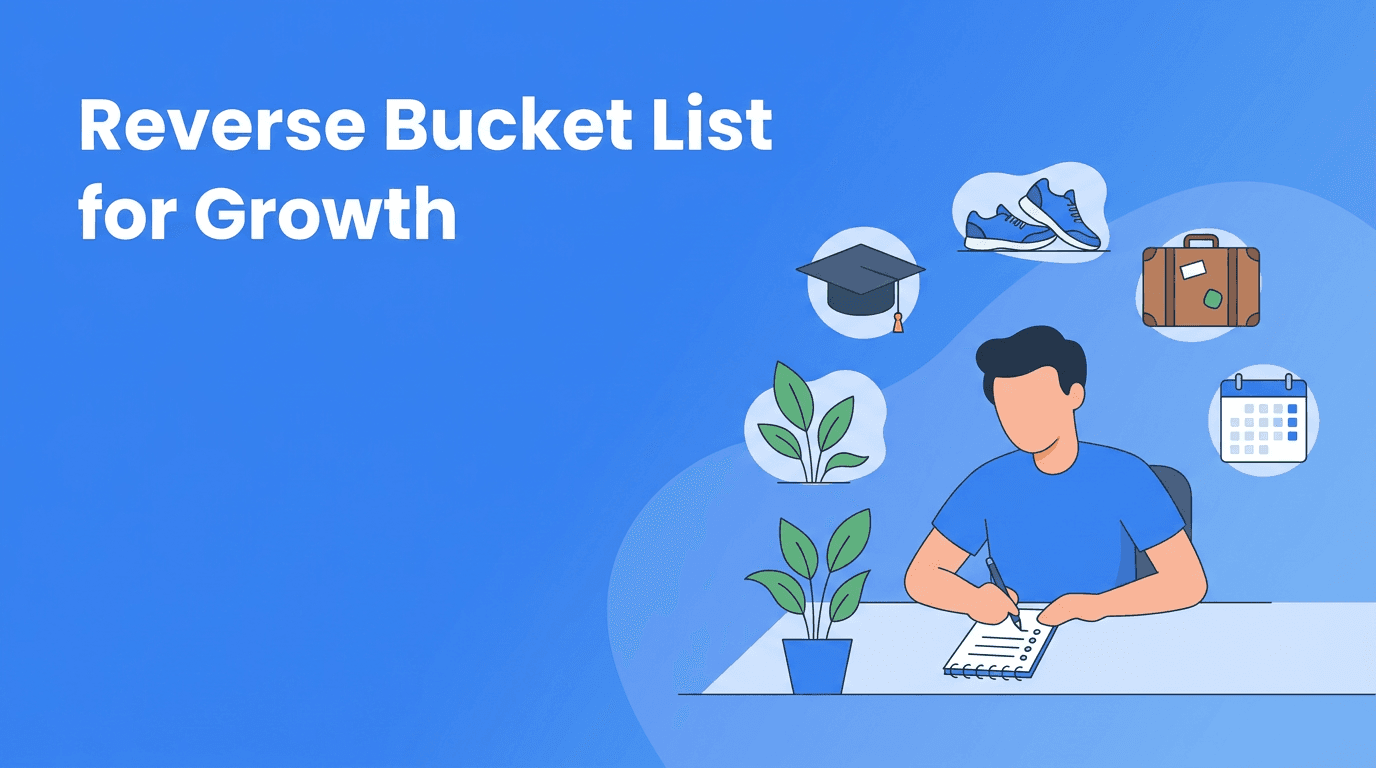
The best reverse bucket list is not just a highlight reel. It should include visible achievements and quiet breakthroughs. The goal is not to impress anyone. The goal is to see yourself more clearly.
Include external milestones
- Trips you took alone
- Jobs you landed or left
- Courses you finished
- Fitness goals you reached
- Creative projects you shipped
- Money goals you hit, even small ones
Include internal milestones
- Times you set a boundary and kept it
- Moments you spoke up with more confidence
- Periods when you stayed consistent with healthy habits
- Situations you handled with a better mindset
- Ways your self-awareness improved, like noticing triggers earlier
- Times you asked for help instead of pretending you were fine
This is where the exercise becomes more than nostalgia. You are not just recording events. You are identifying the behaviors, beliefs, and emotional skills behind them.
A 4-step reverse bucket list exercise
1. Review the last 3 to 5 years
Open your calendar, camera roll, journal, notes app, or old messages. Scroll slowly. Memory needs cues. As you review, write down anything that reflects effort, courage, recovery, learning, or change.
2. Tag each item with the skill behind it
Next to each memory, add one label: discipline, courage, self-awareness, resilience, focus, confidence, or curiosity. This helps you connect outcomes to personal strengths instead of luck alone.
3. Look for patterns
Once you have 20 to 30 items, ask: What kind of growth shows up most often? Which habits led to the biggest change? Where did your mindset help you most? These patterns can guide your next season of personal growth far better than random inspiration.
4. Turn the list into future direction
Circle three items that made you proud. Then write one new goal inspired by each one. This keeps your self-improvement grounded in real evidence. You are building forward from who you already are, not from a fantasy version of yourself.
Want guided support for your next growth step?
Haply is an AI life coaching app for iOS and Android that helps you turn insight into action. Use chat-based coaching, habit tracking, daily reminders, and tools like the Task Planner and Today Dashboard to keep your momentum going.
Try Haply FreeCommon mistakes that weaken the exercise
- Only listing big achievements and ignoring emotional growth
- Turning the list into a comparison game
- Dismissing progress because it looks ordinary now
- Forgetting setbacks you overcame, which often reveal the strongest growth
- Writing the list once and never revisiting it
A reverse bucket list works best when you return to it every few months. That simple review strengthens self-awareness and helps your brain update its story about who you are becoming.
How to use your reverse bucket list in real life
- Read it before interviews or difficult conversations to boost confidence
- Use it during low-motivation weeks to reconnect with your mindset
- Review it monthly to see which habits deserve more attention
- Share parts of it with a coach, therapist, or trusted friend for reflection
- Use it as raw material for journaling prompts and goal setting
If you like structure, Haply can help you turn this reflection into a system. Its goal-based onboarding, specialized AI coaches, and streak-based habit tracker make it easier to move from insight to daily action, which is where lasting personal growth really happens.
The bigger mindset shift
Real self-improvement is not only about chasing the next version of yourself. It is also about recognizing the version of you that already did brave, disciplined, thoughtful things. A reverse bucket list teaches that growth leaves clues. When you learn to see them, you stop treating progress like an abstract idea and start trusting your own capacity.
Frequently Asked Questions
What is a reverse bucket list?
A reverse bucket list is a list of meaningful things you have already done, learned, or overcome. It helps you recognize progress and build confidence from real evidence.
How does a reverse bucket list help with confidence?
It reminds you of past wins, challenges you survived, and skills you have already built. That makes confidence feel earned rather than forced.
How often should I update my reverse bucket list?
A good rhythm is every 1 to 3 months, or anytime you feel stuck, discouraged, or uncertain about your progress.
Can a reverse bucket list improve self-awareness?
Yes. It helps you notice patterns in your behavior, mindset, and habits so you can understand what actually supports your growth.