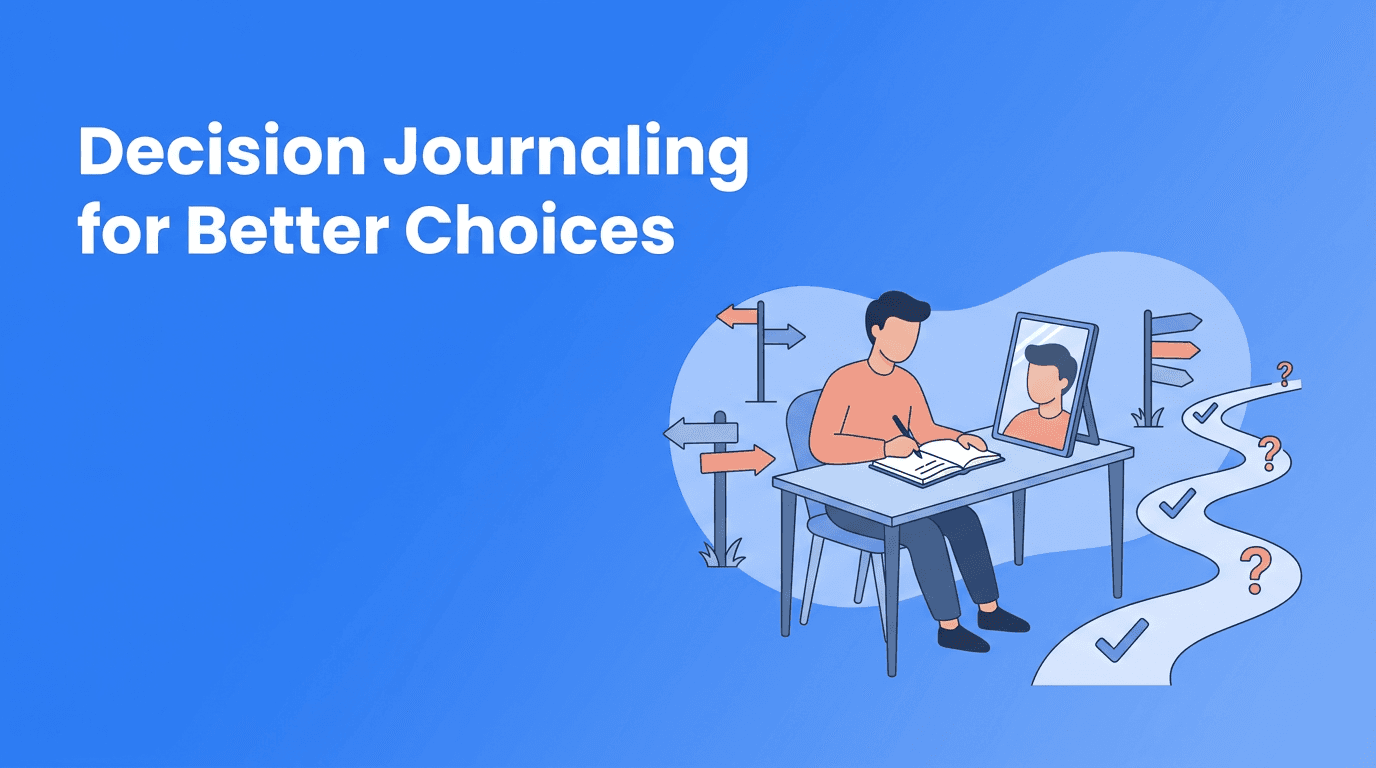
Decision Journaling for Self-Awareness and Better Life Improvement
Decision journaling is a simple self-awareness practice that helps you build confidence, spot thinking patterns, and make smarter choices for real life improvement.

By Haply Team
Haply Editorial Team
Decision journaling is one of the most underrated tools for self-awareness. If you often wonder why you repeat the same mistakes, second-guess yourself, or struggle to trust your judgment, this simple practice can help. By writing down your choices before and after you make them, you create a clear record of how you think, what you fear, and what actually leads to life improvement.
Why decision journaling works for personal development
Most people try to improve by focusing only on outcomes. They ask, "Did it work?" A better question is, "How did I make this decision?" That shift matters because strong personal development comes from better thinking, not just better luck. Decision journaling helps you slow down, notice assumptions, and separate facts from emotions.
- You catch patterns in your thinking
- You build confidence by seeing where your judgment is accurate
- You reduce impulsive choices driven by stress or mood
- You create positive habits around reflection and planning
- You learn faster from everyday wins and mistakes
"You do not rise to the level of your goals. You fall to the level of your systems."
What to write in a decision journal
Keep it simple. A useful decision journal should take 3 to 5 minutes, not 30. The goal is not to write a perfect diary. The goal is to capture your thinking while it is fresh.
Use this 5-part template
- The decision: What choice am I making?
- The context: What is happening right now? What pressures or deadlines exist?
- My reasons: What facts, feelings, and assumptions are influencing me?
- My prediction: What do I think will happen next?
- My review: After the result, what was correct, what was biased, and what will I repeat or change?
This structure boosts self-awareness because it shows whether your fear was realistic, whether your optimism was earned, and whether your actions matched your values. Over time, decision journaling becomes a mirror for your mindset.
How decision journaling builds confidence without fake positivity
Real confidence does not come from telling yourself you are amazing. It comes from evidence. When you review past decisions, you start noticing where your judgment is strong, where you rush, and where you need more information. That kind of honest feedback creates calm, grounded confidence.
- Review one small decision each day
- Look for patterns, not perfection
- Celebrate accurate thinking, even when the outcome was mixed
- Notice emotional triggers like urgency, people-pleasing, or fear of missing out
- Turn lessons into one clear rule for next time
Want guided support for personal growth?
Haply is an AI life coaching app for iOS and Android that helps you build positive habits, reflect on decisions, and stay consistent with personalized coaching, reminders, and tools like the Task Planner and Today Dashboard.
Try Haply FreeA 7-day decision journaling challenge
If you are busy, start small. Use decision journaling for one real choice per day. It can be a work decision, a spending choice, a boundary in a relationship, or how you use your evening.
- Day 1: Track one quick decision you usually make on autopilot
- Day 2: Write down a choice you are avoiding
- Day 3: Notice one decision influenced by stress
- Day 4: Record a choice that supports your long-term goals
- Day 5: Review an old decision and rewrite what you would do now
- Day 6: Identify one repeated pattern hurting your progress
- Day 7: Create one personal rule to improve future decisions
This challenge is especially useful if you want practical life improvement without overhauling your whole routine. One better decision per day can reshape your week faster than waiting for motivation.
Common mistakes that make decision journaling useless
- Writing only after the outcome, which creates hindsight bias
- Being too vague, instead of naming the real fear or goal
- Tracking huge life choices only, instead of daily patterns
- Judging yourself harshly, instead of learning from the process
- Skipping reviews, which is where most of the value appears
To make decision journaling stick, pair it with an existing routine. You might do it after lunch, before bed, or during your commute notes. In Haply, you can also use habit reminders and streaks to turn reflection into one of your easiest positive habits.
The bigger payoff: wiser choices, not just better notes
The real value of this practice is not the journal itself. It is the person you become by using it. You become more observant, less reactive, and more intentional. That is the heart of personal development. When your choices improve, your schedule, relationships, work, and energy often improve with them.
Frequently Asked Questions
What is decision journaling?
Decision journaling is the practice of writing down your thinking before and after a choice. It helps you improve self-awareness, reduce bias, and make better decisions over time.
How does decision journaling improve confidence?
It builds confidence through evidence. By reviewing past choices, you can see where your judgment is strong and learn from mistakes without guessing.
How often should I use a decision journal?
Start with one decision a day or three times a week. Consistency matters more than volume.
Can decision journaling help with personal development?
Yes. It strengthens self-awareness, supports positive habits, and helps you align daily choices with long-term goals.