Best Reading Apps for Adults: How AI Tools Can Turn Spare Minutes Into Real Learning
Looking for the best reading apps for adults? This guide compares AI tools, productivity apps, and digital tools that help you read more consistently and learn better.
By Haply Team
Haply Editorial Team
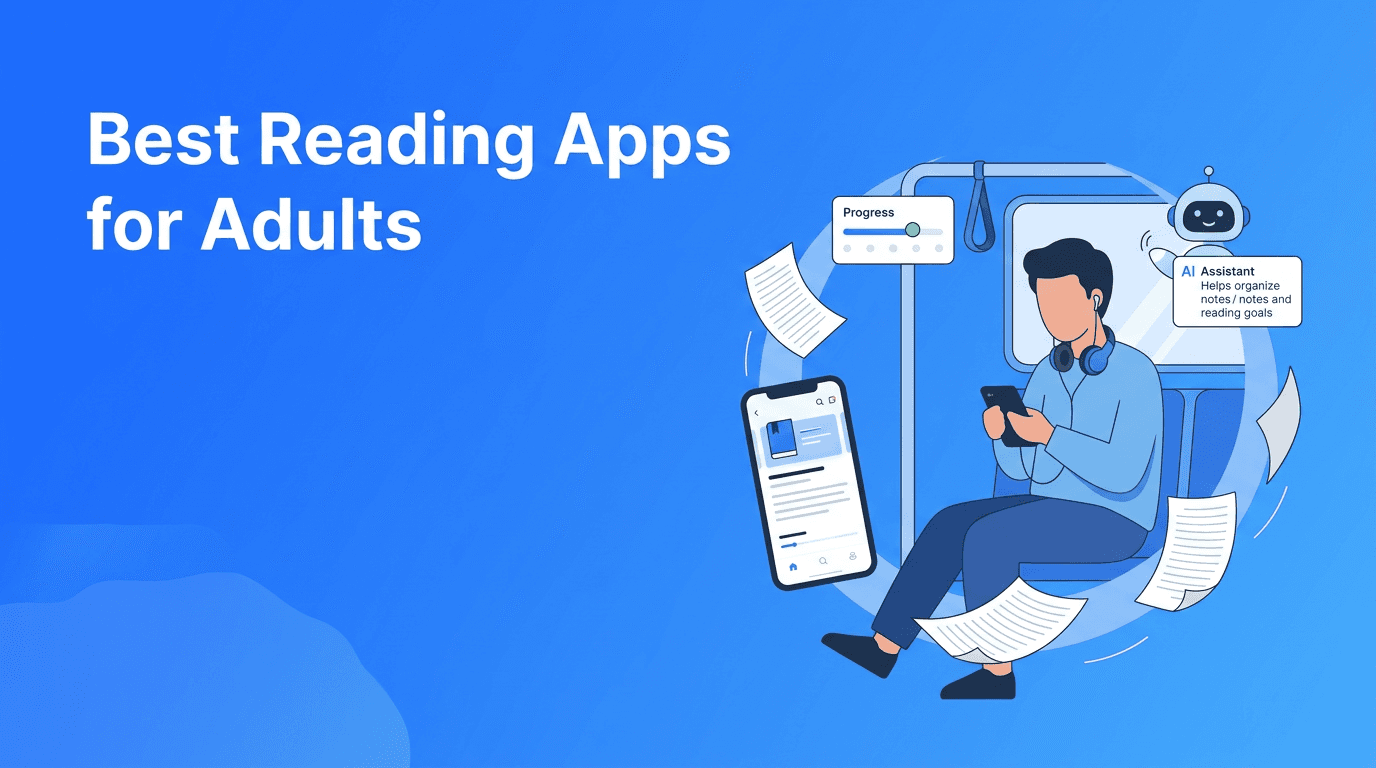
The best reading apps do more than store ebooks. They help adults turn scattered moments into focused learning with AI tools, smart reminders, and simple systems that fit busy schedules. If you are comparing productivity apps, self-improvement apps, and other digital tools, reading apps are an underrated place to start.
Why reading apps matter for personal improvement
Many people want to read more, but the real challenge is not motivation alone. It is friction. You may forget where you left off, lose notes, struggle to choose your next title, or fail to protect time for reading. Good apps reduce that friction and make reading easier to repeat.
- Convenience: read on your phone, tablet, or laptop without carrying a physical book
- Consistency: reminders, streaks, and progress tracking can reinforce the habit
- Retention: highlights, summaries, and note review help you remember more
- Personalization: recommendations and adaptive features help you find relevant content faster
What separates the best reading apps from average ones
The best reading apps support both consumption and reflection. It is easy to download an app with thousands of titles. It is harder to find one that helps you actually finish books and apply what you read. When comparing options, look beyond catalog size.
Features worth prioritizing
- Cross-device syncing so your reading session continues anywhere
- Highlighting and note capture for insight collection
- Audio support for commuting or walking
- Reading goals and progress dashboards
- AI tools that summarize passages, explain concepts, or surface patterns in your notes
- Low-friction design that helps you start reading in under a minute
"The best app is not the one with the most features. It is the one that makes the next useful action feel obvious."
A practical comparison: which type of reading app fits your goal?
Instead of asking for one universal winner, it is more useful to match app type to the outcome you want. Different digital tools solve different reading problems.
1. Ebook library apps
These are best for people who want easy access to full books, adjustable fonts, and smooth syncing. They work well if your main goal is simply to read more books consistently.
2. Book summary apps
These apps are useful when you need fast exposure to ideas, especially in business, psychology, or leadership. They save time, but they can also create the illusion of learning if you never go deeper.
3. Social reading and tracking apps
These are ideal if external accountability motivates you. Reviews, public goals, and reading challenges can increase follow-through, though they may also turn reading into performance.
4. AI-assisted learning apps
This category is growing quickly. Here, AI tools can explain difficult sections, help organize insights, and connect reading to action steps. For adults focused on growth, this is often where reading becomes a true self-improvement app experience rather than passive consumption.
How Haply fits into a smarter reading system
Haply is not a traditional ebook app, but it can complement the best reading apps surprisingly well. As an AI life coaching app on iOS and Android, it helps users turn ideas from books into routines, goals, and real-world follow-through. That matters because reading without application often stops at inspiration.
- Use Haply's chat-based coaching to turn a book insight into a weekly action plan
- Track your reading habit with the habit tracker, streaks, and daily reminders
- Use the Today Dashboard to keep reading goals visible
- Pair a reading session with the Focus Timer to protect distraction-free time
- Capture implementation ideas inside goal-based workflows for productivity, learning, or career growth
Turn reading into action
If you already use reading or summary apps, Haply can help you apply what you learn through coaching, habit tracking, and focused daily planning.
Try Haply FreeHow to choose the right reading app for your routine
A useful way to compare apps is to ask what usually breaks your reading habit. Your best option depends less on popularity and more on your obstacle.
- If you never have time, choose an app with audio support and offline access
- If you start books but do not finish, prioritize progress tracking and session reminders
- If you forget what you read, look for strong notes, highlights, and review features
- If you want practical growth, combine a reading app with productivity apps or coaching tools like Haply
- If you feel overwhelmed by choices, use curated recommendation features instead of giant open catalogs
A simple 20-minute reading workflow using digital tools
You do not need a complex system. A short repeatable workflow is often enough to make reading stick.
- Minute 1-2: open your reading app and set a tiny goal, such as 5 pages or 10 minutes
- Minute 3-15: read without switching apps or checking messages
- Minute 16-18: save one highlight or note with the main idea
- Minute 19-20: use Haply or another planning tool to turn that idea into one action for tomorrow
Final takeaway on the best reading apps
The best reading apps are not just digital bookshelves. They are digital tools that reduce friction, support consistency, and help convert information into growth. For many adults, the strongest setup is not one app alone, but a small stack: a reading app for access, optional AI tools for understanding, and supportive productivity apps like Haply for action and accountability.
Frequently Asked Questions
What are the best reading apps for adults?
The best reading apps for adults depend on your goal. Ebook apps work well for consistent reading, summary apps help with quick idea capture, and AI-supported tools help with understanding and application.
Can AI tools help you read more consistently?
Yes. AI tools can reduce friction by summarizing concepts, organizing notes, and helping you turn reading goals into simple next steps.
Are reading apps considered self-improvement apps?
They can be, especially when they help you learn, reflect, and apply what you read. The strongest self-improvement setup often combines reading with habit tracking or coaching.
How do productivity apps support a reading habit?
Productivity apps support reading by scheduling sessions, tracking streaks, reducing distractions, and connecting insights to tasks or goals.