Cash Flow Side Hustle: A Simple System to Budget Freelance Income Without Stress
Learn a practical cash flow side hustle system for budgeting irregular income, saving money consistently, and building financial literacy while exploring entrepreneurship.

By Haply Team
Haply Editorial Team
A freelance income budget can feel impossible when your pay changes every month, but it does not have to. If you are building a side hustle, testing entrepreneurship, or juggling contract work beside a full-time job, the goal is not perfect prediction. The goal is a repeatable system for budgeting, saving money, and improving financial literacy without burning out.
Why irregular income creates money stress
Most budgeting advice assumes a stable paycheck. That breaks down when your income depends on client work, seasonal demand, or project timing. You might earn a lot one month and very little the next. Without a plan, it becomes easy to overspend during strong months and panic during slow ones.
- You confuse revenue with spendable income
- You forget about taxes, software, or business expenses
- You save inconsistently because there is no fixed routine
- You make personal spending decisions based on your best month, not your average month
"A good budget is not about controlling every dollar. It is about reducing uncertainty so you can make better decisions."
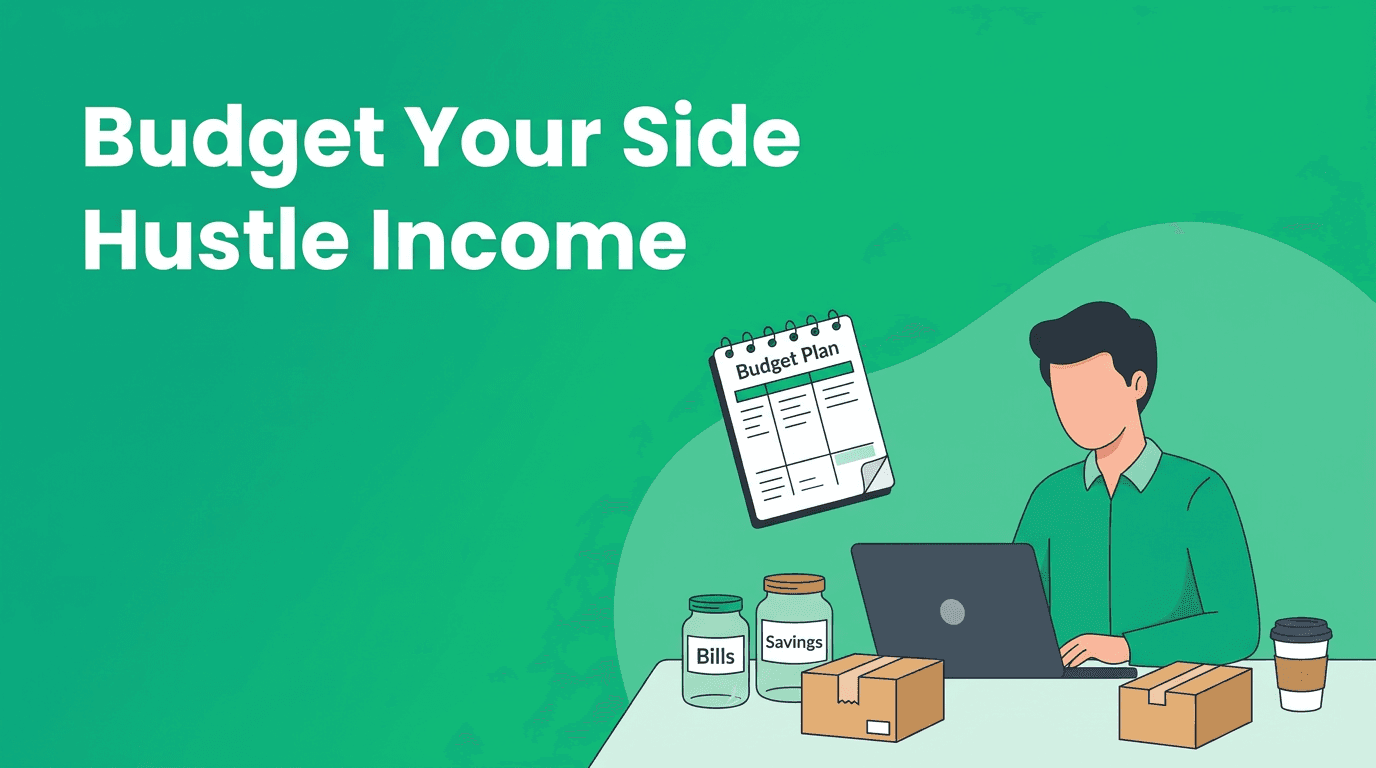
The 4-bucket freelance income budget system
A simple freelance income budget works best when every payment gets split the same way. Instead of asking, "Can I afford this?" every week, create clear buckets for where your money goes the moment it arrives.
1. Essentials bucket
This covers rent, groceries, transportation, insurance, debt minimums, and any must-pay bills. Base this number on your lowest reliable monthly income, not your highest.
2. Tax and business bucket
Set aside money for taxes, software, subscriptions, tools, and contractor expenses. Even if your side hustle is small, separating business cash improves clarity and reduces surprises.
3. Savings bucket
Use this bucket for your emergency fund, short-term goals, and irregular personal expenses. If you want to get better at saving money, automation matters more than motivation.
4. Flex bucket
This is the lifestyle category for dining out, shopping, travel, gifts, and optional upgrades. A flex bucket lets you enjoy the upside of entrepreneurship without sabotaging your base plan.
- Try a starting split such as 50% essentials, 20% tax and business, 20% savings, and 10% flex
- Adjust the percentages based on your location, debt load, and income volatility
- Review your split every 60 to 90 days instead of changing it every week
How to set your baseline number
The smartest way to budget variable income is to create a personal monthly paycheck. Review the last 6 to 12 months of earnings from your side hustle or freelance work, then identify your low-average month. That becomes your planning baseline.
- Add up the income you actually received each month
- Ignore one unusually high month when setting your baseline
- Choose a conservative number you can usually hit
- Transfer only that amount into personal spending each month if possible
This approach strengthens financial literacy because it teaches you to manage cash flow, not just react to it. You are building a system that can survive inconsistency.
A weekly routine that keeps your budget realistic
Your freelance income budget will work only if you review it often enough to catch problems early. A short weekly money check-in is usually enough.
- Check what payments cleared this week
- Move money into your four buckets
- Update upcoming bills and invoices
- Flag any late client payments
- Decide whether extra income goes to savings, taxes, or a buffer fund
Make your money habits easier to keep
Haply is an AI life coaching app for iOS and Android that can help you stay consistent with budgeting check-ins, habit tracking, and goal-based planning. Its Finance coach, reminders, and Budget Tracker are useful when your income changes month to month.
Try Haply FreeCommon mistakes when budgeting side hustle income
- Treating every good month like a permanent raise
- Skipping saving money until income feels more stable
- Using one bank account for business and personal spending
- Forgetting annual expenses like renewals, travel, or equipment
- Building your lifestyle around gross income instead of net income
If you are early in entrepreneurship, your first win is not maximizing profit. It is creating stability. Stability gives you room to make better career decisions, negotiate confidently, and invest in growth over time.
When to grow the side hustle into something bigger
Not every side hustle should become a full business, but some should. Consider scaling when your income is consistent for several months, you have a cash buffer, and you understand your true expenses. That is where budgeting and financial literacy connect directly to career growth.
- You can cover essentials from reliable income sources
- You have at least a basic emergency fund
- You know your average monthly profit after expenses
- You have a repeatable client or sales pipeline
Frequently Asked Questions
How do I budget with irregular freelance income?
Start with a conservative baseline based on your low-average month, then split each payment into essentials, taxes and business, savings, and flex spending.
How much should I save from side hustle income?
A good starting point is to direct a fixed percentage of every payment to savings. The exact amount depends on your bills, taxes, and emergency fund needs.
What is the best budget method for freelancers?
A bucket system works well because it helps you assign every payment a job right away and keeps personal spending separate from taxes and business costs.
Can a side hustle improve financial literacy?
Yes. Managing variable income teaches cash flow planning, expense tracking, saving habits, and decision-making skills that support long-term financial confidence.