Coaching Psychology in the Age of Algorithms: What Makes Digital Guidance Actually Effective?
Coaching psychology offers a scientific lens for evaluating digital guidance. Learn how coaching psychology, positive psychology, and behavior change principles shape more effective AI-powered growth.

By Haply Team
Haply Editorial Team
Coaching psychology is becoming one of the most useful frameworks for judging whether technology-powered personal development is genuinely helpful or just digitally polished advice. As coaching tools become more available, the key question is not whether an app can talk to you. It is whether that guidance reflects coaching psychology, draws from positive psychology, and supports real behavior change in ways that are measurable, ethical, and practical.
Why coaching psychology matters more than coaching hype
Many people encounter coaching through bold promises: become more productive, more confident, more focused, more disciplined. But analytically minded users usually want a deeper answer. They want to know why a coaching method should work. This is where evidence-based coaching becomes essential. Instead of relying on charisma or vague motivation, coaching psychology asks whether an intervention helps people clarify goals, increase self-awareness, strengthen agency, and sustain action over time.
- Coaching psychology studies how structured conversations can improve performance, wellbeing, and goal pursuit.
- It often integrates findings from positive psychology, motivation science, cognitive psychology, and self-regulation research.
- Its practical test is simple: does the process help someone think better, decide better, and act more consistently?
The scientific backbone: positive psychology and behavior change
At its best, coaching does not try to "fix" a broken person. It helps a capable person use their strengths more effectively under real-world constraints. That orientation comes partly from positive psychology, which examines strengths, meaning, optimism, engagement, and flourishing. In coaching contexts, this matters because progress is often driven not by criticism, but by accurate reflection, realistic hope, and well-designed next steps.
Behavior change is rarely about information alone
Most adults already know the basics of self-improvement. Sleep more. Plan better. Exercise consistently. Reduce distraction. The problem is usually not knowledge. The problem is execution in context. Behavior change research shows that people follow through more reliably when they have clear cues, manageable actions, immediate feedback, and systems that reduce friction. Good coaching therefore focuses less on inspiring speeches and more on implementation mechanics.
- Turn abstract goals into specific, observable behaviors.
- Identify friction points that block follow-through.
- Use prompts, reminders, and tracking to reinforce consistency.
- Review outcomes frequently enough to learn from reality, not intention.
"Change is less about becoming a new person and more about building a better system for the person you already are."
What digital coaching gets right when it uses evidence-based coaching
Technology can support coaching unusually well when it is designed around repetition, personalization, and feedback. Human insight is powerful, but daily life happens between appointments. This is where digital tools can complement coaching psychology. They can notice patterns, prompt reflection at the right time, and keep goals cognitively active during ordinary moments when habits are actually formed or broken.
Why frequency changes outcomes
One underappreciated advantage of digital support is interaction frequency. A weekly insight is useful. A timely check-in before a stressful meeting, a reminder during an afternoon slump, or a short reflection after a setback can be more behaviorally relevant. Frequent low-friction coaching moments can create tighter learning loops: intention, action, feedback, adjustment. That pattern aligns strongly with evidence-based coaching and self-regulation science.
- A chat-based coach can help users reframe problems in real time.
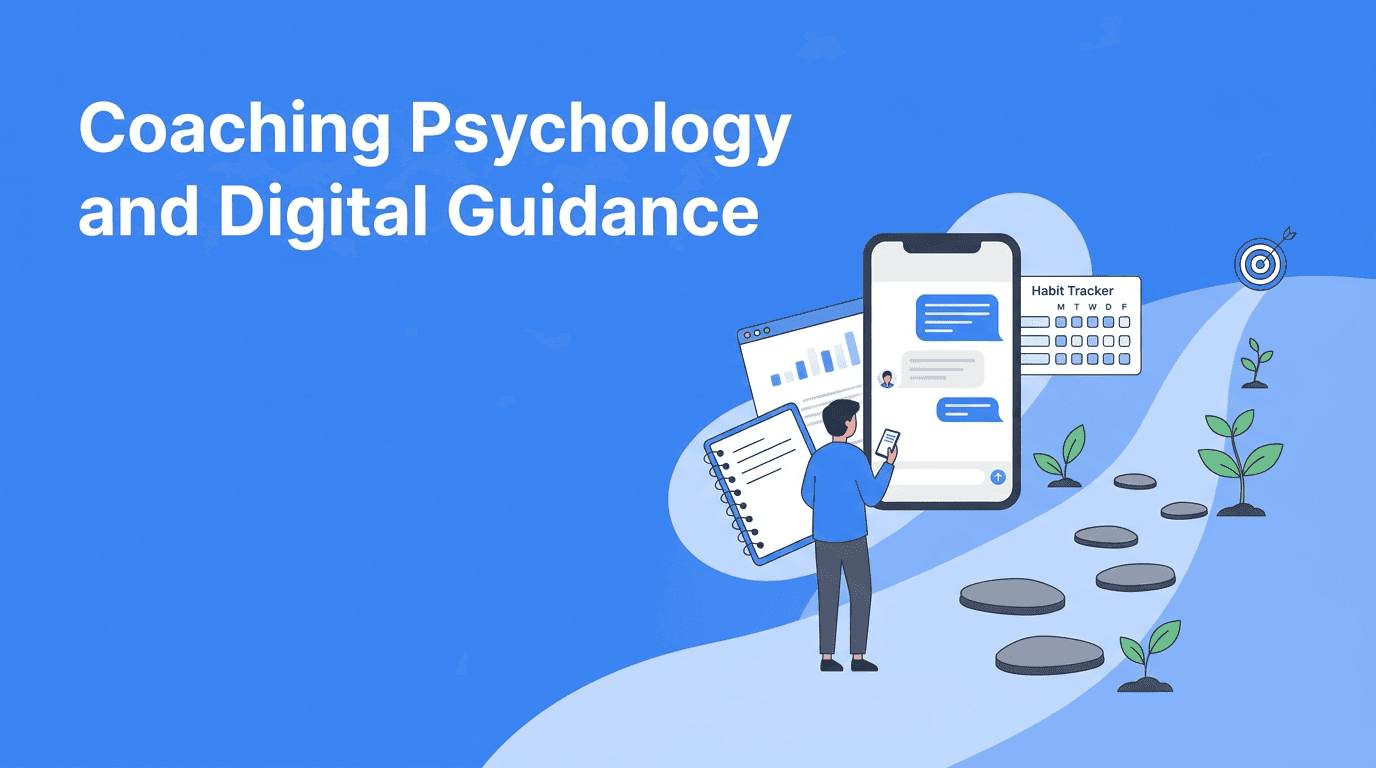
- Habit trackers make progress visible, which increases self-monitoring.
- Mini-tools like timers, planners, breathing exercises, and journals reduce the gap between insight and action.
- Personalized prompts can reinforce goals in the exact contexts where behavior change is needed.
Put coaching psychology into practice
Haply brings coaching psychology into daily life with AI life coaches, habit tracking, guided reflections, and mini-apps for focus, planning, wellness, creativity, and more on iOS and Android.
Try Haply FreeWhere AI-powered personal development can go wrong
Scientific language can be used carelessly. Not every product that mentions mindset, habits, or neuroscience is practicing evidence-based coaching. Some systems simply generate polished encouragement without enough structure. Others over-personalize in a way that feels impressive but lacks a coherent method. For users who value rigor, the standard should be higher: support should be transparent, bounded, and connected to known principles from coaching psychology.
- Beware of tools that offer constant inspiration without measurable action.
- Question advice that ignores context, constraints, or emotional state.
- Look for systems that support reflection, planning, and review, not just positivity.
- The best digital coaching tools help users test assumptions against lived results.
A practical model for evaluating digital coaching
If you want to assess whether a coaching app is worth your time, use a simple analytical filter. First, does it help you define meaningful goals? Second, does it translate those goals into behaviors? Third, does it create feedback loops that help you learn? Fourth, does it adapt as your situation changes? If the answer is yes across all four, the system is much closer to true coaching psychology than generic motivational content.
An example of applied coaching design
Haply is a useful example of how these principles can appear in practice. Its goal-based onboarding personalizes the experience from the start. Its AI life coaches cover domains such as productivity, wellness, career, learning, finance, creativity, and relationships. Its Today Dashboard, streak-based habit tracker, and mini-apps like Focus Timer, Task Planner, Meditation/Breathe, Sleep Stories, Budget Tracker, and Idea Board help convert reflection into repeatable routines. In other words, the app does not stop at advice. It tries to support the full loop of behavior change.
The future of coaching may be less mystical and more measurable
The most interesting future trend is not that coaching will become more automated. It is that coaching may become more testable. As digital platforms gather patterns about routines, obstacles, timing, and consistency, they can potentially offer better hypotheses about what helps a person move forward. Used responsibly, that makes personal development less dependent on memory and mood, and more informed by patterns of actual behavior.
This does not reduce coaching to numbers. It improves coaching by grounding reflection in evidence. A person can still explore identity, values, confidence, and meaning. But they can also ask sharper questions: When do I avoid deep work? Which prompt helps me restart? What conditions predict follow-through? This fusion of human meaning and behavioral data is where coaching psychology may become especially powerful in digital form.
How to use coaching psychology in your own routine
- Choose one meaningful goal instead of five competing ambitions.
- Define the smallest repeatable behavior that supports that goal.
- Track the behavior for two weeks before judging your motivation.
- Use short reflection prompts to identify what helped and what blocked you.
- Adjust the system, not just your self-criticism.
- Use tools like Haply to create reminders, streaks, planning rituals, and fast coaching check-ins.
This approach may feel less dramatic than a motivational breakthrough, but it is often more reliable. Sustainable growth usually comes from repeated adjustments guided by feedback. That is the core promise of coaching psychology when combined with thoughtful technology.
Frequently Asked Questions
What is coaching psychology?
Coaching psychology is the study and application of psychological principles to help people improve performance, wellbeing, and goal achievement through structured coaching methods.
How does positive psychology relate to coaching?
Positive psychology contributes research on strengths, optimism, meaning, and flourishing. In coaching, these ideas help people build on what works rather than focusing only on problems.
Can AI support behavior change effectively?
Yes, AI can support behavior change when it offers personalized prompts, reflection, tracking, and timely feedback. Its value depends on whether the system follows sound coaching and behavioral principles.
What makes evidence-based coaching different from motivational advice?
Evidence-based coaching uses tested psychological principles, measurable goals, and feedback loops. Motivational advice may feel energizing, but it often lacks structure for sustained change.
Is an AI life coaching app a replacement for a human coach?
Not always. For many people, an AI life coaching app is best understood as accessible, daily support that complements self-development and, in some cases, human coaching. It is especially useful for consistency between major decisions or sessions.