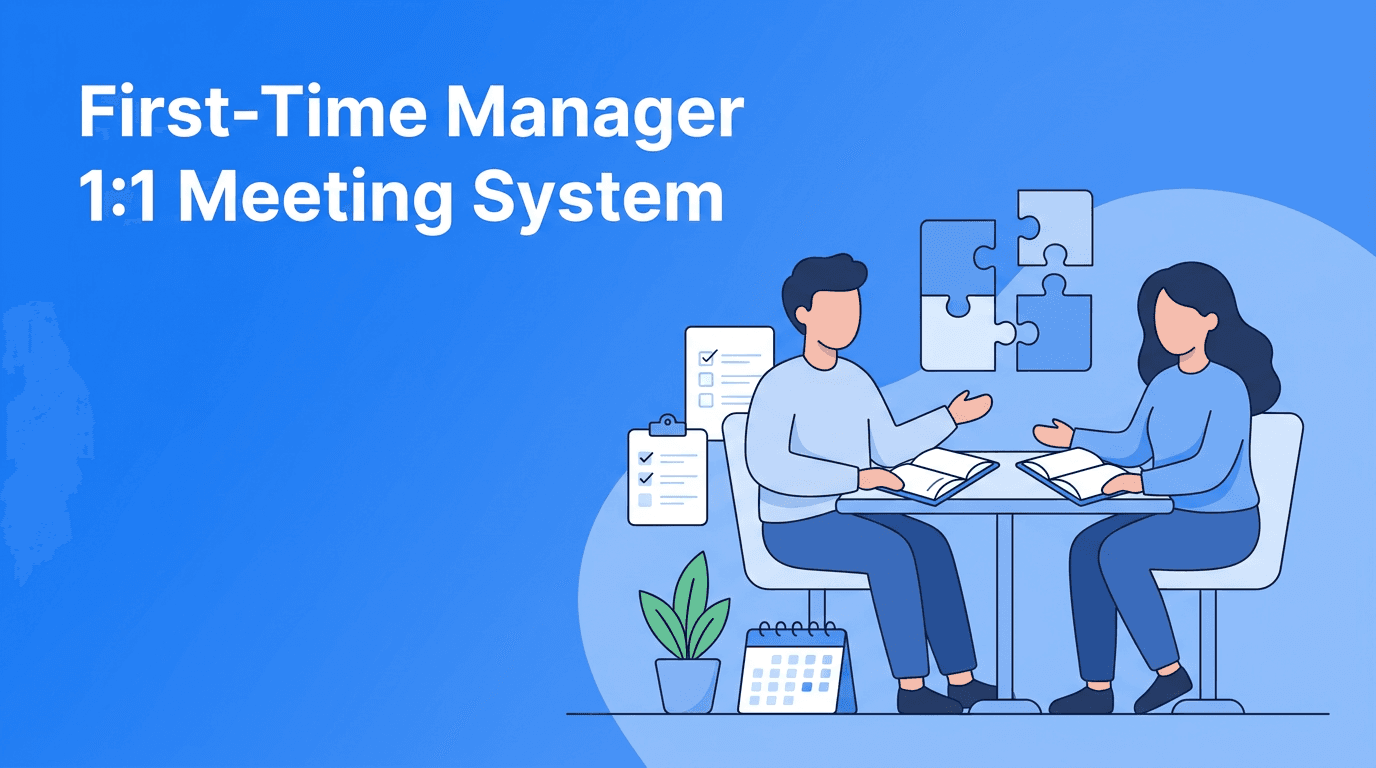
First-Time Manager 1:1 Meetings: A Simple System for Leadership, Delegation, and Team Building
Struggling with first-time manager responsibilities? Use this simple 1:1 meeting system to improve leadership, management, delegation, and team building from week one.

By Haply Team
Haply Editorial Team
If you are a first-time manager, your calendar fills up fast, but your biggest leadership advantage is often one conversation at a time. A well-run 1:1 can sharpen management habits, improve delegation, and strengthen team building without adding complicated systems.
Many new leaders think they need to sound authoritative from day one. In reality, the best early move is to create a reliable rhythm where people know they can raise blockers, clarify priorities, and grow. That is where a practical 1:1 structure becomes one of your most useful tools.
Why 1:1 meetings matter for first-time manager success
A recurring 1:1 is not just a status update. It is a space for leadership, coaching, feedback, and trust. When done consistently, it helps you spot workload issues early, make smarter decisions about ownership, and avoid the classic new-manager trap of solving everything yourself.
- Use 1:1s to clarify what matters most this week
- Ask where team members are stuck before problems escalate
- Separate coaching conversations from task chasing
- Document decisions so delegation becomes clearer over time
People do not need a perfect manager. They need a manager who pays attention, follows through, and helps them do their best work.
A simple 30-minute 1:1 agenda for management and team building
You do not need an elaborate meeting template. A lightweight structure keeps the conversation focused while leaving room for real connection. For a first-time manager, consistency matters more than complexity.
- 5 minutes - Personal check-in: energy, workload, morale
- 10 minutes - Priorities and progress: what is moving, what is stalled
- 10 minutes - Coaching and delegation: support needed, decisions, next ownership step
- 5 minutes - Growth and feedback: one improvement, one win, one follow-up
Questions that improve leadership without micromanaging
- What is taking more time than expected right now?
- Where do you need my help, and where do you want more ownership?
- What decision can you make without waiting on me next time?
- What is one skill you want to build this month?
- What is something I could do differently as your manager?
How to use 1:1s for better delegation
Weak delegation usually sounds like this: vague requests, unclear deadlines, and frequent check-ins that feel like surveillance. Strong delegation is more specific. In your 1:1, define the outcome, constraints, and decision rights clearly so the other person can move independently.
- Assign outcomes, not just tasks
- Explain why the work matters to the team or business
- Agree on checkpoints in advance instead of constant interruptions
- Confirm what success looks like before the meeting ends
- Write down who owns the next step
This approach improves management quality because it reduces confusion and builds accountability. It also supports team building because people feel trusted, not just supervised.
Build better leadership habits with Haply
Want support as a new leader? Haply is an AI life coaching app for iOS and Android with personalized Career coaching, habit tracking, daily reminders, and planning tools that can help you stay consistent as you grow into management.
Try Haply FreeCommon first-time manager mistakes in 1:1 meetings
- Talking more than your team member
- Using the meeting only for project updates
- Cancelling 1:1s when the week gets busy
- Giving unclear feedback that cannot be acted on
- Taking back delegated work too quickly when progress slows
A better fix than overpreparing
If you are new to leadership, do not try to perform expertise in every meeting. Instead, prepare three things: the top priority, one coaching question, and one follow-up from last time. That level of preparation is enough to create trust and momentum.
A weekly system you can actually maintain
The best manager routines are easy to repeat. Block recurring 1:1s, keep shared notes, and end every meeting with one clear next step. If you want extra structure, tools like Haply can help you set reminders, track habits, and use a Career coach to reflect on what is working in your leadership style.
What first-time managers should remember
Being a first-time manager is less about having all the answers and more about creating a dependable system for communication. Strong 1:1s help you practice leadership, improve delegation, strengthen management judgment, and make team building feel natural instead of forced.
Frequently Asked Questions
How often should a first-time manager have 1:1 meetings?
Weekly 1:1s are usually the best starting point. They create consistency without overwhelming your schedule and help you catch issues early.
What should a first-time manager talk about in a 1:1?
Cover workload, priorities, blockers, ownership, feedback, and growth. A good 1:1 is not only a status update, it is also a coaching conversation.
How can delegation improve team building?
Clear delegation builds trust because team members understand what they own and how success is measured. That trust strengthens collaboration and confidence across the team.
What are the biggest leadership mistakes new managers make?
Common mistakes include micromanaging, cancelling 1:1s, avoiding feedback, and taking on too much personally. Simple systems and consistent communication help prevent these issues.