Getting Started With Coaching Apps: 7 Beginner-Friendly Ways AI Supports Personal Growth
Getting started with coaching apps can feel easier than booking a traditional session. Learn 7 beginner-friendly ways AI supports personal growth, reflection, and daily momentum.

By Haply Team
Haply Editorial Team
Coaching apps are changing how beginners explore personal growth. If getting started with coaching has ever felt intimidating, expensive, or too formal, a simple app-based experience can make the first step feel lighter. Instead of waiting until life feels perfectly organized, you can begin with small daily prompts, short reflections, and practical coaching tips that fit real routines.
Why coaching apps feel easier for beginners
One reason coaching apps are gaining attention is accessibility. Traditional coaching can be powerful, but many people hesitate because they are unsure what to say, how often to meet, or whether their goals are 'big enough'. An app creates a lower-pressure starting point. You can reflect privately, build clarity gradually, and learn the coaching process without needing to have everything figured out.
- You can start small with a five-minute check-in instead of a full session.
- You get structure through prompts, habit trackers, reminders, and guided questions.
- You can explore different life areas like productivity, wellness, career, learning, or relationships.
- You build consistency because support is available when motivation drops, not just on appointment days.
"You do not need a perfect plan to begin. You need a small next step you can actually repeat."
7 beginner-friendly ways coaching apps support growth
1. They turn vague goals into clear starting points
A lot of people want change but struggle to define it. Coaching apps can guide you from 'I want to feel better' to something more actionable like 'I want a calmer morning routine' or 'I want to stop procrastinating after work'. That shift matters because clarity is the first step in behavior change.
2. They make reflection less overwhelming
Blank journals can feel surprisingly stressful. AI-guided prompts can help you reflect with direction. Instead of asking you to write pages, they might ask what drained your energy today, what mattered most, or what obstacle keeps repeating. These simple questions create insight without pressure.
3. They support momentum between breakthroughs
Real growth usually comes from repetition, not one big realization. This is where coaching tips inside apps become useful. Daily reminders, streaks, and progress tracking can help you keep moving even when enthusiasm fades. Small actions repeated often are usually more powerful than occasional bursts of motivation.
4. They fit modern routines
One of the biggest coaching trends is flexibility. People want support that fits into commutes, lunch breaks, and evening wind-downs. App-based coaching meets users where they are. A short check-in before a meeting or a reflection after a difficult conversation can be more realistic than scheduling another hour-long commitment.
5. They personalize guidance over time
The future of AI in personal development is not just automation, it is personalization. As you log goals, moods, habits, and wins, AI systems can surface patterns and suggest more relevant prompts. That can make support feel more useful over time, especially for beginners who do not yet know what kind of coaching style helps them most.
6. They lower the barrier to trying coaching
For many people, cost and uncertainty delay action. Coaching apps help democratize support by offering a more approachable entry point. You can experiment, learn what topics matter most to you, and practice self-awareness before deciding whether you want deeper human support later.
7. They connect insight with action
Good coaching is not just about thinking deeply. It is also about doing something with what you learn. The best apps connect reflection to habits, calendars, task planning, or daily routines so your insights do not disappear by tomorrow morning.
Getting started with coaching through AI tools
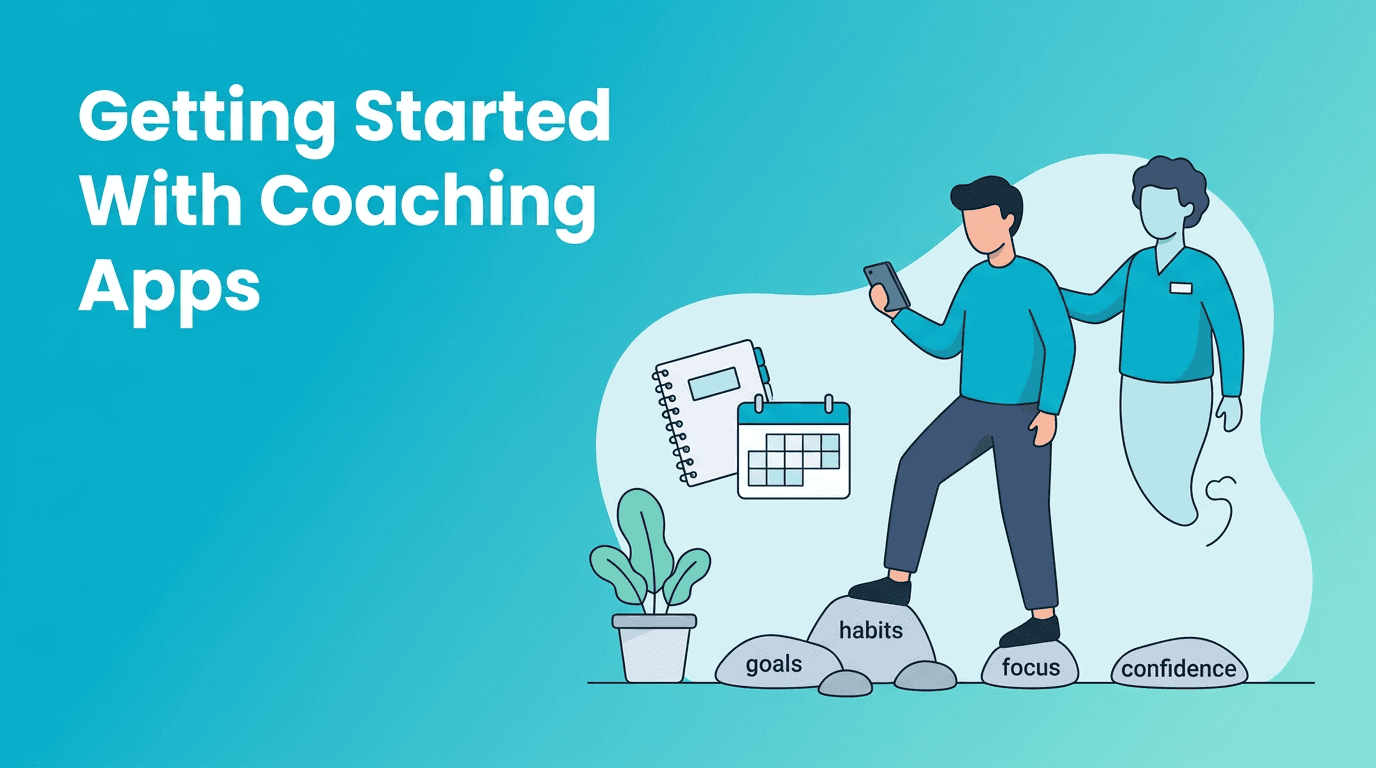
If you are curious about getting started with coaching, begin with one life area instead of trying to improve everything at once. Choose a single theme like focus, stress, confidence, or career direction. Then use a short daily check-in and one weekly review to notice patterns. This creates enough structure to learn without making the process feel heavy.
- Pick one goal for the next 7 days.
- Use one daily question such as 'What would make today feel successful?'.
- Track one behavior like sleep, focus time, or spending.
- Review your week and ask, What helped, what got in the way, and what should I adjust?
Want a simple place to begin?
Haply is an AI life coaching app for iOS and Android with personalized chat-based coaching, habit tracking, mini-tools like a Focus Timer and Task Planner, and goal-based onboarding that helps beginners start with clarity.
Try Haply FreeWhat the future of AI coaching may look like
Looking ahead, coaching trends suggest that AI will become more embedded in everyday self-development. Instead of being a separate activity, coaching may show up as a layer across your day: morning planning, midday stress regulation, evening reflection, and weekly goal reviews. The most useful tools will likely feel less like rigid programs and more like adaptive companions.
That does not mean human coaching disappears. In many cases, the future of AI will be a blended model. AI can help with consistency, reminders, journaling, and pattern spotting, while human coaches can support nuance, deeper emotional work, and complex life transitions. For beginners, this is good news because it expands options rather than replacing them.
Practical coaching tips for your first week
- Keep sessions short. Five to ten minutes is enough when you are building the habit.
- Focus on honesty, not performance. Coaching works better when you answer prompts truthfully instead of trying to sound impressive.
- Look for patterns. Repeated frustrations often reveal the best coaching topics.
- Measure small wins. Better sleep, fewer distractions, or one difficult conversation handled well all count as progress.
- Adjust quickly. If a goal feels too big, shrink it instead of quitting.
Frequently Asked Questions
What are coaching apps used for?
Coaching apps help people build self-awareness, set goals, track habits, and get guided support for personal growth areas like productivity, wellness, career, and relationships.
Are coaching apps good for beginners?
Yes. Coaching apps are often ideal for beginners because they offer structure, privacy, and low-pressure ways to start reflecting and taking action.
Can AI coaching replace a human coach?
AI coaching can support daily reflection, habit-building, and consistency, but human coaches may still be better for complex emotional challenges or deep life transitions.
How do I get started with coaching if I feel overwhelmed?
Start with one small goal, one daily check-in, and one weekly review. Keeping the process simple makes coaching easier to sustain.