Mental Contrasting for Self-Improvement: A Smarter Way to Turn Intentions Into Action
Mental contrasting is a practical self-improvement method that helps you turn wishes into action by pairing optimism with reality. Learn how to use it for personal growth, habits, resilience, and better decisions.

By Haply Team
Haply Editorial Team
Most people do not struggle because they lack ambition. They struggle because good intentions fade under pressure, distraction, and daily friction. Mental contrasting is a self-improvement technique that helps close that gap. Instead of only visualizing success, you pair a meaningful goal with the real obstacles that could stop you. That simple shift can support personal growth, stronger habits, more resilience, and better emotional intelligence in everyday life.
What mental contrasting actually is
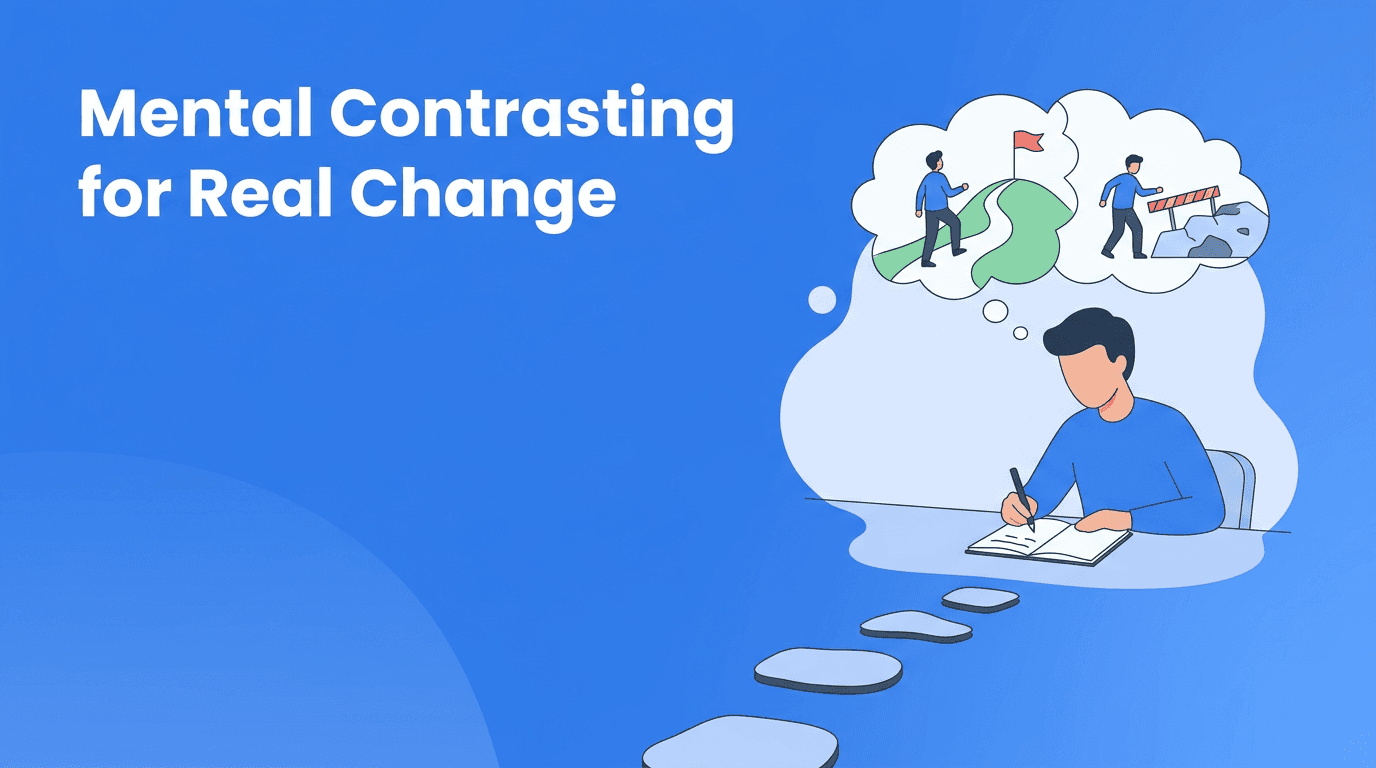
At its core, mental contrasting is a two-part reflection method. First, you identify a desired future. Then, you identify the inner obstacle standing in the way. This is what makes it more effective than vague positive thinking. You are not just dreaming about the outcome. You are training your mind to notice the moment where action usually breaks down.
- Future: What do you want to create, improve, or change?
- Obstacle: What thought, feeling, habit, or pattern inside you could interfere?
- Response: What will you do when that obstacle appears?
"Real change begins when hope meets honesty."
Why this method works for personal growth
Many self-improvement systems fail because they stay abstract. You tell yourself to be more disciplined, calmer, or productive, but you never define the exact barrier. Mental contrasting works because it makes progress concrete. If your goal is to read more, the obstacle may not be time. It may be the habit of opening social media the moment you sit down. If your goal is to speak more confidently, the obstacle may not be lack of knowledge. It may be fear of sounding imperfect.
This is where personal growth becomes practical. Instead of judging yourself, you study your patterns. That mindset also strengthens emotional intelligence, because you learn to recognize what you feel, what triggers avoidance, and how to respond with intention rather than impulse.
It is optimism with reality built in
Positive thinking can boost motivation in the short term, but it often falls apart when life gets messy. Mental contrasting keeps motivation grounded. You still imagine a better future, but you also prepare for resistance. That preparation builds resilience, because setbacks stop feeling surprising and start feeling manageable.
How to use mental contrasting in daily habits
You can apply mental contrasting to almost any area of self-improvement, especially recurring behaviors. The key is to focus on one small, specific habit at a time. That makes follow-through easier and helps you collect quick wins.
- For morning habits: Future - I want to start my day without rushing. Obstacle - I hit snooze three times. Response - I will place my phone across the room before bed.
- For learning habits: Future - I want to study for 20 minutes each evening. Obstacle - I feel mentally drained after work. Response - I will study before dinner, not after.
- For emotional regulation: Future - I want calmer conversations. Obstacle - I react defensively when criticized. Response - I will pause, take one breath, and ask one clarifying question first.
- For fitness habits: Future - I want to move consistently. Obstacle - I wait to feel motivated. Response - I will put on workout clothes immediately after work, even if I only do 10 minutes.
A simple 5-minute worksheet
- Write one wish that matters to you right now.
- Describe the best outcome in one or two sentences.
- Name the main internal obstacle, not just an external excuse.
- Create one if-then plan for that obstacle.
- Repeat the plan out loud once to make it memorable.
Want help turning insight into action?
Haply is an AI life coaching app for iOS and Android that helps you turn self-improvement goals into daily action. Use personalized coaching, habit tracking, reminders, and tools like the Focus Timer and Task Planner to stay consistent.
Try Haply FreeCommon mistakes that weaken mental contrasting
- Choosing goals that are too vague, like "be better" instead of "walk for 15 minutes after lunch."
- Focusing only on external obstacles and ignoring inner patterns such as avoidance, perfectionism, or fear.
- Creating plans that are too ambitious to repeat consistently.
- Using the exercise once and expecting permanent transformation instead of building it into your weekly review.
- Treating setbacks as proof of failure instead of feedback for adjustment.
If you want self-improvement to last, keep the process small and repeatable. The best habits are not always dramatic. They are often simple actions connected to honest self-awareness. Over time, that repeated honesty becomes a form of resilience.
How Haply can support the process
If you like guided structure, Haply can make mental contrasting easier to practice consistently. Its chat-based AI coaches support areas like Productivity, Wellness, Career, Learning, Finance, Creativity, and Relationships. You can set a goal during onboarding, track daily actions with the habit tracker, and use the Today Dashboard for reminders and motivation. Mini-apps like Meditation/Breathe, Sleep Stories, Focus Timer, and Task Planner also help when your obstacle is stress, distraction, or low energy.
That combination matters because self-improvement is not just about insight. It is about having support in the exact moment an old pattern shows up. The more often you catch that moment, the faster personal growth becomes visible in real life.
A weekly practice for stronger resilience
Try this once a week: choose one challenge that drained your energy, confidence, or focus. Then ask yourself three questions: What did I want? What got in the way inside me? What will I do next time? This turns frustration into data. It also builds emotional intelligence, because you become better at naming emotions without letting them control your next move.
With time, mental contrasting becomes more than a technique. It becomes a way of thinking. You stop waiting for ideal conditions and start preparing for real ones. That is one of the most useful forms of personal growth available, because it helps you act even when motivation is imperfect.
Frequently Asked Questions
What is mental contrasting in simple terms?
Mental contrasting is a goal-setting method where you imagine a desired future and then identify the internal obstacle that could block it. This helps you make a realistic action plan.
How does mental contrasting help with self-improvement?
It helps self-improvement by turning vague goals into specific responses. You become more prepared for the thoughts, feelings, and habits that usually derail progress.
Can mental contrasting improve habits?
Yes. Mental contrasting works especially well for habits because it helps you predict obstacles and decide in advance how to respond when they appear.
Is mental contrasting better than positive thinking?
It is often more practical than positive thinking alone because it combines motivation with realistic planning. You stay hopeful without ignoring what makes change difficult.