
Morning Pages for Writers: A Low-Pressure Ritual for Better Content Creation
Morning pages can unlock writing flow, sharpen storytelling, and make content creation feel lighter. Learn a simple journaling ritual that helps creative writing start before self-doubt does.

By Haply Team
Haply Editorial Team
If your best writing ideas seem to appear only after you stop forcing them, morning pages may be the missing link in your creative routine. This simple journaling practice helps aspiring writers clear mental clutter, loosen perfectionism, and enter content creation with more honesty, momentum, and room for storytelling.
What Are Morning Pages?
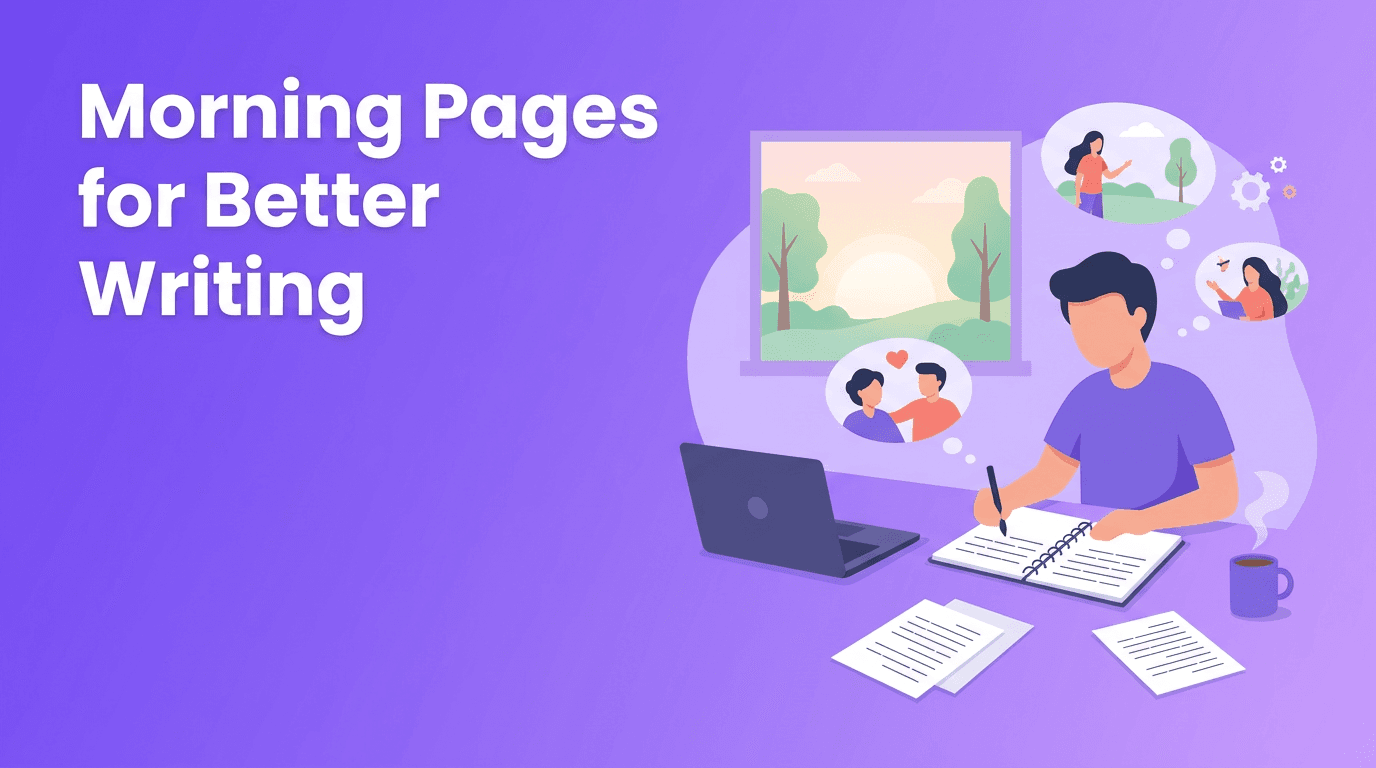
Morning pages are three pages of longhand, stream-of-consciousness writing done early in the day. The goal is not polished creative writing. It is not a diary entry you need to keep, publish, or even reread. It is a private warm-up that lets your mind empty the noise before you begin the work that matters most.
- Write by hand if possible, because it slows your inner critic
- Fill the page even if you think you have nothing to say
- Do not edit, organize, or try to sound smart
- Let complaints, ideas, worries, images, and fragments all belong
- Treat it as mental decluttering, not performance
You do not need a brilliant first thought to create something meaningful. You need a place to let the ordinary thoughts pass through.
Why Morning Pages Work for Content Creation
A lot of blocked content creation is not caused by a lack of ideas. It is caused by internal static, like self-judgment, unfinished tasks, comparison, and pressure to be original too fast. Morning pages lower that pressure. By moving the noise onto paper, you make more space for clearer sentences, stronger angles, and more natural storytelling.
They turn resistance into motion
Starting is often the hardest part of writing. When your first task is simply to fill a page, you build movement before ambition. That small win matters. Once you have already written something, your draft, article, script, or scene feels less intimidating.
They surface ideas you did not know you had
Because the practice is unfiltered, patterns begin to appear. A repeated frustration might become an essay. A memory might become a scene. A question might become a newsletter topic. Many writers find that journaling uncovers better material than brainstorming under pressure.
They strengthen your voice
Private pages let you hear your own rhythm without performing for an audience. Over time, this can improve creative writing by making your voice feel less borrowed and more grounded in what you actually notice, care about, and want to say.
How to Use Morning Pages Without Turning Them Into Another Task
The biggest mistake is trying to do morning pages perfectly. If you turn them into a productivity test, they lose their softness. The ritual works best when it feels forgiving and repeatable.
- Set a timer for 15 to 20 minutes if three pages feels too rigid
- Keep your notebook visible, so starting requires less effort
- Begin with a simple line like 'Today I do not know what to write'
- Ban backspacing if you type, or crossing out if you write by hand
- Stop keeping score, consistency matters more than streak perfection
Build a writing habit with support
If you want help staying consistent, Haply offers AI coaching for Creativity, plus tools like the Idea Board, habit tracking, and daily reminders that make your writing routine easier to keep.
Try Haply FreeA Simple 5-Step Morning Pages Routine for Writers
- Step 1: Sit down before input. Try writing before email, social media, or news, so your thoughts are still your own.
- Step 2: Lower the bar. Promise yourself the pages can be boring, repetitive, or messy.
- Step 3: Follow what appears. If a line sparks emotion or curiosity, stay with it for a few sentences.
- Step 4: Highlight one usable idea after finishing. Pick a phrase, image, or question you could use in later content creation.
- Step 5: Move into your main project immediately. Use the momentum to begin your draft, outline, or revision session.
What Morning Pages Can Unlock in Storytelling
Writers often think better storytelling comes from trying harder on the page. Sometimes it comes from becoming less guarded before the page. Morning pages can reveal emotional truth, sensory details, and surprising connections that make stories feel alive.
- A complaint can reveal a strong character voice
- A memory fragment can become the opening of a personal essay
- A repeated fear can point to the deeper theme in a story
- An overheard phrase from yesterday can spark dialogue
- A half-formed question can become your next article angle
When Journaling Feels Stale, Try These Variations
- Write your pages as a letter to your future reader
- Describe your mood using only images and sensory details
- Start with 'What I am avoiding is...' and continue honestly
- Write one page on your current project, one on your life, and one on ideas
- End with three possible titles for anything you might create today
The Real Goal: A Kinder Start to Creative Writing
The best reason to keep morning pages is not that they make you more productive, although they often do. It is that they create a gentler doorway into creative writing. You begin the day by listening instead of judging. For aspiring writers and creators, that shift can change not just what you make, but how you feel while making it.
Frequently Asked Questions
What are morning pages in writing?
Morning pages are a daily journaling practice where you write freely, usually first thing in the morning, to clear your mind and reduce creative resistance.
Do morning pages help with content creation?
Yes. Morning pages can help content creation by reducing overthinking, surfacing ideas, and making it easier to start drafting with momentum.
How long should morning pages take?
Most people spend 15 to 30 minutes on morning pages, depending on their pace and whether they write full pages or use a timer.
Can morning pages improve storytelling?
They can. Because the writing is unfiltered, morning pages often reveal emotions, memories, and observations that strengthen storytelling.