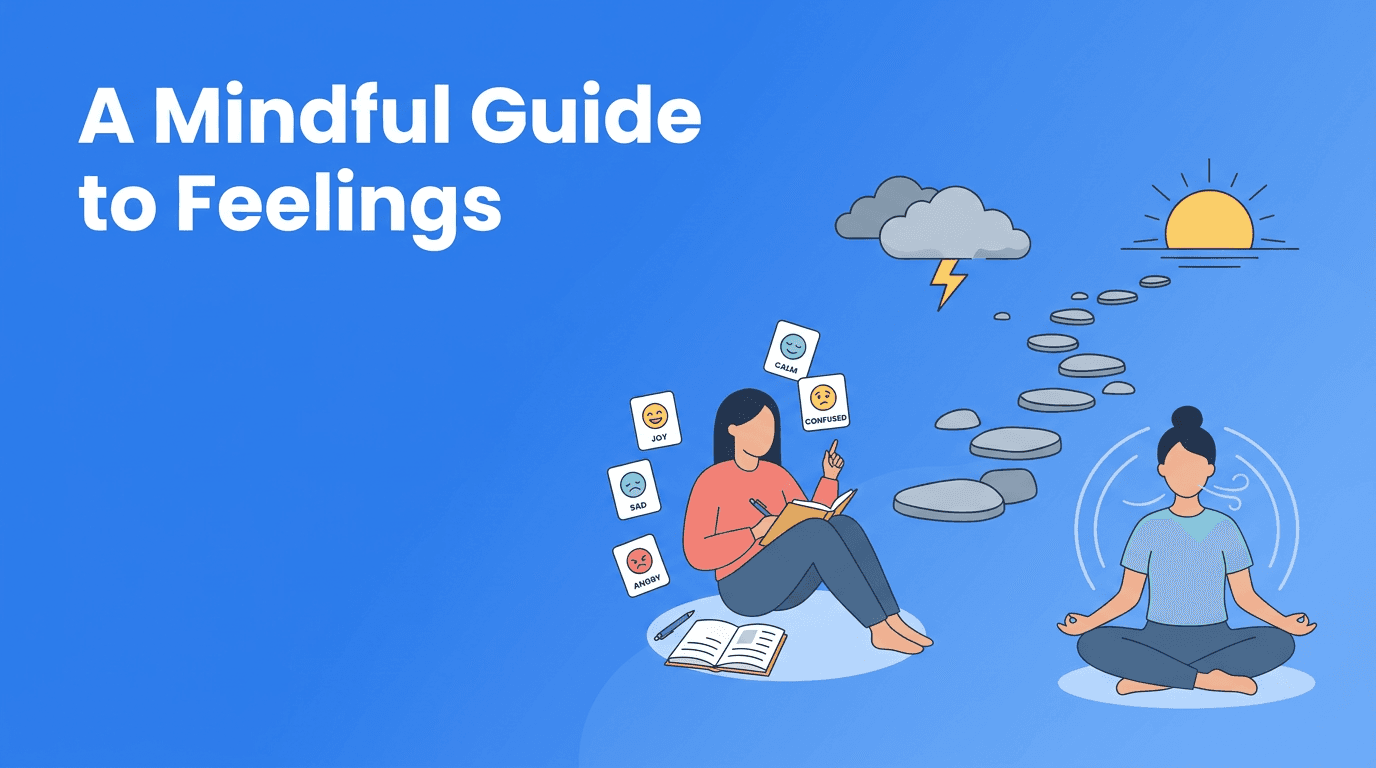
Name Your Feelings: A Mindful Guide to Emotional Granularity
Emotional granularity can strengthen emotional awareness and emotional intelligence by helping you identify feelings with more clarity. Learn simple, mindful steps to understand emotions and respond with intention.

By Haply Team
Haply Editorial Team
If you have ever said "I feel bad" and stopped there, emotional granularity may be the skill you are missing. It is the practice of naming your feelings with more precision, so your emotions become easier to understand, regulate, and communicate. In mindfulness, this matters because clear language creates deeper self-awareness, and deeper self-awareness supports calmer choices.
Why emotional granularity matters in daily life
Many people move through the day with a vague sense of being stressed, off, or overwhelmed. But there is a big difference between feeling disappointed, embarrassed, restless, lonely, or anxious. When you notice that difference, your brain gets better information. That improves emotional awareness and can strengthen emotional intelligence over time.
- If you can name a feeling precisely, you are more likely to choose the right coping strategy.
- If you can describe your emotions clearly, your relationships often become more honest and less reactive.
- If you can track patterns in your feelings, you can spot triggers before they take over your day.
"The more clearly you can name your inner experience, the more gently you can respond to it."
The problem with saying only 'fine' or 'stressed'
Broad labels are not wrong, but they are often incomplete. Saying "I am stressed" might actually mean pressured, unprepared, resentful, or mentally tired. Saying "I am fine" might hide hurt, numbness, or uncertainty. A mindful life is not about having perfect control over emotions. It is about becoming honest enough to notice what is really there.
A quick check-in you can use anywhere
- Pause and take one slow breath.
- Ask, "What am I feeling right now, exactly?"
- Replace a broad label with a more specific one.
- Ask, "What might this feeling need from me?"
This four-step check-in takes less than a minute, but it can interrupt autopilot and build stronger emotional awareness little by little.
How mindfulness helps you identify feelings
Mindfulness creates a small space between the feeling and the reaction. In that space, you can observe what is happening in your body, thoughts, and behavior. You might notice a tight chest, fast speech, or an urge to withdraw. These clues help you identify emotions before they spill out as impulsive actions.
Use your body as an emotional map
- A heavy chest may point to sadness or disappointment.
- A racing mind may suggest anxiety or anticipation.
- A hot face may signal embarrassment or anger.
- A flat, low-energy feeling may reflect discouragement or emotional exhaustion.
This is where emotional granularity becomes practical. You are not guessing randomly. You are collecting information with curiosity.
Want support building emotional self-awareness?
Haply is an AI life coaching app for iOS and Android that helps you understand emotions, build habits, and create calming daily routines. You can explore Wellness coaching, use the Meditation/Breathe mini-app, and check in with personalized prompts.
Try Haply FreeA simple emotional vocabulary practice
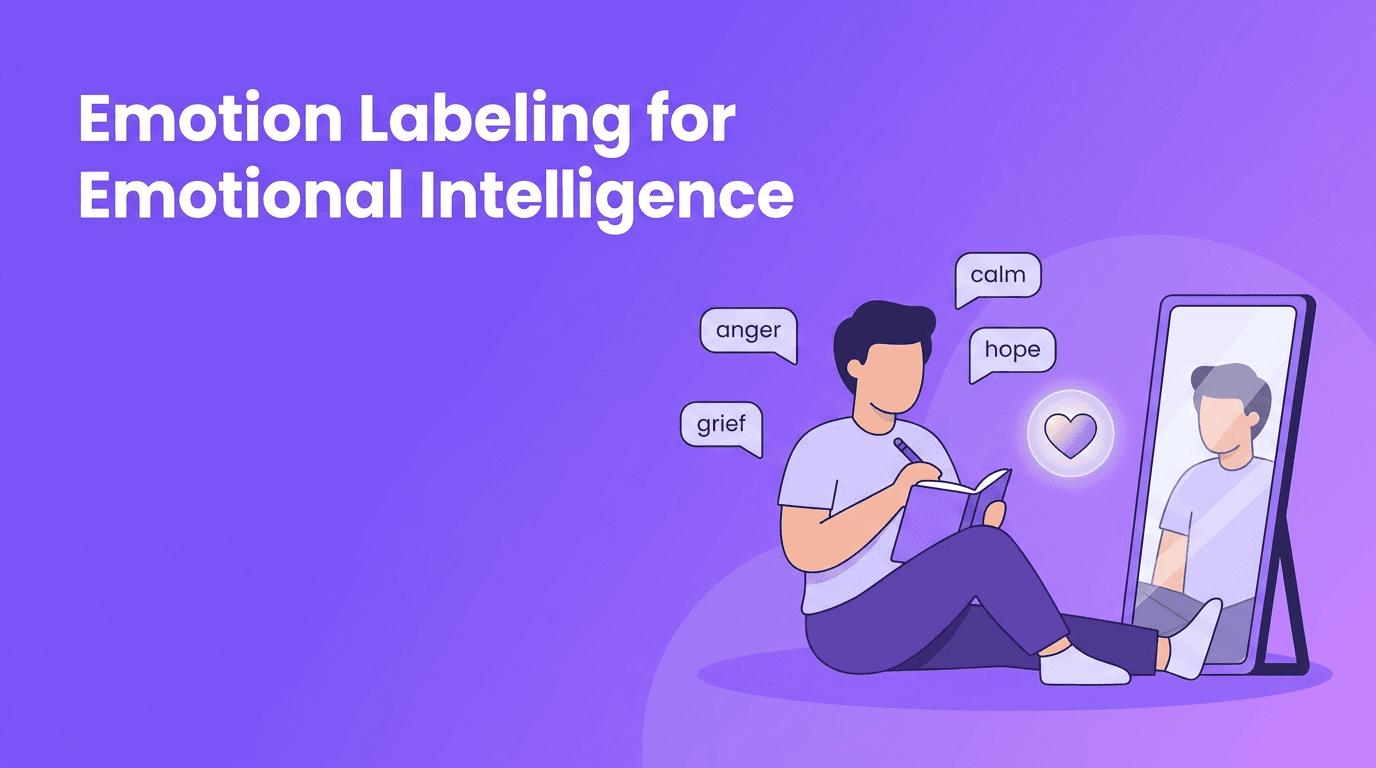
One of the easiest ways to improve emotional intelligence is to expand your emotional vocabulary. Instead of asking only whether you feel good or bad, sort your experience into more detailed categories.
- For anger, try: irritated, frustrated, resentful, betrayed.
- For sadness, try: disappointed, grief-stricken, lonely, discouraged.
- For fear, try: nervous, insecure, panicked, uneasy.
- For joy, try: content, relieved, grateful, hopeful.
You do not need to memorize a huge chart. Just learn a few better words each week. Over time, your ability to understand emotions becomes more nuanced and useful.
What to do after you name the emotion
Naming a feeling is not the end of the practice. It is the beginning of a wiser response. Once you identify the emotion, ask what action would be kind, grounded, and effective.
- If you feel overstimulated, reduce input and take a quiet break.
- If you feel lonely, send one honest message to someone safe.
- If you feel guilty, clarify whether you need repair, apology, or self-compassion.
- If you feel resentful, look for a boundary that may need attention.
This is how mindfulness supports intentional living. You stop reacting only to discomfort and start responding to information.
Make it a five-minute daily ritual
Try a short evening practice. Open a notes app or journal and finish these prompts: Today I felt..., The strongest feeling came from..., My body felt..., and Tomorrow I want to respond by.... This tiny ritual can sharpen self-awareness and reveal emotional patterns you may otherwise miss.
If you want more structure, Haply can help you turn this into a repeatable habit with daily reminders, streaks, and chat-based support from specialized coaches. Even a few mindful minutes a day can deepen emotional awareness.
Frequently Asked Questions
What is emotional granularity?
Emotional granularity is the ability to describe your feelings with specific words instead of broad labels like bad or stressed. It improves emotional awareness and helps you respond more effectively.
How does emotional granularity improve emotional intelligence?
It gives you a more accurate understanding of what you feel and why. That makes it easier to regulate emotions, communicate clearly, and choose helpful actions.
How can I get better at naming my feelings?
Practice pausing, noticing body sensations, and replacing vague words with more specific emotional labels. A short daily check-in or journal can help a lot.
Is mindfulness useful for emotional awareness?
Yes. Mindfulness helps you notice emotions before reacting automatically, which makes your inner experience easier to understand and manage.