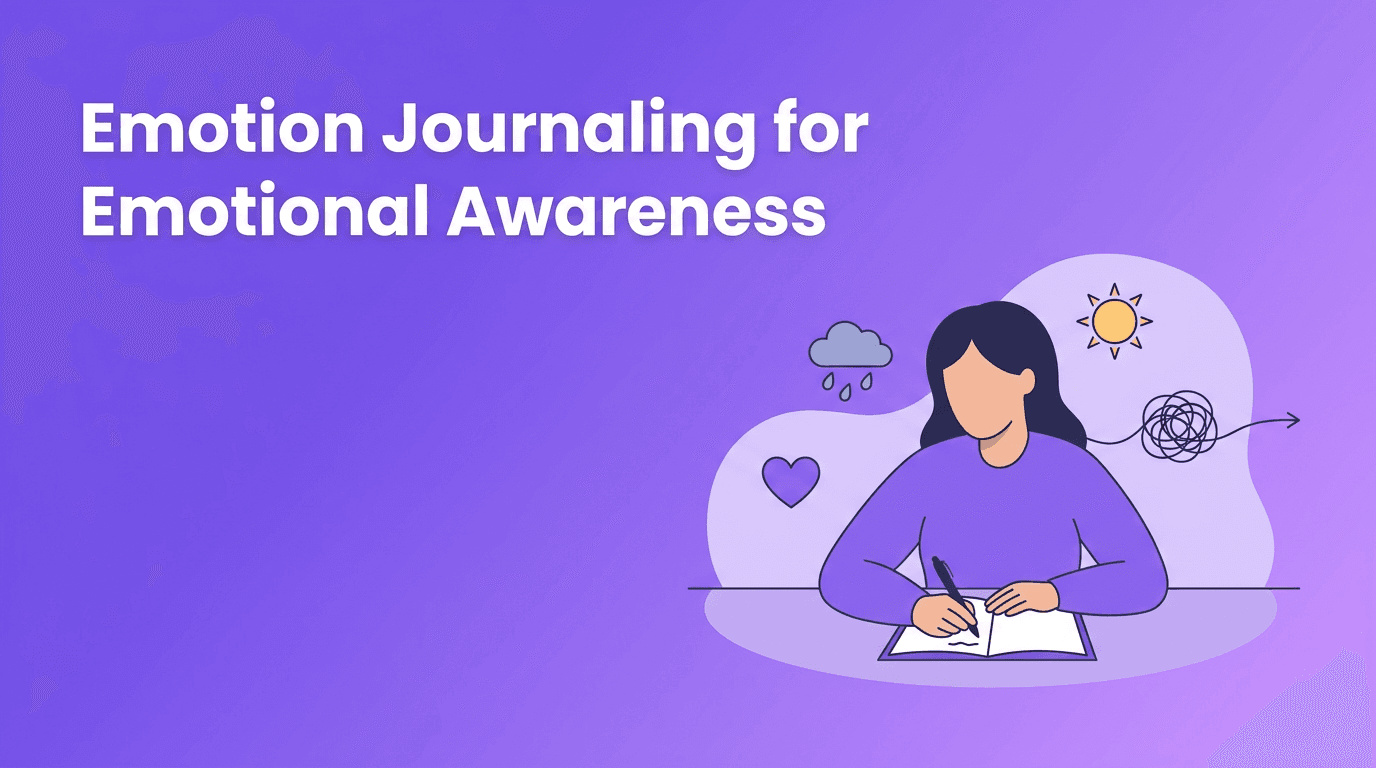
Emotion Journaling: A Simple Practice for Emotional Awareness
Emotion journaling is a gentle, practical way to build emotional awareness, understand your feelings, and strengthen self-awareness and emotional intelligence in everyday life.

By Haply Team
Haply Editorial Team
Emotion journaling can feel surprisingly powerful because it turns vague inner tension into words you can actually work with. If you want better emotional awareness, stronger self-awareness, and a healthier relationship with your feelings, this simple practice can help you notice your emotions before they overwhelm you.
Why emotion journaling works
Many people move through the day reacting first and understanding later. You may say, "I'm just stressed," when what you really feel is disappointment, shame, loneliness, or mental overload. Emotion journaling creates a pause between experience and reaction. That pause is where emotional intelligence begins.
- It helps you name emotions more precisely
- It reveals patterns in triggers, thoughts, and behaviors
- It strengthens self-awareness over time
- It gives intense feelings a safe place to land
- It supports calmer, more intentional decisions
"When you can name what you feel, you are less likely to be ruled by it."
The difference between writing and emotional awareness
Not all journaling builds insight. A page full of complaints may release tension, but it does not always increase emotional awareness. The goal of emotion journaling is not to write beautifully or solve everything at once. The goal is to notice what is true, without judgment, and gently explore what your inner world is trying to tell you.
What to include in an emotion journaling entry
- What happened? Describe the situation briefly
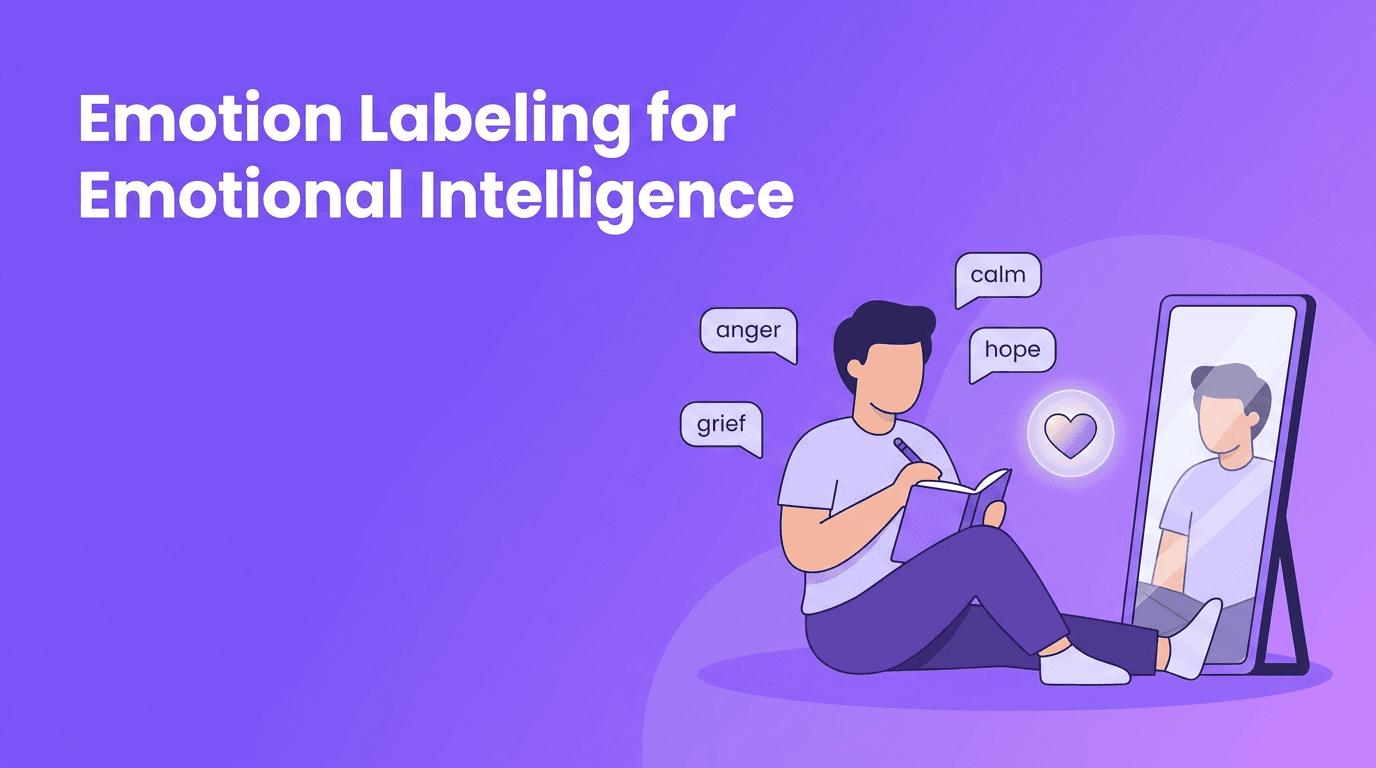
- What did I feel? Use specific emotion words if possible
- Where did I feel it in my body? Tight chest, heavy shoulders, clenched jaw
- What story was my mind telling? Notice assumptions and fears
- What did I need in that moment? Rest, reassurance, space, honesty, support
- What would help now? One kind, realistic next step
This structure helps transform messy emotional moments into useful information. Over time, you may notice that your feelings are not random. They often point to unmet needs, crossed boundaries, old fears, or values that matter deeply to you.
A 5-minute emotion journaling routine
You do not need a long ritual to benefit from emotion journaling. A short daily check-in is enough to improve your relationship with your emotions.
- Set a timer for 5 minutes
- Write one sentence about what happened today
- List three feelings without overthinking
- Underline the strongest emotion
- Write: "What might this feeling be trying to protect or show me?"
- End with one supportive action for yourself
When this practice is most helpful
Try it after conflict, before bed, during anxious spirals, or when you feel emotionally numb. It is especially helpful when you keep saying "I'm fine" but your body says otherwise. In these moments, emotion journaling can reconnect you to your actual experience.
Want guided support for emotional check-ins?
Haply is an AI life coaching app for iOS and Android that helps you build emotional awareness with personalized coaching, Wellness support, daily reminders, and calming tools like the Meditation/Breathe mini-app.
Try Haply FreeHow emotion journaling builds emotional intelligence
Emotional intelligence is not about being calm all the time. It is about recognizing emotions, understanding what influences them, and choosing your response with more intention. Journaling helps you practice all three.
- You become faster at identifying subtle feelings
- You learn which situations trigger defensiveness, shutdown, or overwhelm
- You notice the gap between facts and interpretations
- You build compassion for yourself instead of immediate self-criticism
- You respond more thoughtfully in relationships
Common mistakes to avoid
- Using journaling only when things are falling apart
- Judging yourself for having certain emotions
- Writing in vague terms like "bad" or "off"
- Trying to force a lesson from every entry
- Turning the journal into proof that something is wrong with you
A helpful mindset is this: your journal is not a courtroom. It is a place for honest observation. You are not there to win a case against yourself. You are there to understand your inner life with more kindness.
Gentle prompts for deeper self-awareness
- What feeling have I been avoiding this week?
- What emotion keeps showing up in different situations?
- What do I need but struggle to admit?
- When do I feel most emotionally safe?
- What belief makes this feeling harder to hold?
- If this emotion had a message, what would it say?
These prompts support deeper self-awareness without demanding perfect answers. Even one honest sentence can teach you something important.
A small practice that changes how you relate to feelings
You do not need to become a different person to understand yourself better. Often, you just need a reliable moment of attention. Emotion journaling offers exactly that. With a few quiet minutes, you can build emotional awareness, understand your feelings, and meet your emotions with more clarity, honesty, and care.
Frequently Asked Questions
How do I start emotion journaling if I do not know what I feel?
Start with simple words like sad, angry, anxious, numb, or relieved. If that feels hard, write about body sensations first and let emotion words come later.
Can journaling improve emotional intelligence?
Yes. Journaling can strengthen emotional intelligence by helping you identify patterns, name feelings clearly, and respond more thoughtfully instead of reacting automatically.
What should I write in an emotional awareness journal?
Write what happened, what you felt, where you felt it in your body, what thoughts came up, and what you needed in that moment. Keep it brief and honest.
How often should I do emotion journaling?
A few minutes several times a week is enough to see benefits. Consistency matters more than length.
Is emotion journaling good for stress and overwhelm?
It can be very helpful because it slows down mental noise and helps you sort through feelings with more clarity. It is a simple way to create space before reacting.