Name Your Feelings: An Emotion Labeling Practice for Emotional Intelligence
Emotion labeling is a simple mindfulness skill that strengthens emotional intelligence, builds self-awareness, and helps you respond to feelings with more clarity and calm.

By Haply Team
Haply Editorial Team
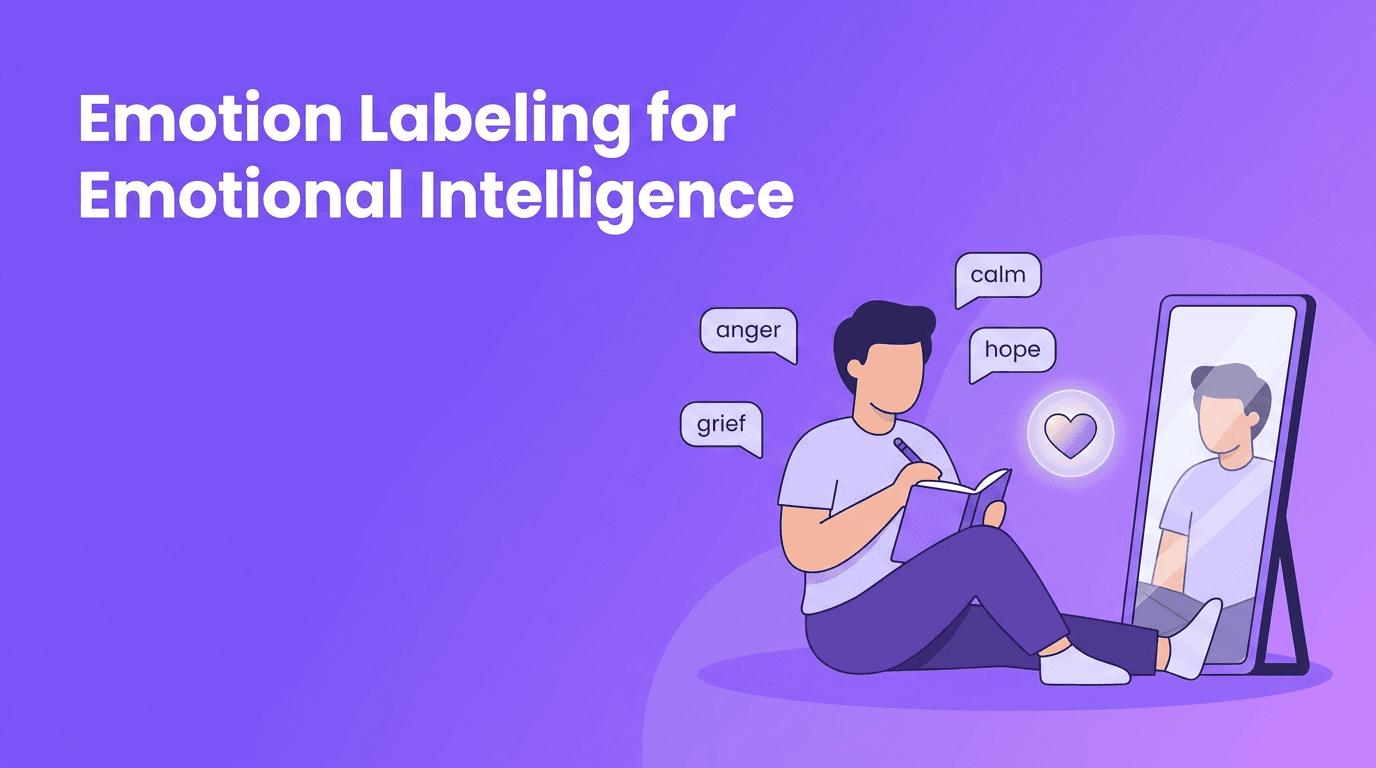
Sometimes the hardest part of a difficult day is not the feeling itself, but the confusion around it. Emotion labeling is a mindfulness practice that helps you put accurate words to your inner experience, so your feelings become easier to understand, regulate, and communicate.
Instead of saying "I feel bad" or "I'm just stressed," you learn to pause and ask, What exactly is happening in me right now? That small shift can deepen self-awareness, improve emotional awareness, and support stronger emotional intelligence over time.
Why emotion labeling works
When you name an emotion clearly, it often becomes less overwhelming. Research in psychology suggests that labeling emotions can reduce their intensity by moving your brain from raw reactivity toward reflection. In simple terms, words create a little space between you and the feeling.
- Vague feelings often keep you stuck, but specific words create clarity.
- Naming your feelings can make it easier to choose a healthy next step.
- The practice supports emotional intelligence by helping you recognize patterns in your inner life.
- It also improves communication, because you can express what you feel without blaming or shutting down.
"When you can name what you feel, you are less likely to be ruled by it."
A simple emotion labeling practice
You do not need a long meditation session to practice emotion labeling. You can use it in the middle of a tense conversation, while journaling, or during a quiet moment before bed.
Step 1: Pause before reacting
Take one slow breath. Relax your jaw, shoulders, and hands if you can. The goal is not to force calm, but to create enough space to notice your internal state.
Step 2: Describe the feeling with precision
Ask yourself, "What am I feeling right now?" Try to go beyond broad labels like angry or sad. Maybe you feel disappointed, embarrassed, restless, resentful, lonely, or overloaded. More precise language builds stronger emotional awareness.
Step 3: Notice where it shows up in the body
Many feelings have physical signals. Anxiety may feel like a tight chest. Frustration may show up as heat in the face. Grief may feel heavy in the body. This step connects mindfulness with self-awareness.
Step 4: Add context without judgment
Try the sentence, "I feel ___ because ___." Keep it factual. For example: "I feel anxious because I have not heard back about the interview," or "I feel hurt because I expected more support." This helps you understand your emotions without criticizing yourself for having them.
Step 5: Choose one kind response
After naming the emotion, ask, "What would help right now?" The answer might be a boundary, a short walk, a glass of water, a journaling session, or a conversation. Emotion labeling works best when it leads to compassionate action.
Common mistakes when identifying feelings
- Confusing thoughts with feelings. "I feel like nobody cares" is a thought. "I feel lonely" is a feeling.
- Using only a few emotion words. Expanding your vocabulary improves emotional intelligence.
- Judging your experience. Feelings are information, not proof that something is wrong with you.
- Trying to fix the emotion too quickly. Sometimes understanding comes before change.
How to build the habit in daily life
The easiest way to strengthen emotion labeling is to attach it to moments that already happen every day. Try it when you wake up, before meals, after meetings, or whenever you notice tension.
- Set a reminder that asks, "What am I feeling right now?"
- Keep a short list of feeling words in your notes app or journal.
- Use a 60-second check-in before responding to conflict.
- Reflect at night on one emotion you felt and what triggered it.
Want guided support for emotional check-ins?
Haply is an AI life coaching app for iOS and Android with Wellness coaches, chat-based support, a habit tracker, and a Meditation/Breathe mini-app to help you build mindful routines around your feelings.
Try Haply FreeWhen emotion labeling becomes transformational
At first, this practice may seem almost too simple. But over time, it can change how you relate to yourself. You stop treating emotions as interruptions and start seeing them as signals. You become less reactive, more honest, and more capable of meeting your needs with care.
That is the heart of mindfulness. Not perfect calm, but a more truthful relationship with your inner world. And often, that begins with one brave sentence: "This is what I am feeling."
Frequently Asked Questions
What is emotion labeling in mindfulness?
Emotion labeling is the practice of naming your feelings with specific words. It helps reduce emotional overwhelm and increases self-awareness.
How does emotion labeling improve emotional intelligence?
It strengthens your ability to recognize, understand, and communicate emotions clearly. That makes it easier to respond thoughtfully instead of reacting automatically.
Can naming feelings really calm you down?
Yes, for many people it can. Putting words to emotions often creates mental distance, which can lower intensity and improve regulation.
What is the difference between feelings and thoughts?
Feelings are emotional states like sadness, relief, or anger. Thoughts are interpretations or stories about what is happening.