Intentional Tech Use: A Mindful Plan to Reduce Screen Time Without Missing Out
Intentional tech use can help you cut screen time, calm FOMO, and build a healthier relationship with your phone without a harsh digital detox.

By Haply Team
Haply Editorial Team
Intentional tech use is a gentler alternative to an extreme digital detox. If you are tired of rising screen time, distracted habits, and the constant pull of FOMO, this approach helps you use your phone on purpose instead of by default.
Why intentional tech use works better than going cold turkey
A lot of people try to fix phone addiction by deleting every app, turning off their phone for a weekend, or making strict rules they cannot keep. That can work briefly, but it often backfires because modern life really does require technology. Work messages, maps, banking, family updates, and community all live on our screens.
Intentional tech use starts with a more realistic question: What do I want technology to do for me? When you answer that, your phone becomes a tool again, not the manager of your attention.
"If you do not choose where your attention goes, something else will choose it for you."
The hidden loop behind screen time and FOMO
Most compulsive scrolling is not about laziness. It is usually a loop of cue, craving, action, and temporary relief. You feel bored, lonely, stressed, or mentally tired. You pick up your phone. You get a small hit of novelty. Then your brain learns that checking is the fastest way to change your state.
- FOMO makes you feel that if you are offline, you are missing something important.
- Endless feeds remove natural stopping points, so screen time stretches longer than planned.
- Notifications create urgency, even when nothing truly needs your attention.
- Stress and decision fatigue make mindless phone use feel easier than rest.
A mindfulness shift that changes the pattern
Before unlocking your phone, pause and ask: "What am I here to do?" This tiny question interrupts autopilot. It brings awareness back to the present moment and helps you separate a real need from a reflex.
A 5-step intentional tech use plan
1. Define your high-value screen time
Not all screen use is equal. Some digital activities support your life, while others drain it. Make two short lists: helpful screen time and empty screen time. Helpful might include calling family, listening to a meditation, learning a skill, or using maps. Empty might include doomscrolling, checking the same app every few minutes, or opening social media when you feel anxious.
2. Create friction for your biggest triggers
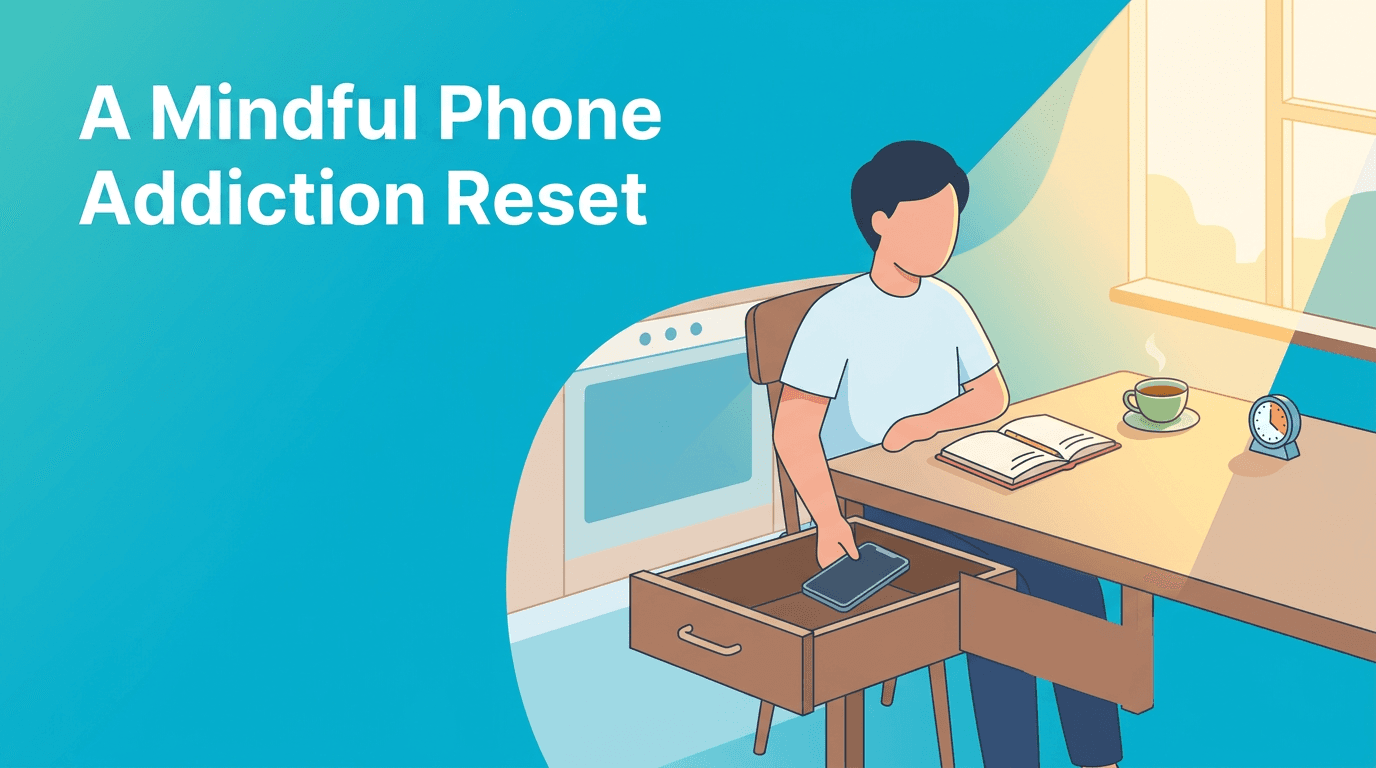
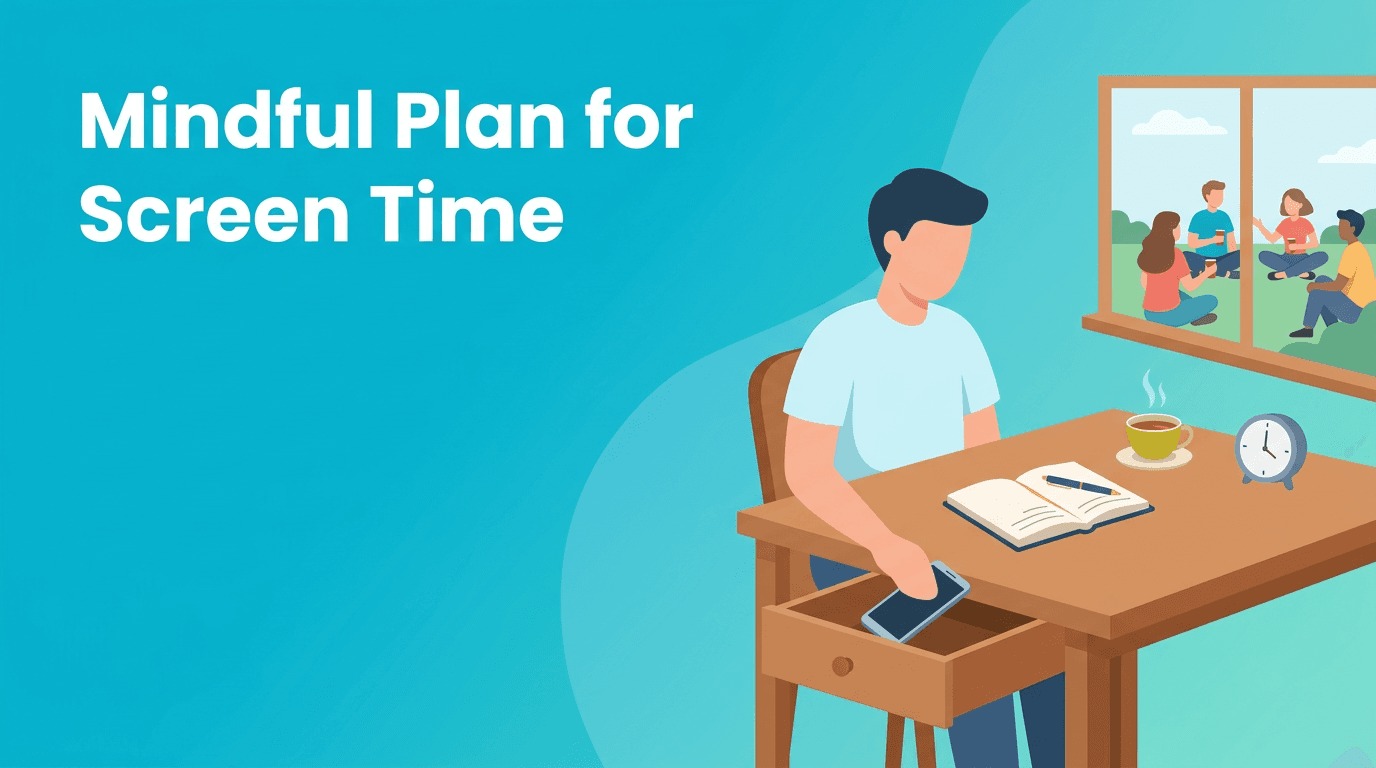
Make your hardest habits slightly less convenient. Move social apps off your home screen. Log out after each session. Charge your phone outside the bedroom. Turn off nonessential notifications. Small barriers are powerful because they give your mindful brain a chance to catch up.
3. Replace, do not just remove
If you cut scrolling but leave a void, your brain will look for the quickest substitute. Replace phone habits with low-friction options like a short walk, stretching, a paper book, a voice note to a friend, or three slow breaths. This is where intentional tech use becomes sustainable.
4. Use timed windows instead of constant access
Try checking messages and social media at set times rather than all day. For example, 15 minutes at lunch and 20 minutes after dinner. A structure like this reduces background mental noise and lowers the sense that you must always be available.
5. End the day with a phone shutdown ritual
Your evenings shape your nervous system. Pick a time when your phone is effectively done for the day. Dim the lights, plug it in away from your bed, and switch to a calming activity. This can improve sleep, reduce overstimulation, and lower late-night screen time.
Want support building healthier tech habits?
Haply is an AI life coaching app for iOS and Android that can help you build mindful routines, track habits, and stay consistent. Try the Wellness coaching tools, daily reminders, and Meditation/Breathe mini-app as you reset your relationship with screens.
Try Haply FreeWhat to do when phone addiction feels emotional
Sometimes phone addiction is not really about the phone. It is about what the phone helps you avoid. Silence. Anxiety. Loneliness. Unfinished tasks. Social discomfort. If your urge to check your phone spikes during emotional moments, try naming the feeling first: "I am restless", "I am avoiding", or "I want comfort". Awareness lowers reactivity.
- Take three slower breaths before opening any app.
- Set a 10-minute delay when you feel a strong urge to scroll.
- Ask, "Do I need connection, information, or escape?"
- Choose one intentional action that matches the real need.
A realistic digital detox for ordinary life
A full digital detox is not the only path. For many people, a better option is a recurring mini-reset. You might keep one phone-free hour every morning, one screen-light evening each week, or one social-media-free day on weekends. These repeatable rituals are easier to maintain and often more effective than dramatic short-term changes.
Try this beginner reset
- First 30 minutes after waking up: no social media
- Meals: keep your phone out of reach
- Commutes or short waits: allow boredom without scrolling
- Last 60 minutes before sleep: screen-light routine
How Haply can help you stay consistent
If you want accountability, Haply can make this easier. Its chat-based AI coaching can help you define better boundaries, the habit tracker can support streaks for phone-free routines, and the Today Dashboard can keep your goals visible. If stress is driving your checking habits, the Meditation/Breathe mini-app offers a quick way to regulate your state without reaching for endless content.
The goal is not less tech, but wiser attention
Mindfulness is not about rejecting modern life. It is about meeting it with awareness. Intentional tech use helps you reduce screen time, soften FOMO, and loosen the grip of phone addiction by bringing choice back into the moment. Start small, repeat what works, and let your phone return to its proper role: a useful tool, not your default state.
Frequently Asked Questions
What is intentional tech use?
Intentional tech use means using devices with a clear purpose instead of out of habit or impulse. It helps you reduce distraction and make screen time more aligned with your values.
How can I reduce screen time without doing a full digital detox?
Start with small boundaries like phone-free mornings, timed app windows, and charging your phone outside the bedroom. These habits are easier to maintain than an all-or-nothing detox.
Why do I feel FOMO when I spend less time on my phone?
FOMO often comes from the fear of missing social updates, opportunities, or connection. It usually softens when you replace passive checking with real communication and meaningful offline activities.
Can mindfulness help with phone addiction?
Yes. Mindfulness helps you notice urges before acting on them, identify emotional triggers, and choose a more intentional response instead of automatic scrolling.