Phone Addiction Reset: A Mindful Digital Detox That Actually Sticks
A mindful phone addiction reset can help you reduce screen time, calm FOMO, and build intentional tech use habits without going off the grid.

By Haply Team
Haply Editorial Team
If phone addiction feels less like a bad habit and more like a reflex, you are not alone. Many people want a digital detox, but what they really need is a gentler system for reducing screen time, handling FOMO, and practicing intentional tech use without making daily life harder.
Why a harsh digital detox often backfires
All-or-nothing plans sound powerful, but they usually ignore how phones are woven into work, family life, navigation, banking, and social connection. When you try to quit everything at once, your brain reads it like deprivation. That is when rebound scrolling happens.
- Phone addiction is often triggered by cues, not weakness.
- Screen time spikes when you are tired, bored, lonely, or avoiding a task.
- FOMO keeps you checking because uncertainty feels uncomfortable.
- A sustainable digital detox works better when it replaces, not just removes, the habit.
"You do not need more willpower. You need fewer invisible invitations to disconnect from yourself."
The 3-layer phone addiction reset
1. Remove frictionless checking
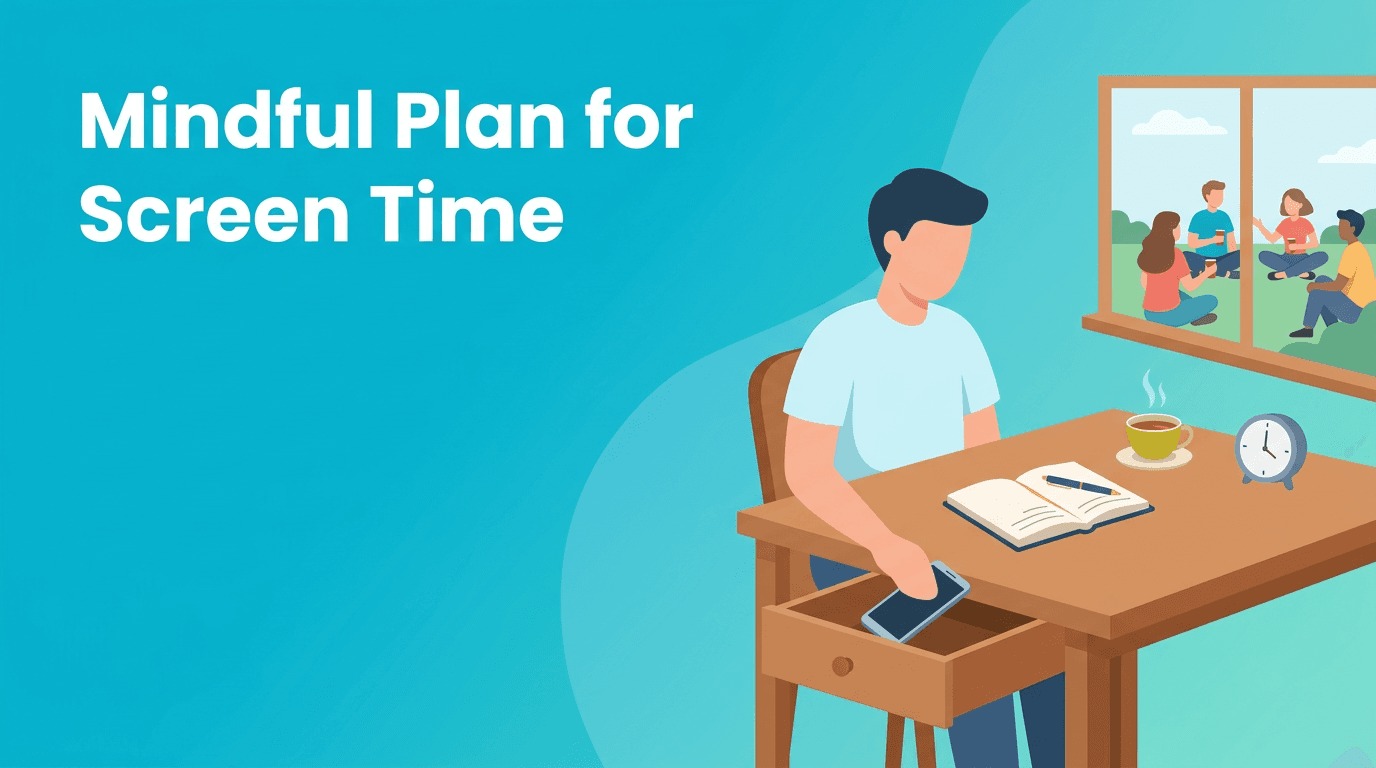
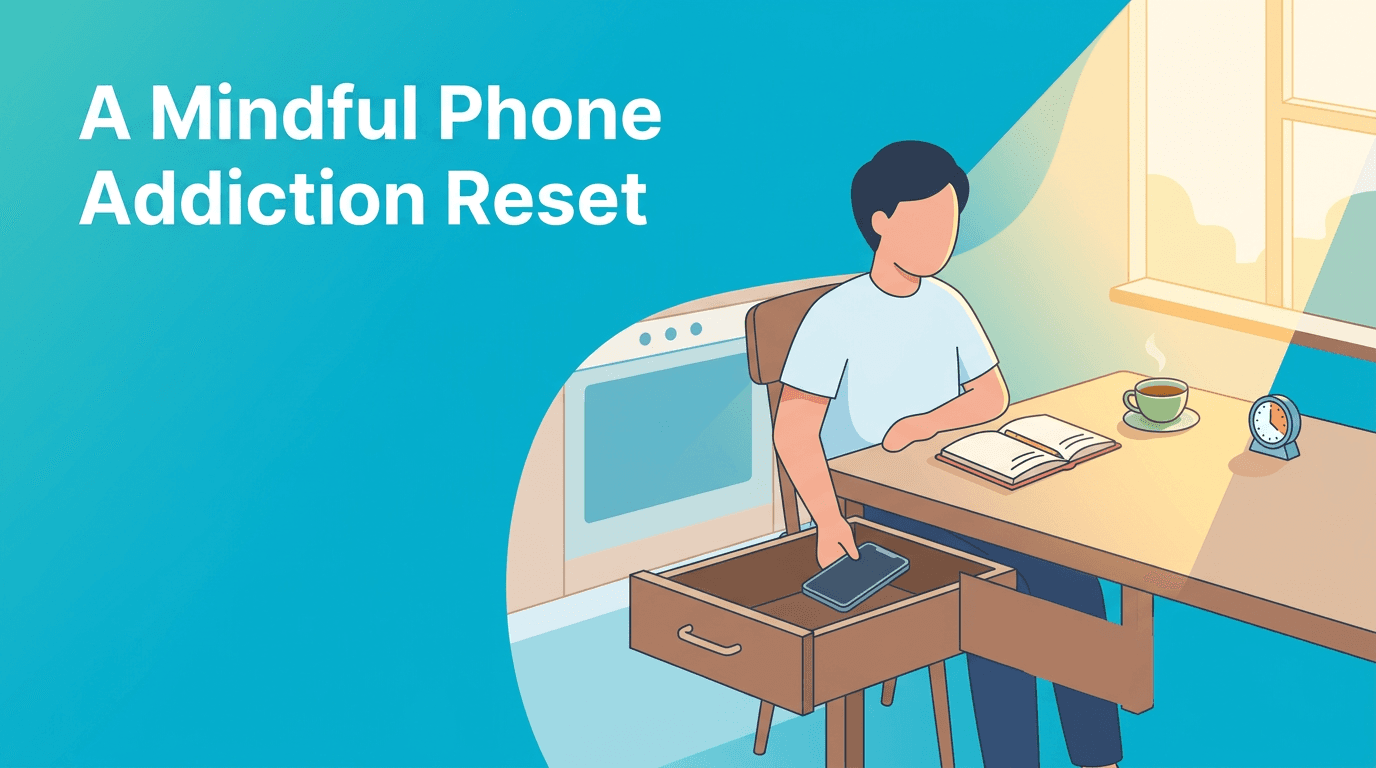
Start with the moments when your phone seems to appear in your hand before you even notice. Turn off non-human notifications, move social apps off the home screen, log out of the most compulsive apps, and keep your charger outside the bedroom. These small barriers interrupt autopilot.
2. Create mindful replacement rituals
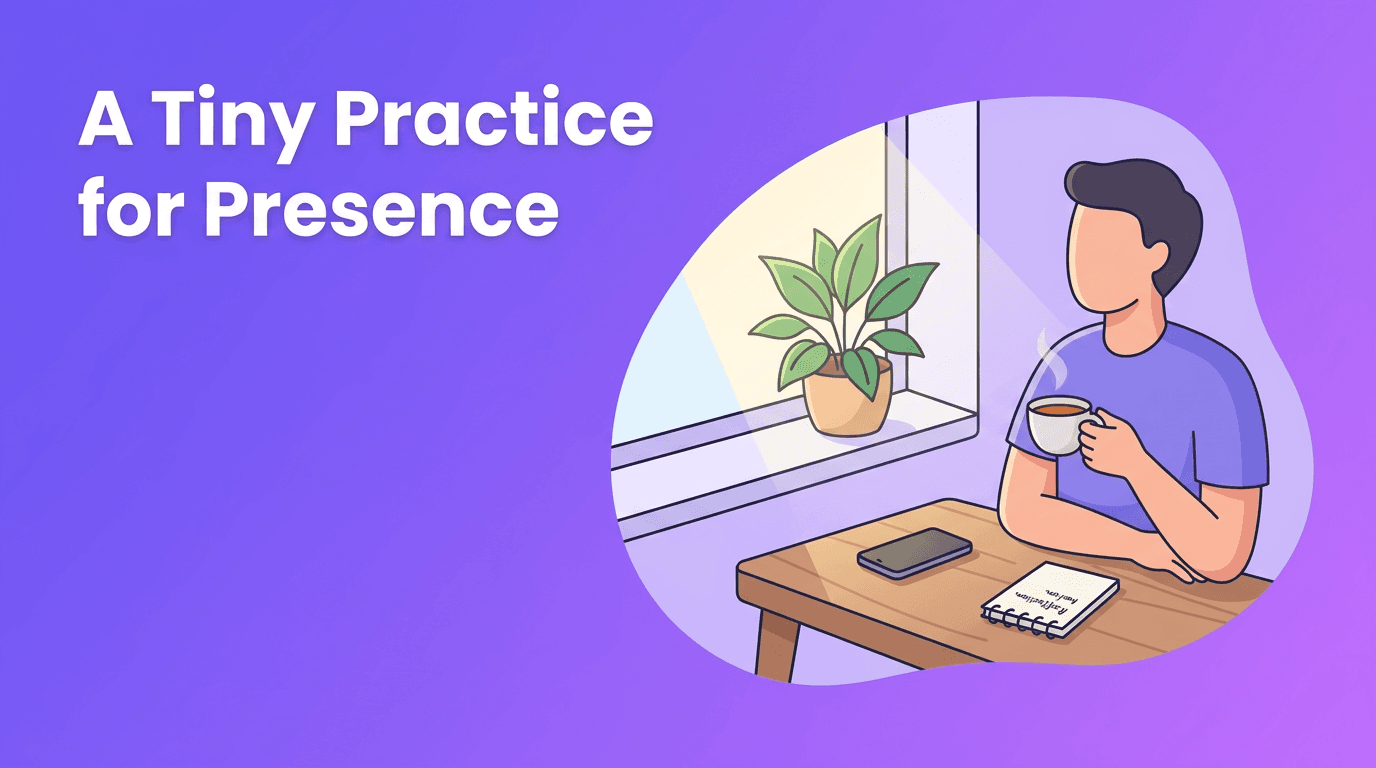
A good digital detox plan gives your nervous system something else to do. Try a 60-second breathing pause before unlocking your phone. Keep a paper notebook nearby for random thoughts. Replace morning scrolling with stretching, tea, or two lines of journaling. The goal is not perfection. It is pattern change.
- Before opening a social app, ask: "Why now?"
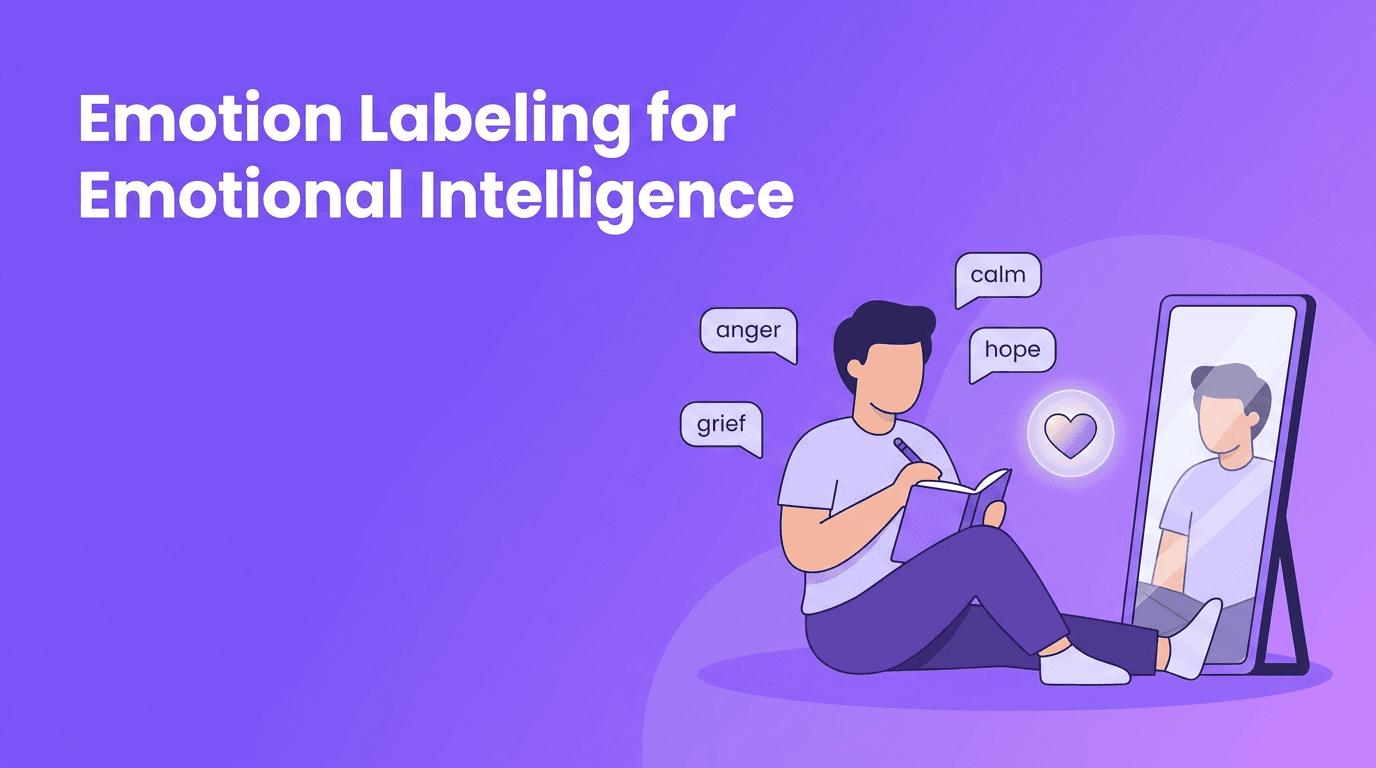
- When you feel FOMO, name what you fear missing.
- Set two check-in windows for messages and social media.
- Use grayscale or Focus mode during work blocks.
- Keep one phone-free zone, like the dining table or bed.
3. Rebuild trust with intentional tech use
The final step is intentional tech use. Decide what your phone is for before deciding how much less you will use it. Maybe it supports learning, close relationships, music, maps, and workouts. Anything outside those priorities should earn its place.
A 7-day mindful digital detox experiment
Instead of promising a whole new life, try a one-week experiment. This lowers resistance and gives you real data about your screen time patterns.
- Day 1: Check your screen time report and write down your top three most-used apps.
- Day 2: Delete one app you do not actually value, or at least remove it from your home screen.
- Day 3: Make the first 20 minutes of your morning phone-free.
- Day 4: Take one walk, meal, or commute without your phone in hand.
- Day 5: Notice one FOMO trigger and write what it promises you.
- Day 6: Create a short evening shutdown routine with lights dimmed and your phone parked away from bed.
- Day 7: Reflect on what improved: focus, mood, sleep, presence, or energy.
Want help building healthier tech habits?
Haply is an AI life coaching app for iOS and Android that can support your digital detox goals with Wellness coaching, habit tracking, daily reminders, and the Meditation/Breathe mini-app for quick reset moments.
Try Haply FreeHow mindfulness helps with screen time and FOMO
Mindfulness does not ask you to hate technology. It teaches you to notice the moment before the impulse becomes action. That tiny pause is where freedom starts. When you observe the urge to check, you can respond with curiosity instead of obedience.
- Notice the body cue: tight chest, restless hands, mental buzzing.
- Name the state: bored, anxious, lonely, overstimulated, procrastinating.
- Take three slower breaths before deciding what to do next.
- Choose the smallest helpful action, not the fastest distraction.
This is why mindfulness works so well for phone addiction. It addresses the emotional loop under the behavior, not just the behavior itself.
Tools that make intentional tech use easier
You do not need twenty apps to use your phone less. You need a few clear supports. A timer, app limits, a written intention, and a calming practice can go a long way. If you want extra structure, Haply's habit tracker, Today Dashboard, and chat-based Wellness coaching can help you turn good intentions into repeatable routines.
What progress actually looks like
A healthier relationship with your phone is not measured by never scrolling again. It looks like checking less automatically, sleeping better, finishing tasks with less fragmentation, and feeling more present in your own life. The real win is not lower numbers alone. It is reclaiming attention.
Frequently Asked Questions
How do I stop phone addiction without deleting everything?
Start by adding friction: turn off notifications, move distracting apps, and set phone-free times. Small barriers reduce automatic checking without requiring a total cutoff.
What is the best digital detox for busy people?
The best digital detox is usually a realistic one-week reset with clear boundaries, such as a phone-free morning routine and limited social media check-ins.
Why does FOMO make screen time worse?
FOMO creates a fear that something important is happening without you, which keeps you checking for updates. Naming that fear can reduce its power.
Can mindfulness help with phone addiction?
Yes. Mindfulness helps you notice urges before acting on them, making it easier to choose intentional tech use instead of reflexive scrolling.