Self-Forgiveness Meditation: A Quiet Practice for Inner Peace in Uncertainty
Self-forgiveness meditation offers a grounded way to meet uncertainty, soften self-judgment, and cultivate inner peace through acceptance and practical reflection.

By Haply Team
Haply Editorial Team
There are seasons when the mind becomes a courtroom. We replay old choices, rehearse better versions of the past, and quietly punish ourselves for being human. Self forgiveness meditation is not an attempt to erase responsibility. It is a way to meet your own history with acceptance, honesty, and enough mercy to keep living.
For people moving through change, loss, or existential doubt, the deeper struggle is often not what happened, but the story we keep telling about what happened. We ask whether we should have known more, loved better, spoken sooner, stayed longer, left earlier. In the face of uncertainty, the psyche searches for control, and guilt can feel like a substitute for wisdom. Yet guilt without compassion rarely becomes growth. More often, it becomes exhaustion.
Why forgiveness can feel harder than regret
Regret is familiar. It gives the illusion that if we keep suffering, we are still being moral. Forgiveness, especially self-forgiveness, can feel dangerous because it seems like permission. But true forgiveness is not denial. It is the decision to stop turning pain into identity. In that sense, self forgiveness meditation is both a mindfulness practice and a small philosophy of freedom.
- Regret looks backward and asks, 'Why did I do that?'
- Shame turns an action into a self-definition, 'I am bad'
- Acceptance says, 'This happened, and I can face it honestly'
- Forgiveness says, 'I will learn without abandoning myself'
"The wound may be part of your story, but it does not have to become your name."
A philosophical view of inner peace
Many spiritual and philosophical traditions agree on one difficult truth: inner peace does not come from controlling every outcome. It comes from learning how to relate to what cannot be changed. Stoic thought reminds us to distinguish between what is in our power and what is not. Mindfulness asks us to witness experience without immediately resisting it. Together, they offer a practical path: take responsibility for your next action, and release the fantasy of a perfect past.
This is where letting go becomes more than a soothing phrase. It becomes disciplined realism. To let go is not to stop caring. It is to stop negotiating with yesterday. When practiced regularly, self forgiveness meditation can help transform remorse into repair, and repair into a quieter kind of dignity.
What self-forgiveness is not
- It is not pretending no harm was done
- It is not skipping apology or accountability
- It is not spiritual bypassing or forced positivity
- It is not a one-time breakthrough that ends all pain
What self-forgiveness can become
- A daily practice of acceptance
- A gentle reduction in harsh self-talk
- A clearer sense of what needs repair
- A steadier capacity to live with uncertainty
- A realistic doorway to inner peace
Want support beyond reading?
Haply is an AI life coaching app for iOS and Android with Wellness coaches, chat-based guidance, and a Meditation/Breathe mini-app that can help you build a gentle self-forgiveness practice with reminders and streaks.
Try Haply FreeA 10-minute self-forgiveness meditation practice
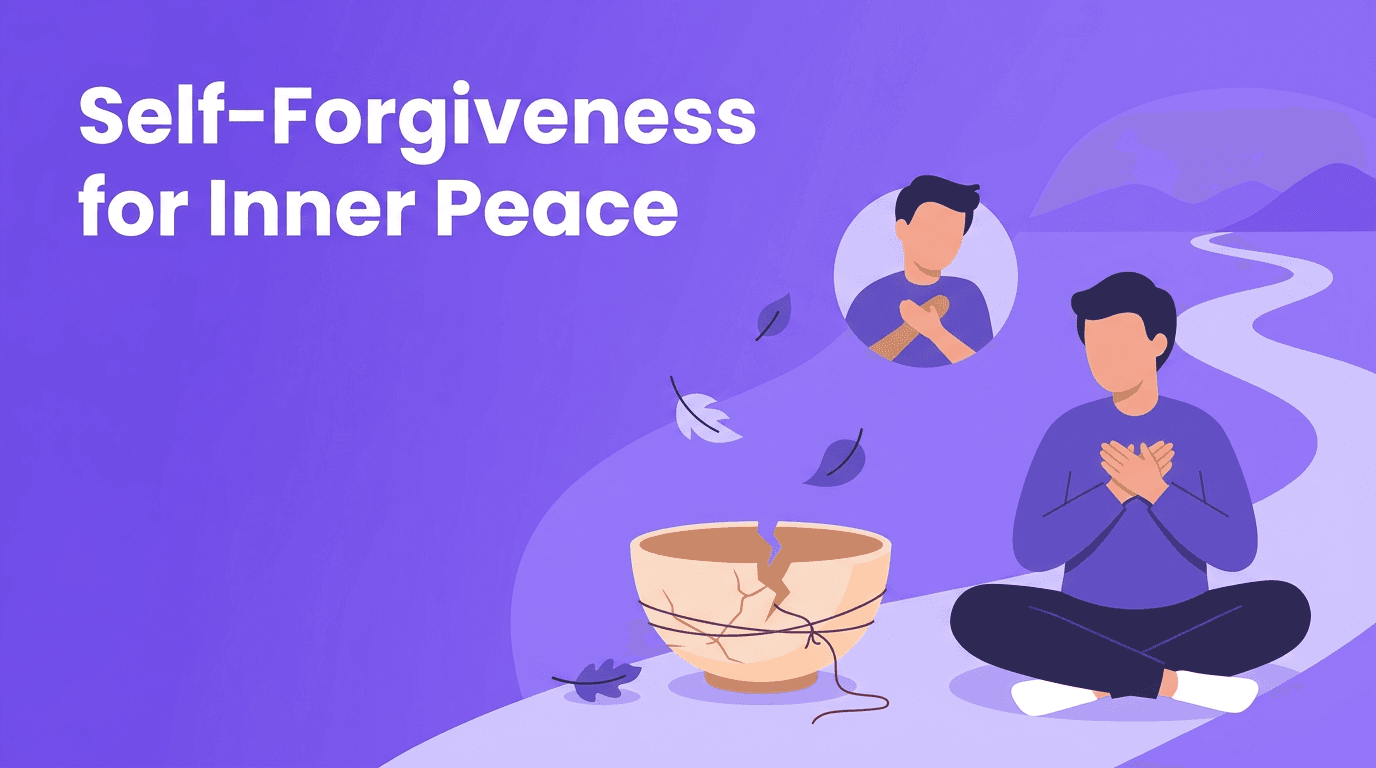
Use this practice when you feel stuck in blame, looping thoughts, or the ache of unfinished self-judgment. Sit comfortably. Let your body be supported. You do not need to feel peaceful before you begin. You only need to be willing to stay.
- Minute 1-2: Arrive. Notice your breathing without changing it. Feel your feet, legs, and hands. Name silently: 'I am here.'
- Minute 3-4: Tell the truth. Bring one regret to mind. Describe it simply, without dramatic language. Focus on facts, not identity.
- Minute 5-6: Acknowledge impact. Ask, 'What happened, and what matters about it?' If someone was hurt, let that truth be real.
- Minute 7-8: Offer humane language. Place a hand on your chest and say, 'I was imperfect. I am still responsible. I am still worthy of care.'
- Minute 9: Open to learning. Ask, 'What can this pain teach me that punishment cannot?'
- Minute 10: Release. Exhale slowly and repeat, 'I do not need to carry this in the same way forever.'
If emotion rises, that does not mean the practice is failing. It may mean something honest is finally being felt. Meditation is not the removal of feeling. It is the creation of enough space to hold feeling without drowning in it.
How to practice acceptance when closure never comes
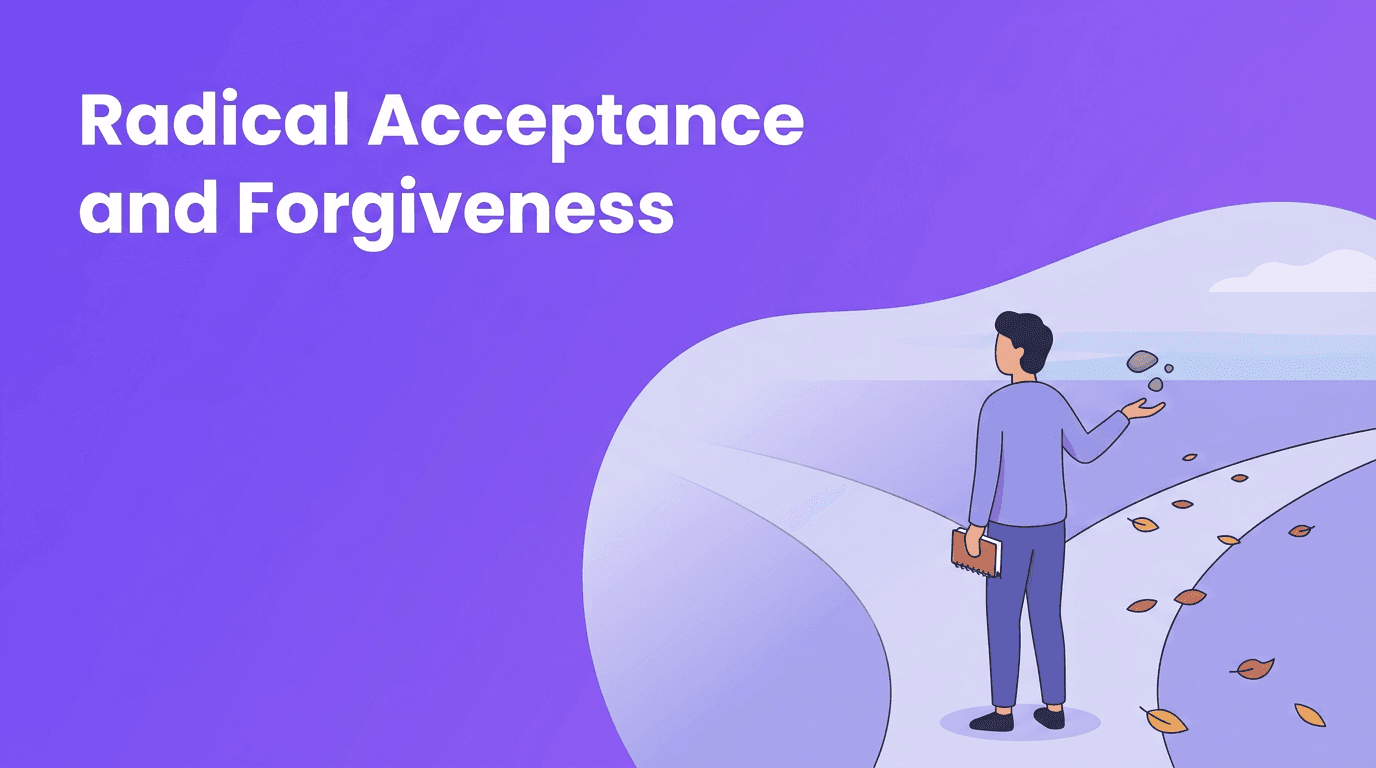
Some situations do not end cleanly. There may be no final conversation, no perfect apology, no complete understanding. In these moments, acceptance is not passive surrender. It is the brave refusal to build your life around what will not resolve. The deepest challenge of adulthood may be learning to act meaningfully without guarantees.
- Write one sentence beginning with 'Even without certainty, I choose...'
- Create a repair plan for what is still possible
- Name what is outside your control today
- Replace 'I must fix the past' with 'I can honor the present'
- Return to the breath when the mind demands impossible answers
This is also where philosophy becomes practical. We do not study wisdom merely to admire ideas. We study it so that when the heart is confused, the mind can offer a steadier posture. A wise life is not pain-free. It is oriented.
Small daily rituals for letting go
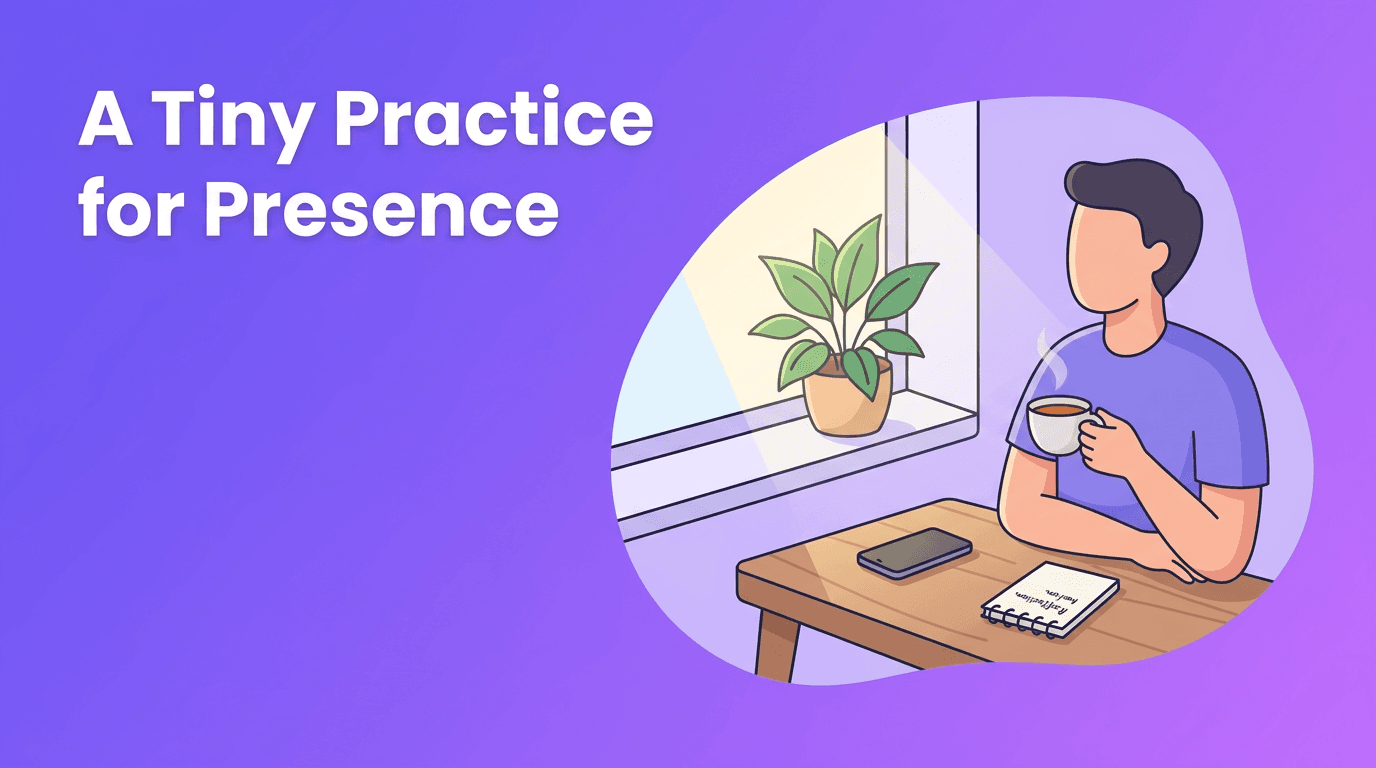
Grand emotional breakthroughs are rare. More often, healing comes through repetition. Try these small rituals for letting go and notice which one makes your inner world feel a little more spacious.
- At night, write down one thing you are ready to stop replaying
- Use a simple breath cue: inhale 'allow', exhale 'release'
- When self-criticism appears, ask, 'Would I speak this way to someone I love?'
- Light a candle before journaling to mark a transition from rumination to reflection
- Use Haply's Today Dashboard or reminders to keep your practice visible and consistent
The quiet outcome of self-forgiveness
The goal is not to become someone who never aches for the past. The goal is to become someone who can carry memory without being ruled by it. Self forgiveness meditation does not make you less serious about life. It makes you more available to it. It teaches that inner peace is not earned through perfection, but discovered through honest presence.
Perhaps that is the simplest form of wisdom: to understand that being alive means making mistakes under conditions of partial knowledge, then learning to respond with courage instead of contempt. In that space, forgiveness becomes less like an event and more like a way of walking.
Frequently Asked Questions
What is self forgiveness meditation?
Self forgiveness meditation is a mindfulness practice that helps you face regret with honesty, compassion, and accountability. It supports acceptance without excusing harm.
How do I forgive myself for past mistakes?
Start by naming what happened clearly, acknowledging impact, making amends where possible, and practicing compassionate self-talk. Repetition matters more than perfection.
Can meditation help with guilt and uncertainty?
Yes. Meditation can reduce mental looping, create emotional space, and help you respond to uncertainty with more steadiness and less self-attack.
Is self-forgiveness the same as letting yourself off the hook?
No. Self-forgiveness does not remove responsibility. It helps you take responsibility without collapsing into shame.