New Manager Training Plan: Build Leadership Skills Without Becoming a Bottleneck
A practical new manager training plan to strengthen leadership, management, team building, and delegation skills without falling into the first-time manager trap.


By Haply Team
Haply Editorial Team
New manager training matters more than most promotions admit. One day you are the reliable individual contributor, and the next you are expected to handle leadership, management, team building, and delegation like a seasoned pro. That jump is where many new leaders struggle, not because they lack talent, but because they were never given a clear system. This guide offers a simple training plan that helps you lead with confidence without becoming the bottleneck on your team.
Why new manager training changes your first 90 days
The biggest mistake in a first leadership role is assuming your old strengths will automatically transfer. As an individual contributor, success often comes from speed, expertise, and personal output. In management, success comes from clarity, trust, and your team's ability to perform without constant rescue. Good new manager training helps you make that shift early.
- Move from doing the work to guiding the work
- Replace guesswork with simple management routines
- Learn delegation before overwhelm turns into micromanaging
- Build credibility through consistent communication
- Create a healthier foundation for team building and performance
"The best leaders are not the people with all the answers. They are the people who build teams that can solve problems well together."
A 4-part training plan for leadership and management
1. Learn the difference between leading and doing
New managers often stay stuck in helper mode. They jump in too quickly, rewrite work, and answer every question. That feels supportive, but it trains dependency. A better approach is to pause and ask: What outcome is needed? What decision belongs to me? What can my team own? This is the first real step in leadership.
- Write down your top 5 weekly responsibilities
- Mark each one as do, delegate, coach, or review
- Reduce low-value tasks that keep you in individual contributor mode
- Set one weekly goal focused on team output, not personal output
2. Build a management rhythm your team can trust
Strong management is rarely dramatic. It is repetitive, clear, and calm. Your team needs predictable check-ins, clear priorities, and visible follow-through. A simple rhythm lowers confusion and prevents avoidable fires.
- Hold weekly 1:1s with a repeatable agenda
- Set team priorities at the start of the week
- Use a shared task board for ownership and deadlines
- End the week with quick wins, blockers, and next steps
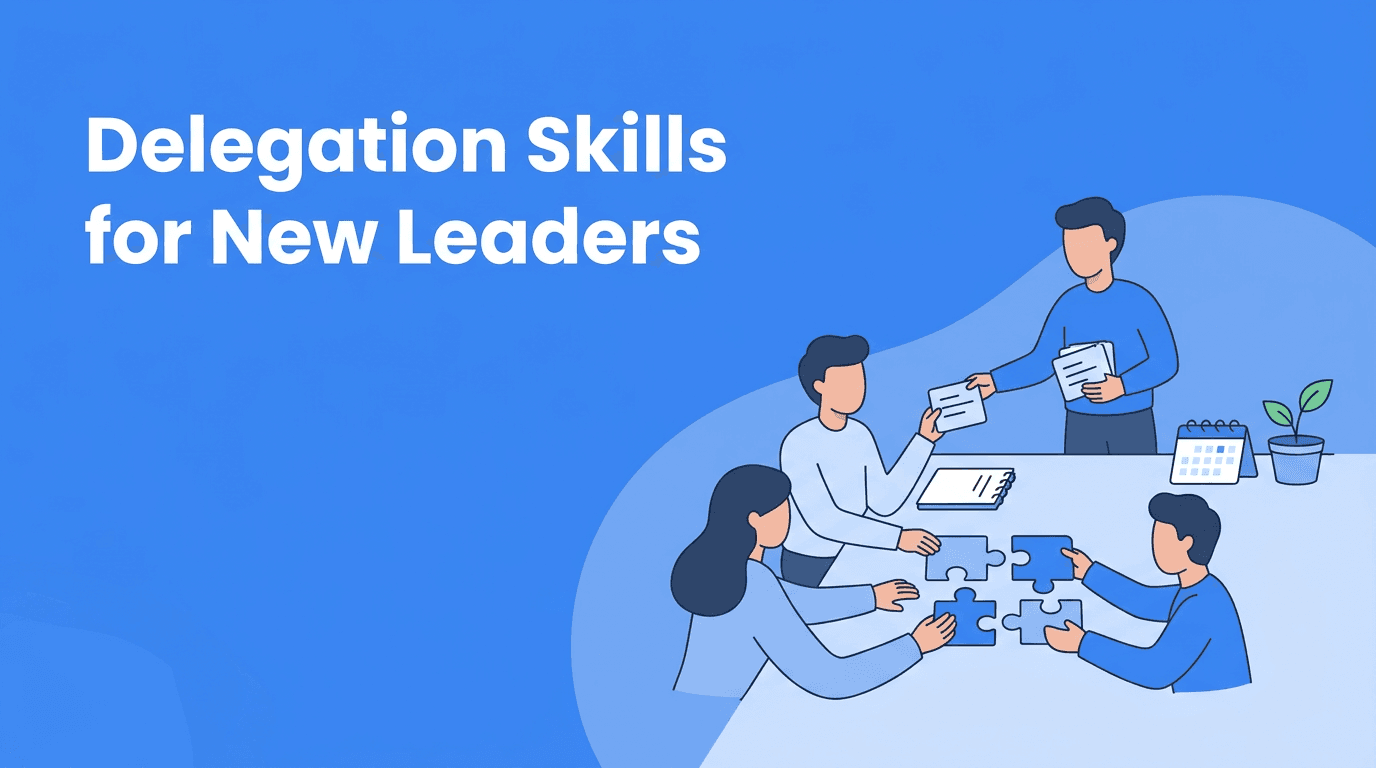
3. Practice delegation as a growth tool
Many first-time leaders think delegation is dumping work. In reality, it is one of the most important development tools you have. Delegation works best when you assign ownership with context, success criteria, and checkpoints instead of constant monitoring.
- Explain why the task matters, not just what to do
- Define the expected result and deadline
- Agree on decision boundaries early
- Schedule one or two review points instead of hovering
- Debrief afterward so the person learns and improves
4. Use team building to create psychological safety
Effective team building is not limited to offsites or icebreakers. It comes from everyday behavior. People collaborate better when they know what is expected, feel safe raising risks, and trust that mistakes can be discussed productively. That kind of culture starts with the manager.
- Start meetings by clarifying purpose and decisions needed
- Ask quieter team members for input before closing discussion
- Praise specific behaviors, not vague effort
- Address tension early and privately
- Model accountability by admitting your own mistakes
The first-time manager trap to avoid
A common first-time manager trap is trying to prove you still deserve your promotion by being the hardest worker in the room. That often leads to late nights, approval bottlenecks, and a team that waits for permission. Your job is no longer to be the hero. Your job is to make success easier for other people.
Build leadership habits with Haply
If you want support while building new management habits, Haply can help. The app offers AI coaching for Career and Productivity, habit tracking with reminders, and tools like a Task Planner and Focus Timer to help new managers stay consistent.
Try Haply FreeA simple weekly checklist for new supervisors
- Did I clarify the team's top 3 priorities this week?
- Did I coach instead of instantly solving every problem?
- Did I delegate at least one meaningful responsibility?
- Did I recognize progress or good judgment publicly?
- Did I remove one blocker that slowed the team down?
- Did I leave space for strategic thinking instead of only reacting?
This kind of review makes new manager training practical. Instead of waiting for formal leadership workshops, you create improvement through weekly repetition. That is how management confidence grows in real life.
How Haply can support your management growth
Because leadership development often happens in the middle of a busy workweek, small support systems matter. Haply is an AI life coaching app on iOS and Android that can help you stay focused on growth goals. You can use chat-based coaching sessions, daily reminders, streaks, and the Today Dashboard to stay accountable while building better management habits.
Frequently Asked Questions
What is the best new manager training for beginners?
The best new manager training teaches core leadership habits like communication, delegation, feedback, and team management through practical routines you can use every week.
How can a first-time manager improve delegation skills?
Start by delegating outcomes, not just tasks. Give context, define success clearly, set checkpoints, and avoid taking the work back too early.
What leadership skills matter most for new managers?
The most important skills are communication, prioritization, coaching, delegation, and trust-building. These skills help teams perform well without constant supervision.
How do you build a team as a new manager?
Focus on clear expectations, consistent 1:1s, psychological safety, and recognition of good work. Strong team building usually comes from daily habits, not one-time events.