Self Distancing for Personal Growth: A Calm Way to Improve Reactions
Self distancing is a practical self-improvement tool that helps you respond with more clarity, resilience, and emotional intelligence. Learn how to use it in daily life for lasting personal growth.

By Haply Team
Haply Editorial Team
Self distancing is one of the most underrated tools in self-improvement. Instead of getting trapped inside every thought or emotion, you learn to step back and look at your situation with a little more space. That small mental shift can improve your habits, strengthen resilience, and support better emotional intelligence in everyday life.
Many people think personal change always starts with more discipline, more motivation, or a perfect routine. But often, real personal growth starts with a different skill: the ability to pause before reacting. Self distancing helps you do exactly that.
What self distancing actually means
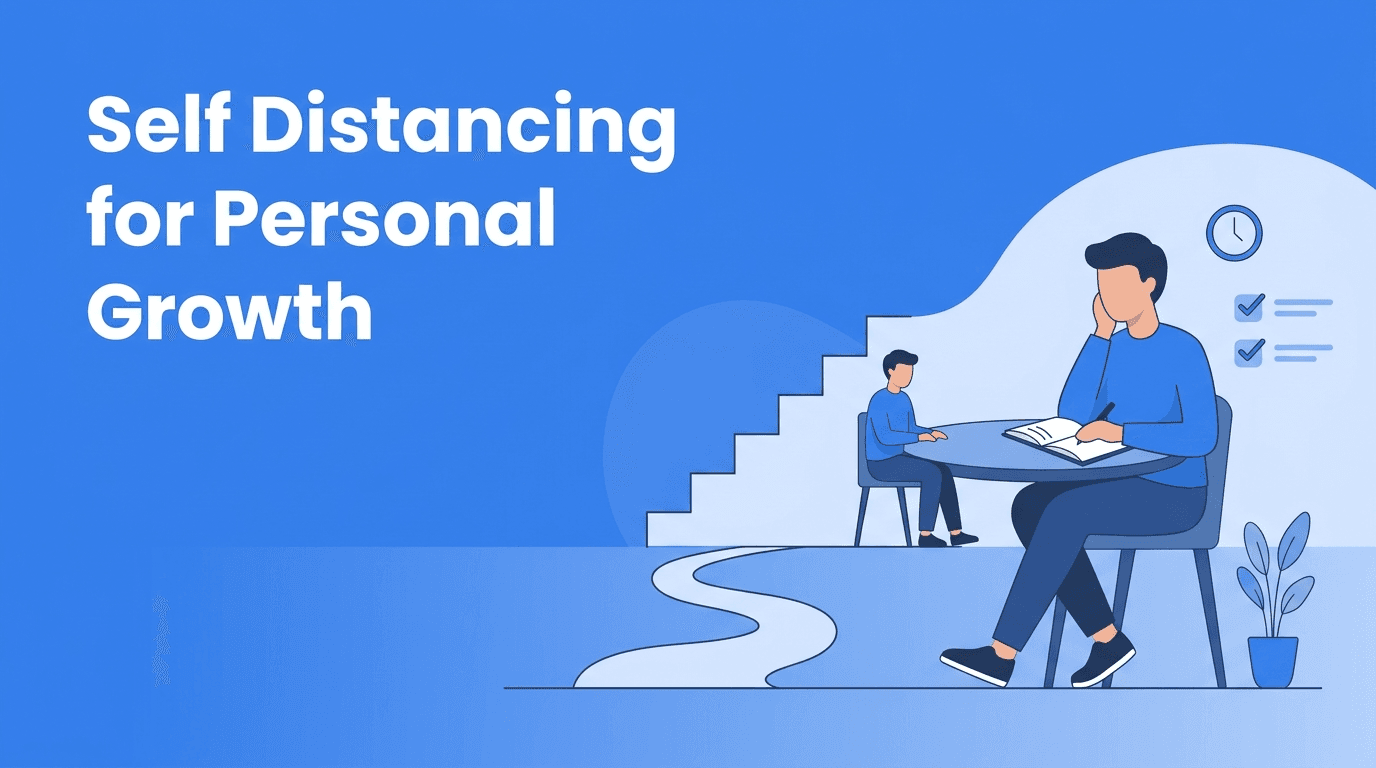
Self distancing is the practice of viewing your thoughts, emotions, or challenges from a slight distance rather than from the center of the storm. You are not ignoring your feelings. You are creating enough room to understand them better.
A simple example is changing your inner language. Instead of asking, "Why am I such a mess?" you might ask, "What is [your name] feeling right now, and what would help them most?" This subtle shift reduces emotional intensity and makes wiser choices easier.
"Between stimulus and response there is a space. In that space is our power to choose our response."
Why self distancing works for self-improvement
When you are fully fused with a difficult moment, every setback feels personal and permanent. That mindset can damage consistency, confidence, and decision-making. Self distancing interrupts that pattern by helping you see the bigger picture.
- It lowers emotional overreaction so you can respond more thoughtfully.
- It improves emotional intelligence by helping you name what you feel without becoming controlled by it.
- It supports resilience because setbacks start to look temporary and workable.
- It strengthens habits by reducing the all-or-nothing thinking that often breaks progress.
- It helps self-improvement feel sustainable instead of intense for a few days and abandoned a week later.
The hidden link between distance and better habits
Most broken habits are not just a time-management issue. They are an emotion-management issue. People skip workouts after stressful meetings. They overspend after a frustrating day. They stop journaling after one imperfect week. Self distancing helps you notice the emotional trigger before it becomes automatic behavior.
That makes it easier to ask a more useful question: "What would help future me here?" This is where self-improvement becomes practical, not theoretical.
A 4-step self distancing practice for daily life
1. Name the situation clearly
Describe what is happening in one sentence without drama. For example: "I got critical feedback and now I feel defensive." Clear language creates mental order.
2. Switch to third-person self-talk
Use your own name or say "you" instead of "I." Research suggests this can create enough psychological distance to reduce emotional flooding. Try: "What does Sarah need to do next?"
3. Zoom out to the bigger timeline
Ask yourself, "Will this matter in a week, a month, or a year?" This does not minimize the moment. It restores perspective, which is essential for resilience and personal growth.
4. Choose one grounded action
End with a small response you can control. Send the email. Take a walk. Write three lines in your journal. Reset tomorrow's plan. Tiny actions protect momentum better than dramatic promises.
Where self distancing helps most
- Conflict - You can listen instead of preparing your defense.
- Failure - You can learn from a mistake without turning it into your identity.
- Stressful workdays - You can avoid carrying one bad moment into the rest of the day.
- Habit setbacks - You can restart quickly instead of quitting completely.
- Fear of judgment - You can act based on values, not just emotional discomfort.
Want support building calmer self-improvement habits?
Haply is an AI life coaching app for iOS and Android that helps you build routines, track streaks, and get personalized coaching across productivity, wellness, learning, and more. If you want practical tools for personal growth, it can help you turn reflection into action.
Try Haply FreeIf you want to make self distancing a regular practice, tools matter. In Haply, you can use chat-based coaching to work through difficult moments, the habit tracker to stay consistent, and the Today Dashboard to keep your next step visible. Small prompts at the right time often make the difference between reacting and responding.
Common mistakes when using self distancing
- Using distance to avoid feelings instead of understanding them.
- Overanalyzing instead of taking one useful action.
- Expecting instant calm every time. The skill improves with repetition.
- Treating one setback as proof it does not work. Like all self-improvement tools, it becomes stronger through practice.
Make self distancing part of your personal growth system
The best self-improvement strategies are not always the loudest ones. Sometimes the most powerful change comes from learning how to create space inside a hard moment. Self distancing is simple, but it can reshape how you think, feel, and act.
When you stop treating every emotion as an emergency, you become more consistent with your habits, more thoughtful in relationships, and more capable of steady personal growth. That is how resilience is built in real life, one response at a time.
Frequently Asked Questions
What is self distancing in psychology?
Self distancing is a technique where you step back from your immediate thoughts and emotions to view a situation more objectively. It can improve emotional regulation and decision-making.
How do you practice self distancing every day?
Use third-person self-talk, name the situation clearly, zoom out to the bigger picture, and choose one small action. Repeating this during stressful moments helps it become a habit.
Can self distancing improve emotional intelligence?
Yes. Self distancing helps you notice, label, and manage emotions with more clarity, which is a core part of emotional intelligence.
Is self distancing good for resilience?
Yes. It helps you see setbacks as temporary and manageable, which supports resilience and faster recovery after challenges.