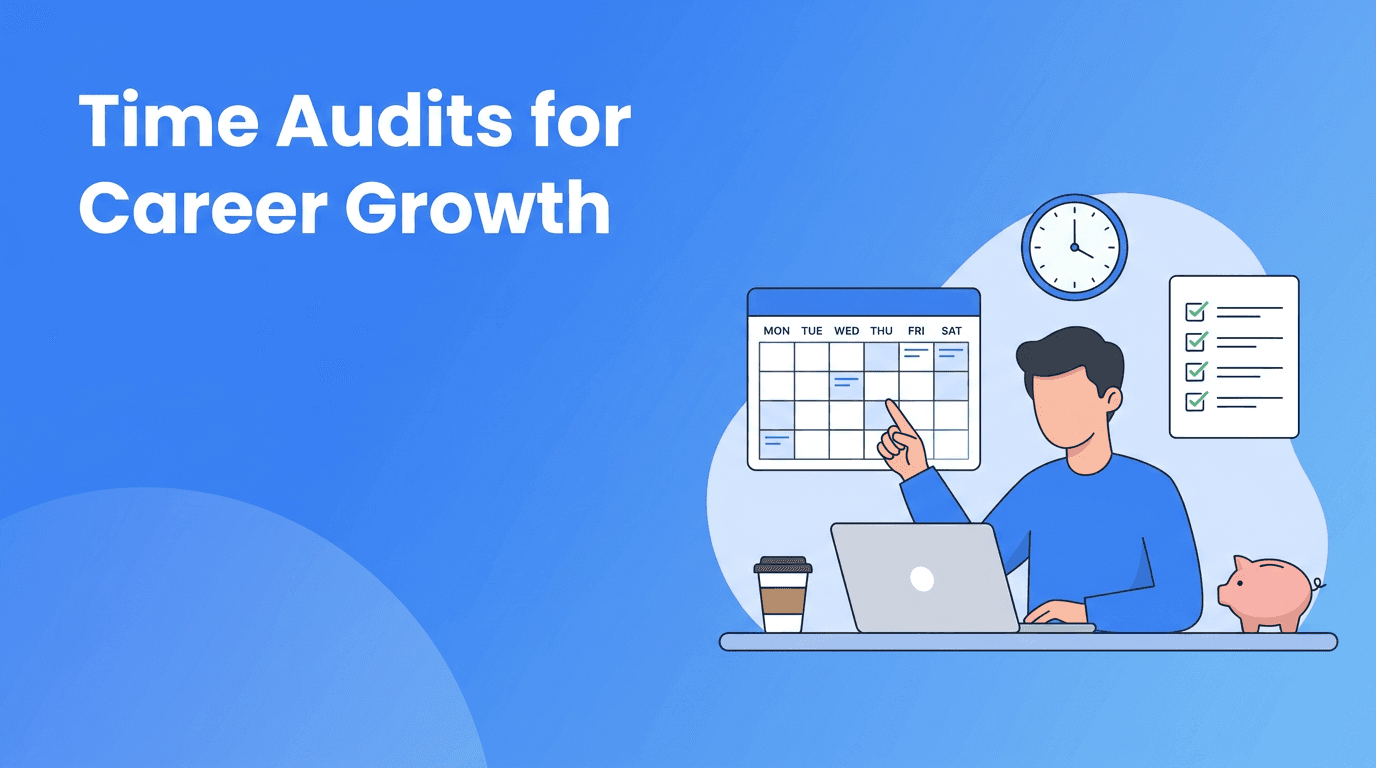
Time Audits for Career Growth: A Practical System for Professional Development and Personal Finance
A smart time audit can accelerate career growth, sharpen professional development, and improve personal finance by revealing where your hours, energy, and money really go.

By Haply Team
Haply Editorial Team
A time audit is one of the most underrated tools for career growth, professional development, and personal finance. If you feel busy but not advancing, a simple review of how you spend your hours can reveal why your work momentum, learning goals, and money management habits are not lining up with what you want.
Why a time audit matters more than another productivity hack
Most ambitious people do not have a motivation problem. They have an allocation problem. You may care deeply about getting promoted, building stronger skills, or organizing your finances, but your calendar often tells a different story. A time audit helps you spot the gap between intention and reality.
- It shows where your best energy is being spent
- It reveals low-value tasks that drain focus
- It exposes whether professional development is actually scheduled
- It highlights habits that quietly hurt personal finance, like convenience spending caused by poor planning
- It gives you data before you redesign your week
"You do not rise to the level of your goals. You fall to the level of your systems."
The hidden link between career growth and money management
People often separate career growth from personal finance, but they influence each other every day. When your time is fragmented, you may delay skill-building, miss networking follow-ups, or avoid strategic work that leads to raises and better roles. At the same time, time pressure can increase takeout spending, late fees, impulse purchases, and other weak money management patterns.
What this looks like in real life
- You want better professional development, but your evenings disappear into reactive admin and scrolling
- You say you are too busy to update your portfolio, learn a new tool, or prepare for internal opportunities
- You spend more money because you are constantly rushed and unprepared
- You feel productive all week, but cannot point to progress on your most important goals
This is why a time audit works so well. It does not just improve output. It helps you build a week that supports better decisions in both work and life.
How to run a 7-day time audit
You do not need a complicated system. For one week, track your day in 30-minute or 60-minute blocks. Use your notes app, spreadsheet, or a coaching tool that helps you reflect consistently. If you use Haply, the AI life coaching app on iOS and Android, its Today Dashboard, reminders, and Productivity coaching can make daily check-ins easier to maintain.
Step 1: Track what actually happened
Log your activities honestly, not ideally. Include meetings, focused work, commuting, social media, learning, errands, and downtime. Also note quick spending triggers, especially when stress or lack of planning influenced a purchase.
Step 2: Label each block
- Growth - work that improves future opportunities, like learning, strategic projects, mentoring, or networking
- Maintenance - necessary tasks, like email, admin, meetings, errands, and chores
- Recovery - sleep, exercise, breaks, hobbies, and real rest
- Leakage - time lost to distraction, avoidance, context switching, or low-value activity
Step 3: Score the week
At the end of the week, ask three questions. How many hours went to growth? When did you do your highest-value thinking? Which activities created stress that later affected your spending or planning? This turns a time audit into a decision-making tool, not just a tracking exercise.
Use your audit to improve professional development
Once you see your patterns, protect small but consistent blocks for professional development. You do not need ten extra hours a week. Even three focused sessions can compound quickly if they target visible, career-relevant skills.
- Block one weekly session for learning a skill that your next role requires
- Reserve one session for career maintenance, such as resume updates, outreach, or portfolio improvements
- Move deep work to your highest-energy window
- Batch shallow tasks so they do not consume your best hours
- Review your calendar every Friday and plan growth blocks before the next week starts
Build better routines with Haply
Want help turning insights into action? Haply offers AI coaching for Career, Productivity, and Finance, plus tools like Task Planner, Focus Timer, habit streaks, and daily reminders to support real follow-through.
Try Haply FreeHow time audits strengthen personal finance
A better schedule often creates better personal finance outcomes. When your week is planned, you reduce avoidable spending and make more room for thoughtful money management. That does not mean optimizing every minute. It means removing the chaos that leads to expensive defaults.
Simple changes that save time and money
- Prepare meals or snacks before your busiest days
- Set one weekly admin block for bills, budgeting, and account review
- Automate recurring transfers where appropriate
- Schedule shopping lists before errands to reduce impulse spending
- Protect recovery time so stress does not drive emotional purchases
If finance habits are part of your goals, Haply's Finance coach and tools like the Budget Tracker can help you connect daily behavior with bigger priorities, without turning the process into something overwhelming.
A weekly reset template you can keep using
- Review last week and identify your top three time leaks
- Choose two growth blocks for career growth this week
- Schedule one block for professional development
- Set one 20-minute personal finance check-in
- Remove or shorten one low-value commitment
- Add one recovery activity that helps you sustain performance
This is where lasting career growth happens. Not through perfect discipline, but through small structural changes that make better decisions easier.
Frequently Asked Questions
How do I do a time audit for career growth?
Track your activities for 7 days, label them by value, and review how much time goes to growth, maintenance, recovery, and distraction. Then adjust your week to protect high-value work and learning.
Can a time audit help with personal finance?
Yes. A time audit shows where stress, disorganization, and rushed decisions may be causing unnecessary spending. Better planning often improves money management automatically.
How often should I do a time audit?
A full audit every one to three months works well for most people. You can also do a lighter weekly review to stay aligned with your goals.
What is the difference between productivity tracking and a time audit?
Productivity tracking often measures output, while a time audit examines how your time is actually allocated. It helps you see whether your schedule matches your priorities.