Interview Story Bank: A Smarter System for Job Interview Confidence During a Career Change
A strong job interview starts before you apply. Learn how to build a story bank that improves your resume, sharpens LinkedIn, supports career change goals, and strengthens salary negotiation.

By Haply Team
Haply Editorial Team
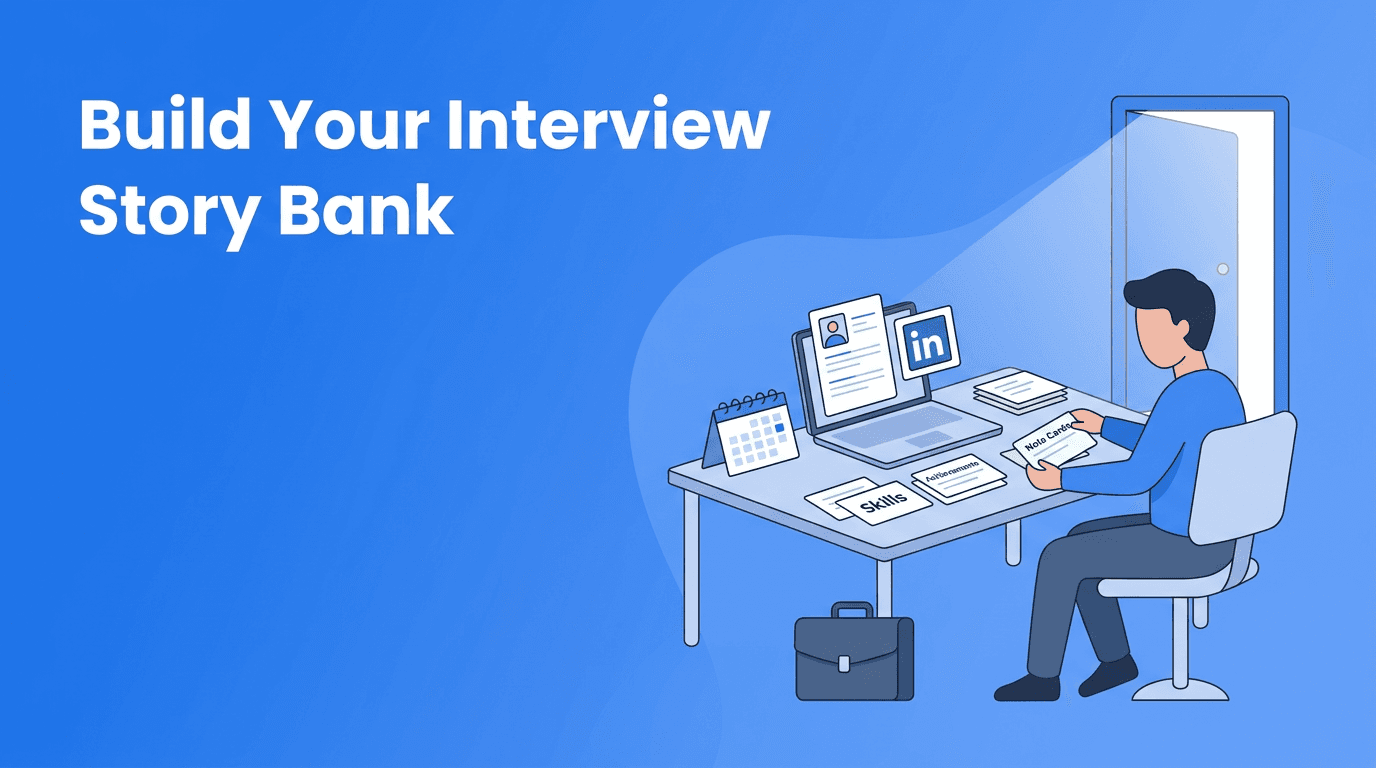
A great job interview rarely depends on quick thinking alone. For job seekers, especially those navigating a career change, the real advantage comes from preparing a personal story bank, a simple system for collecting examples that prove your value across your resume, LinkedIn, and live interviews.
Why a story bank beats last-minute job interview prep
Most people prepare for a job interview by reading common questions and hoping the right examples come to mind. That approach creates stress and vague answers. A story bank gives you a better option: a curated set of short, flexible career stories you can adapt for different roles, industries, and interview formats.
- It helps you answer behavioral questions with specific evidence
- It makes your resume bullets more results-focused
- It gives your LinkedIn profile stronger proof of impact
- It helps you explain a career change with confidence
- It supports smoother salary negotiation because you can clearly describe your value
"Confidence in interviews is often just evidence that has been organized ahead of time."
What to include in your job interview story bank
Think of your story bank as a private career document. It is not polished for recruiters. It is raw material you can shape later. Start by collecting 8 to 12 stories from work, school, volunteering, freelance projects, or personal initiatives.
Use these five categories
- Problem-solving: a time you fixed an issue, removed friction, or improved a process
- Leadership: a moment you guided people, influenced a decision, or took ownership without formal authority
- Adaptability: an example of learning quickly, handling change, or succeeding in ambiguity
- Collaboration: a story about teamwork, communication, or conflict resolution
- Results: a win with measurable outcomes such as revenue, time saved, quality improved, or customer satisfaction
For each story, write down the situation, your role, the actions you took, and the result. The STAR method is useful here, but keep it simple. Your goal is to create reusable proof, not perfect scripts.
How to use the same stories for resume, LinkedIn, and career change messaging
One of the best parts of this system is that your stories do double and triple duty. A single example can become a bullet on your resume, a featured achievement on LinkedIn, and a polished answer in a job interview.
Turn stories into stronger resume bullets
Look at each story and ask, what result matters most? Then rewrite it as a bullet with action and impact. Instead of "helped with onboarding," try "Redesigned onboarding checklist, reducing new hire setup time by 30%." This makes your resume more persuasive and easier for hiring managers to scan.
Use stories to strengthen LinkedIn
Your LinkedIn profile should echo the same evidence. Add quantified wins to your About section and experience entries. If you are making a career change, use your headline and summary to connect past strengths to your target role, not just list old job titles.
Use stories to explain a career change
A career pivot feels more believable when it is built on patterns. Your story bank helps you say, "I am not starting from zero. I have already been building relevant skills through these projects, results, and responsibilities." That framing can make a career change feel strategic rather than risky.
A practical 30-minute job interview routine
If interview prep feels overwhelming, keep it short and repeatable. Before each job interview, spend 30 minutes reviewing your story bank and matching examples to the role.
- Spend 10 minutes reviewing the job description and highlighting top priorities
- Spend 10 minutes selecting 5 stories that best match the role
- Spend 5 minutes updating your LinkedIn and resume language so your message stays consistent
- Spend 5 minutes practicing your opening pitch, one behavioral answer, and your salary negotiation value statement
Want guided support while you prepare?
Haply is an AI life coaching app on iOS and Android that can help you prepare for interviews, build better habits, and stay consistent during your job search. Use the Career coach for personalized practice, planning, and momentum.
Try Haply FreeHow story banks make salary negotiation easier
Many people treat salary negotiation as a separate skill, but it starts with evidence. When you can clearly explain the business value behind your work, you negotiate from a stronger position. Your story bank gives you examples of impact, initiative, and outcomes you can reference when discussing compensation.
- Keep 3 stories tied to measurable outcomes
- Practice saying your value in one or two sentences
- Connect your results to the employer's likely goals
- Avoid apologizing for asking, focus on contribution and market fit
This is especially useful in a career change, when you may worry about being seen as less experienced. Clear examples of transferable value can shift the conversation from titles to results.
Common mistakes that weaken interview stories
- Telling stories with no clear result or lesson
- Using overly generic claims like "I am a hard worker" without evidence
- Repeating what is already on your resume without adding context
- Having a polished LinkedIn profile but no spoken examples to back it up
- Waiting until the night before a job interview to remember your best work
The fix is simple: document your wins while they are fresh. Add a note after projects, presentations, feedback moments, or successful problem-solving situations. Over time, your story bank becomes one of the most useful career tools you own.
Frequently Asked Questions
How do I prepare for a job interview when changing careers?
Focus on transferable skills and build a few stories that show relevant results. Explain your career change as a deliberate move based on strengths and direction.
Can I use job interview stories in my resume and LinkedIn profile?
Yes. Strong stories can be turned into resume bullets, LinkedIn achievements, and interview answers, which makes your message more consistent and credible.
What is the best way to talk about salary negotiation in an interview?
Wait until the timing is appropriate, then connect your request to the value you bring, your results, and the scope of the role. Stay calm, specific, and professional.
How many stories should I prepare for a job interview?
Aim for 8 to 12 stories in your story bank, then choose the 5 most relevant for each interview. This gives you flexibility without overpreparing.