Micro-Coaching Loops: How AI Coaching Supports Behavior Change in Real Time
AI coaching behavior change works best in small, timely loops. Learn how coaching psychology, positive psychology, and evidence-based coaching principles make digital support more actionable.

By Haply Team
Haply Editorial Team
Most people do not fail at behavior change because they lack insight. They fail because insight arrives at the wrong time. You may understand your goals perfectly at 8 a.m., then abandon them at 3 p.m. when stress, fatigue, or distraction takes over. This is where AI coaching becomes interesting, not as a replacement for human wisdom, but as a system for delivering support at the exact moment a decision is about to happen.
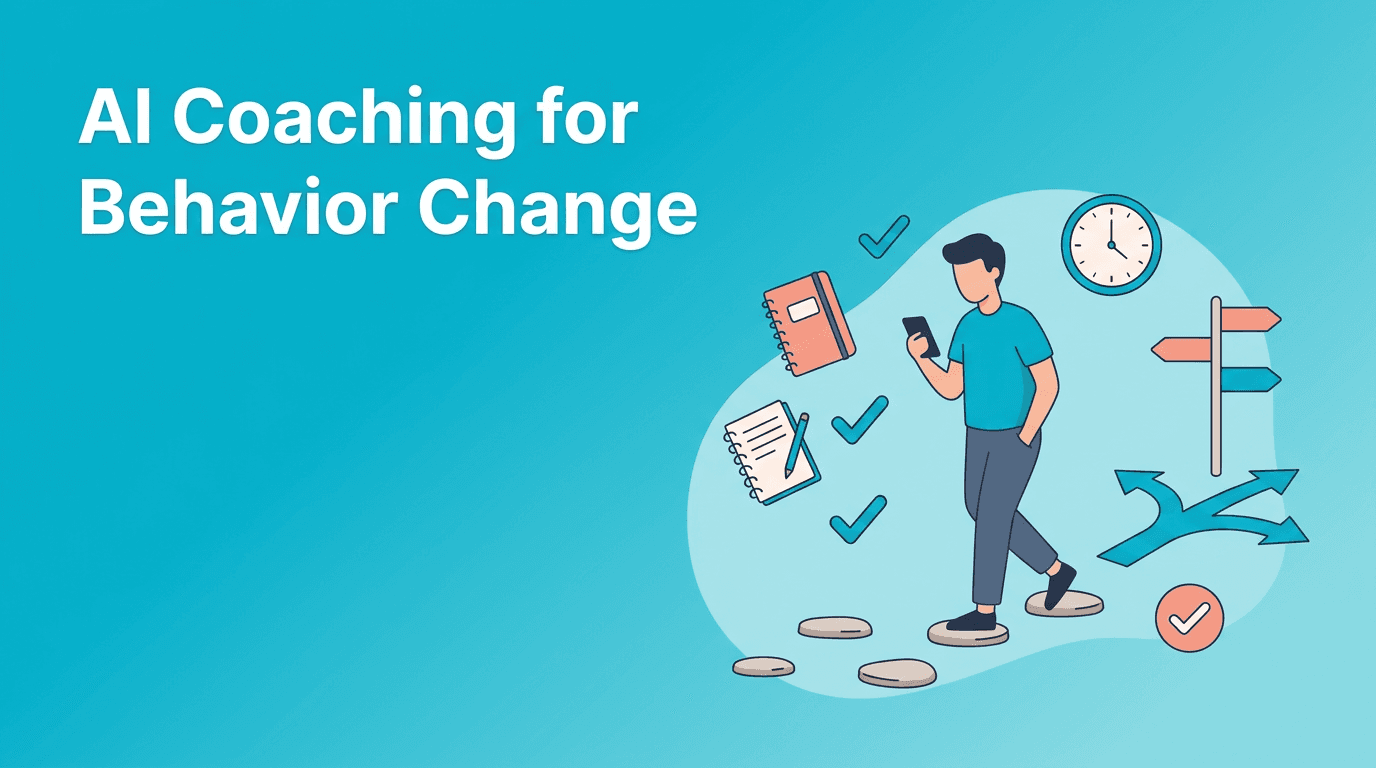
A useful way to think about modern coaching technology is through micro-coaching loops. These are short cycles of noticing, interpreting, acting, and reflecting. They draw from coaching psychology, positive psychology, and evidence-based coaching to make personal development less abstract and more operational. Instead of waiting for a weekly session to unpack what went wrong, a digital coach can help you adjust your behavior while life is still unfolding.
Why behavior change breaks down between intentions and action
From a scientific perspective, behavior is highly context-dependent. We often imagine change as a rational sequence: set a goal, stay motivated, succeed. In reality, behavior is shaped by cues, friction, emotional state, rewards, identity, and environment. That is why intellectually sophisticated people often remain inconsistent. They are not irrational. They are responding to systems that overpower intention.
- Intentions are usually formed in calm moments, but tested in messy ones.
- Motivation fluctuates far more than most people expect.
- Feedback is often delayed, which weakens learning.
- Self-observation is biased, especially under stress.
- Habit loops can run automatically unless interrupted at the right time.
"We do not rise to the level of our goals. We fall to the level of our systems." This idea matters because coaching works best when it improves the system around a behavior, not just the story about it.
What coaching psychology adds to AI coaching
Coaching psychology studies how coaching facilitates goal pursuit, self-regulation, learning, and wellbeing. Its value in AI coaching is not decorative. It provides a disciplined framework for what the technology should actually do. A digital coach should not merely generate cheerful advice. It should support mechanisms known to matter, such as goal clarity, reflective questioning, accountability, self-efficacy, and adaptive planning.
From generic advice to targeted intervention
This distinction is crucial. Generic advice sounds good but often changes nothing. Targeted intervention asks a sharper question: What is the smallest useful action for this specific person in this specific moment? When an app can prompt reflection before a difficult meeting, suggest a two-minute breathing exercise after a stress spike, or help redesign a plan after a missed streak, it begins to function less like content and more like coaching.
In Haply, this logic appears through chat-based personalized coaching, goal-based onboarding, and tools such as the Focus Timer, Task Planner, Meditation/Breathe, and Today Dashboard. The value is not just convenience. It is timing. The app can translate coaching principles into small behavioral moves that fit the rhythm of daily life.
The role of positive psychology in sustainable progress
Many people hear positive psychology and assume it means relentless optimism. In scientific coaching, it means something more rigorous: understanding the conditions that help people function well, build strengths, experience meaning, and recover from setbacks. For behavior change, this matters because sustainable growth rarely comes from self-criticism alone.
- Strengths awareness helps people choose methods that fit their natural style.
- Self-efficacy increases the likelihood of persistent effort.
- Hope and agency improve re-engagement after failure.
- Positive emotion broadens attention and supports creative problem solving.
- Meaning makes difficult habits easier to sustain over time.
An effective AI coach can operationalize these ideas by noticing wins, reinforcing progress, helping users identify what worked, and shifting attention from perfection to learning. That is very different from shallow positivity. It is structured psychological support.
Why evidence-based coaching favors small loops over dramatic breakthroughs
Evidence-based coaching emphasizes methods informed by research, practitioner expertise, and the client’s context. One of its most practical implications is that change usually happens through repeated adjustment, not one dramatic realization. People often overvalue breakthrough moments and undervalue calibration.
This is where behavior change becomes more tractable. If a person can observe a pattern, test one adjustment, receive feedback, and iterate tomorrow, the process compounds. AI is particularly well suited to this because it can support frequent, lightweight interactions without requiring a full appointment every time.
A simple micro-coaching loop
- Notice the moment of friction, such as procrastination, avoidance, or emotional overload.
- Name what is happening using clear language rather than vague self-judgment.
- Narrow the next step until it feels realistic.
- Nudge action with a timer, checklist, reminder, or prompt.
- Review what happened and update the plan for the next similar moment.
This loop may look modest, but it reflects serious coaching science. It supports metacognition, self-regulation, and reinforcement learning in a form that fits everyday constraints.
Turn coaching science into daily practice
Use Haply to apply behavior change principles through personalized AI coaching, habit tracking, mini-apps, and daily check-ins that fit real life.
Try Haply FreeThe future of coaching is not less human, but more continuous
A common misconception is that technology-powered personal development aims to eliminate human coaches. A more plausible future is a layered model. Human coaches may remain best for deep relational work, complex identity shifts, and nuanced emotional processing. AI coaching may become the infrastructure for continuity, helping people carry insight from one conversation into the rest of the week.
This hybrid vision is compelling because most development problems are not caused by lack of knowledge. They are caused by failure to transfer knowledge into situations. Technology can narrow that transfer gap. It can prompt reflection after a conflict, support a bedtime routine before sleep deterioration becomes chronic, or help a learner recover quickly after a lapse in focus.
How analytically-minded users can apply this model
- Choose one behavior that occurs frequently enough to study, such as phone distraction, skipped workouts, or reactive spending.
- Track the trigger, behavior, and consequence for one week without trying to fix everything.
- Define a minimum viable action that is so small it survives low-motivation days.
- Use prompts, reminders, or timers to intervene at the moment the behavior usually starts.
- Run a weekly review focused on patterns, not blame.
- Adjust one variable at a time, such as timing, environment, wording, or difficulty.
This is also why an app like Haply can be useful for intellectually curious users. It combines personalized coaching with repeatable tools, streaks, reminders, and progress structures. In other words, it helps transform self-knowledge into a testable system.
A better question than "Can AI coach me?"
The better question is this: Can AI help me make better decisions at the moments when my old patterns usually win? If the answer is yes, then AI coaching is already valuable. Not because it performs human empathy perfectly, but because it can make behavior change more immediate, measurable, and adaptive.
The future of coaching may belong to systems that combine scientific rigor with practical availability. In that future, support is not rare, expensive, or confined to one hour a week. It is woven into the places where change actually happens, one decision at a time.
Frequently Asked Questions
How does AI help with behavior change?
AI helps with behavior change by providing timely prompts, reflection questions, reminders, and feedback in the moments when decisions happen. This makes coaching more continuous and easier to apply in daily life.
What is coaching psychology in simple terms?
Coaching psychology is the scientific study of how coaching helps people improve goals, performance, wellbeing, and self-regulation. It brings research-based methods to personal development.
Is positive psychology the same as just thinking positively?
No. Positive psychology studies strengths, resilience, meaning, motivation, and wellbeing. In coaching, it is used to support sustainable growth rather than forced optimism.
What makes coaching evidence-based?
Evidence-based coaching combines scientific research, professional coaching expertise, and the individual’s real-world context. It focuses on methods that are both credible and practical.
Can an AI coaching app replace a human coach?
For some daily habits and check-ins, an AI coaching app can be highly effective. For deeper relational, emotional, or complex life issues, many people benefit from human support as well.