Decision Fatigue at Work: A Smarter Prioritization System for Busy Days
Decision fatigue at work can quietly drain focus, weaken prioritization, and break productivity systems. Learn a practical method to reduce mental overload and work with more efficiency.

By Haply Team
Haply Editorial Team
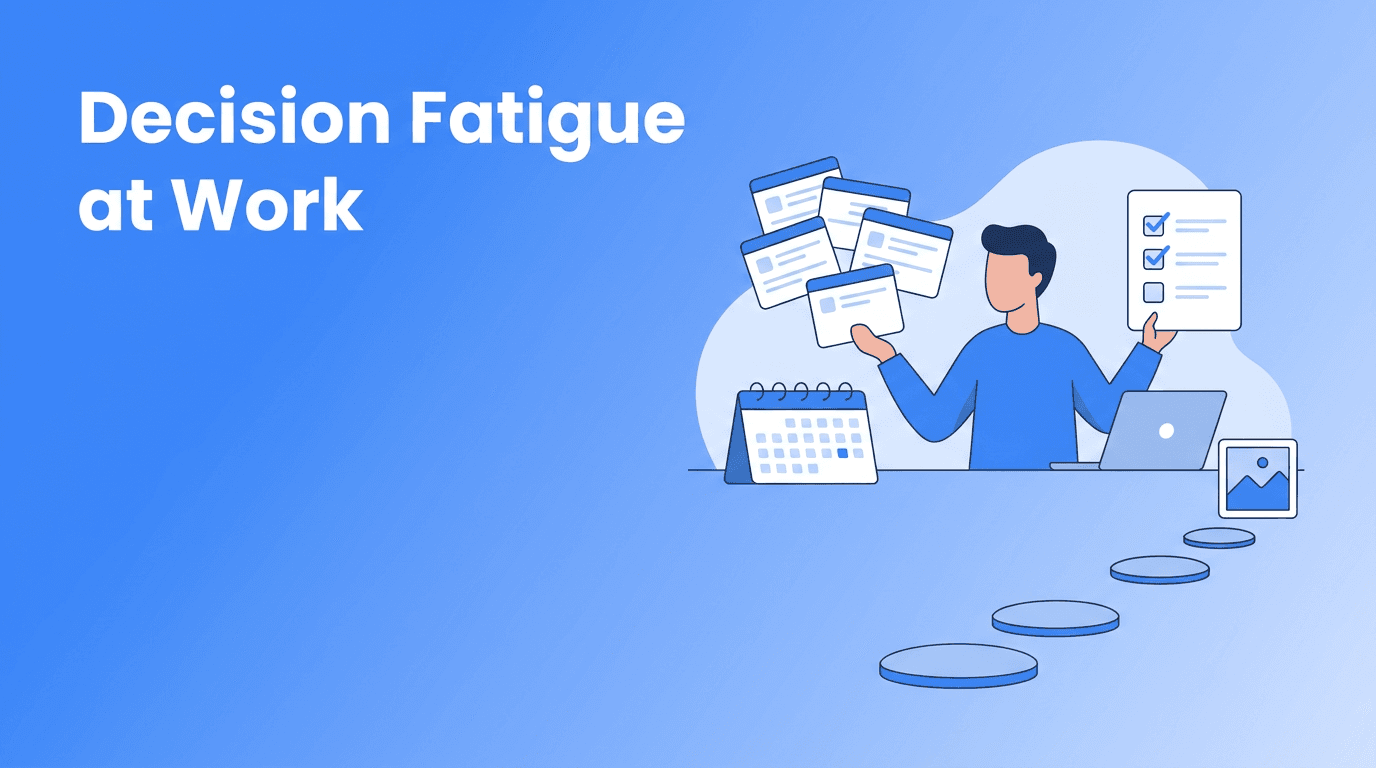
Decision fatigue is one of the most overlooked reasons smart people end the day feeling busy but strangely unproductive. When every email, task, and meeting demands a choice, your brain burns energy on micro-decisions instead of meaningful work. The good news is that a better prioritization approach can reduce friction, strengthen productivity systems, and make daily scheduling feel lighter.
Why decision fatigue quietly ruins efficient days
Most people think productivity breaks down because of laziness, poor motivation, or lack of discipline. In reality, many workdays fall apart because there are simply too many choices. What should you do first? Which task matters most? Should you answer messages now or later? Each small choice steals a bit of mental fuel, and by afternoon, your ability to make strong decisions drops.
- You start the day with a plan, then abandon it after reacting to inbox noise.
- You spend more time choosing tasks than actually doing them.
- You bounce between low-value work and urgent requests.
- You feel mentally tired before your most important work begins.
- You end the day with activity, but not much real progress.
"You do not rise to the level of your goals. You fall to the level of your systems."
A practical prioritization system to reduce decision fatigue
If decision fatigue is the problem, the solution is not trying harder. It is reducing the number of decisions your future self must make. The best productivity systems do this by creating simple rules in advance. Instead of asking, "What should I do now?" every hour, you build a repeatable framework for choosing once and executing many times.
Step 1: Use three work buckets
Create only three categories for your day: must do, should do, and could do. This forces honest prioritization. If everything is urgent, nothing is. Your must-do list should contain no more than one to three items. These are the tasks that truly move projects, grades, revenue, or key responsibilities forward.
Step 2: Decide tomorrow before today ends
One of the best habits for reducing mental friction is planning the next day before logging off. Spend 10 minutes assigning tasks to your three buckets and placing your must-do work into your calendar. This small scheduling ritual means you start the next morning with direction instead of uncertainty.
Step 3: Match task type to mental energy
Not all hours are equal. High-focus tasks like writing, studying, analysis, or strategic planning should be placed in your sharpest window. Lower-energy periods are better for admin, messages, and routine follow-up. This is where efficiency improves fast, because you stop wasting your best attention on shallow work.
- Morning sharpness: deep work, problem solving, creative output.
- Midday steady energy: meetings, collaboration, task reviews.
- Late-day low energy: inbox, updates, simple admin, planning tomorrow.
The hidden link between habits and better scheduling
People often treat habits and calendars as separate tools, but they work best together. A habit is simply a decision you no longer need to debate. When you always review priorities at 4:45 p.m. or always begin with your top task before opening chat, you remove choice from the moment. That is how decision fatigue shrinks over time.
This is also why rigid systems often fail. A useful system should reduce thinking, not create more of it. If your planner has too many labels, statuses, or rules, it becomes another source of friction. Keep your workflow simple enough that you can follow it on a stressful day.
Build a lighter productivity routine with Haply
Haply is an AI life coaching app for iOS and Android that helps you turn good intentions into repeatable action. Use chat-based Productivity coaching, the Task Planner, Focus Timer, streaks, and daily reminders to simplify decisions and stay consistent.
Try Haply FreeA 15-minute reset for overloaded workdays
When your day already feels chaotic, use this short reset instead of trying to rescue everything at once. It is designed to restore clarity without overcomplicating your workflow.
- Spend 2 minutes writing every open task on one page.
- Spend 3 minutes marking each item as must do, should do, or could do.
- Spend 5 minutes deleting, delegating, or delaying anything nonessential.
- Spend 3 minutes putting your top one or two tasks into fixed time slots.
- Spend 2 minutes closing unrelated tabs, chats, and notifications before starting.
This reset works because it lowers cognitive load. You are not solving your whole week. You are removing unnecessary choices so your next action becomes obvious. That is real efficiency.
How Haply can support your prioritization system
If you want more structure without building a complicated setup, Haply can help. Its goal-based onboarding personalizes support from the start, and its specialized AI coaches can guide you through prioritization, routines, and follow-through. The Today Dashboard gives you a clear daily overview, while tools like the Task Planner and Focus Timer support steady execution. For people trying to build stronger productivity systems, this kind of daily support can make consistency easier.
What to remember about decision fatigue
You do not need a more intense schedule. You need fewer unnecessary choices. By using simple productivity systems, stronger habits, and clearer scheduling, you protect your attention for the work that matters most. The less often you ask, "What should I do now?" the more likely you are to finish the day with real progress instead of mental exhaustion.
Frequently Asked Questions
What is decision fatigue at work?
Decision fatigue at work is the mental drain that happens after making too many choices throughout the day. It can weaken focus, slow prioritization, and reduce productivity.
How do I reduce decision fatigue during the day?
Reduce decision fatigue by making key choices in advance, limiting your top priorities, and using simple routines for planning, scheduling, and task review.
Can productivity systems help with decision fatigue?
Yes. Good productivity systems reduce repeated choices by giving you clear rules for prioritization, scheduling, and task execution.
What are the best habits for better prioritization?
Useful habits include planning tomorrow before today ends, limiting daily must-do tasks, and starting work before checking messages or notifications.